
What Is THE GOLDEN RULE?

What we call “the golden rule” applies to the general guideline on how we should treat other people:
“In everything, then, do to others as you would have them do to you. For this is the essence of the Law and the prophets.”
“Do to others as you would have them do to you.”
This social guideline is referred to as “the royal law” in the Bible:
If you really fulfill the royal law stated in Scripture, “Love your neighbor as yourself,” you are doing well.
True believers live a lifestyle that reflects “the golden rule” or “the royal law.” This rule is the simplest of guidelines to live by: Do to others as you would have them do to you. For instance, if you don’t want people to be rude and insulting to you for no justifiable reason, don’t be rude and insulting to others. If you want people to be respectful and courteous towards you, be so toward them. If you don’t want people to gossip about you, don’t badmouth others behind their backs.
Imagine the global revolution if everyone lived this way — there’d be no theft, no adultery, no malicious lying, no racism, no wars.
I’m stunned when I come across intelligent confessing believers who’ve gone to quality assembles for decades and yet don’t follow this simple rule. They might as well get out a megaphone and say, “I’m not a true believer! I’m a fake Christian!”
Of course, the golden rule doesn’t mean you have to be nicey wicey in situations where tough love is in order:
5Better is open rebuke
than hidden love.
6Wounds from a friend can be trusted,
but an enemy multiplies kisses.
Proverbs 27:5-6
This is relevant to the golden rule — doing to others as you would have them do to you — because truly godly people want others to correct them if they are in the wrong because it will improve the quality of their lives and their service to God; only an arrogant fool — a mocker — hates legitimate correction:
7Whoever corrects a mocker invites insults;
whoever rebukes the wicked incurs abuse.
8Do not rebuke mockers or they will hate you;
rebuke the wise and they will love you.
9Instruct the wise and they will be wiser still;
teach the righteous and they will add to their learning.
Proverbs 9:7-9
Kindness is a fruit of the spirit (Galatians 5:22-23) and the kindest thing you can do for someone who’s walking in harmful error is correct him/her. As such, there’s example after example of believers boldly confronting & correcting others in the New Testament, such as Matthew 16:23, Matthew 18:15-17, Matthew 23:13-33, Acts 8:9-24, Acts 13:8-12 and Galatians 2:11-14.
This article is available in book form in chapter 4 of…

- The print book is available here for only $12.50 (303 pages)
- The Kindle eBook is available here for just 99¢!
Both links allow you to “look inside” the book.
Related Topics:
Is There Such a Thing as RIGHTEOUS ANGER?
Does Walking in AGAPE LOVE Mean You Should Be a DOORMAT to Abuse?
Ministerial Abuse — The Diotrephes Spirit vs. the Davidic Spirit
Ministerial Pitfalls and Abuses
Dealing with Personal Offenses vs. Criminal Acts
Pacifism — Absolute Pacifism (Unbiblical) and Limited Pacifism (Biblical)
What Are THE BASICS of Christianity?
What Makes a Believer a LEGITIMATE CHRISTIAN?

Occasionally you’ll come across people who have a list of doctrines that they deem mandatory for being a “legitimate believer.” This is fine if the list is comprised of actual core truths of Christianity, but not if the doctrines are peripheral and therefore unessential. So, what makes a legitimate Christian according to the God-breathed Scriptures? The answer can be split into two areas — beliefs and practices. We’ll look at both in detail and then offer the gist (so, if you don’t want the details, just scroll down to The Short Answer).
The Beliefs That Mark a Genuine Christian
The core belief that marks a legitimate believer can be observed here:
9If you declare with your mouth, “Jesus is Lord,” and believe in your heart that God raised him from the dead, you will be saved. 10For it is with your heart that you believe and are justified, and it is with your mouth that you profess your faith and are saved.
Romans 10:9-10
If you truly believe something, you’ll declare it with your mouth. This core belief can be observed by what the Lord said during his ministry on Earth, along with the apostle John:
14Just as Moses lifted up the snake in the wilderness, so the Son of Man must be lifted up, 15that everyone who believes may have eternal life in him.
16For God so loved the world that he gave his one and only Son, that whoever believes in him shall not perish but have eternal life. 17For God did not send his Son into the world to condemn the world, but to save the world through him. 18Whoever believes in him is not condemned, but whoever does not believe stands condemned already because they have not believed in the name of God’s one and only Son.
John 3:14-18
36Whoever believes in the Son has eternal life, but whoever rejects the Son will not see life, for God’s wrath remains on them.
John 3:36
Humanity’s problem is that we have a sin nature, which separates us from our holy Creator and puts us on a collision course with eternal death. God’s conundrum is that the LORD is love and thus loves humanity (1 John 4:8; John 3:16), but God is also just and must therefore issue out the just wage of sin, which is death (Romans 6:23; Matthew 10:28). While God is willing to forgive sin, the LORD cannot ignore sin. Thus the Almighty came up with an ingenious plan to save humanity from eternal death by providing a way to forgive a person’s sin through providing someone without sin willing to die in his/her place (2 Corinthians 5:21; Hebrews 4:15; 1 John 3:5).
This parable might help to grasp the concept: An entomologist lived by some woods where he studied the various insects. There was a huge ant hill of which he became particularly fond. When news came that the nearby road was going to be extended through the woods and it was on a collision course with the ant hill, the entomologist longed to save his beloved ants, but it was impossible to communicate the dangers to them. The only way he could do so would be to become an ant!
This is the Christian message in a nutshell: God became a human being in the form of Jesus Christ to warn us to repent or perish (Luke 13:1-9) and, more than that, sacrifice himself for us by dying in our place (Philippians 2:5-11, 1 Peter 3:18; Hebrews 9:14, 9:26). Think about it, the LORD could’ve just kicked back in Heaven and destroyed us all for our sin, which would’ve been a just act. Instead, God was born into this humbling, brutal planet and suffered & died for us.
Yet it doesn’t end there, Christ was raised from the dead for our justification (Romans 4:25).
Thus the penalty of sin, death, is paid for and those who believe & repent are saved from eternal death (Mark 1:15; Acts 20:21), not to mention reconciled to their Creator (Romans 5:10; 5:11). Belief, by the way, simply means you believe the message while repentance means to “change your mind” in response to that particular truth, which naturally has an impact on your actions or lifestyle. This shows that faith & repentance go hand-and-hand and are actually two sides of the same coin. After all, if you truly believe something, you’ll change your thinking and actions accordingly, right?
This explains why faith and repentance are the first two basic doctrines of biblical Christianity (Hebrews 6:1-2), as detailed here.
It should be emphasized that believing the message of Christ with the corresponding repentance (changing one’s mind accordingly) is all that is required for eternal salvation:
8For it is by grace you have been saved, through faith—and this is not from yourselves, it is the gift of God— 9not by works, so that no one can boast. 10For we are God’s handiwork, created in Christ Jesus to do good works, which God prepared in advance for us to do.
Ephesians 2:8-10
Yet notice that, while we are saved by faith, we are recreated spiritually in Christ (Titus 3:5) for the purpose of doing good works, which brings up…
The Practices That Mark a Genuine Christian
If a believer is walking in the spirit and producing the fruit thereof (Galatians 5:16; 5:22-23) as they fulfill their particular call, that would indeed mark them as legitimate. This ties into the two greatest commands with its three applications: Love God and love others, as you love yourself:
36“Teacher, which is the greatest commandment in the Law?”
37Jesus replied: “ ‘Love the Lord your God with all your heart and with all your soul and with all your mind.’ c 38This is the first and greatest commandment. 39And the second is like it: ‘Love your neighbor as yourself.’ d 40All the Law and the Prophets hang on these two commandments.”
Matthew 22:36-40
This is what the New Testament calls “the law of love” or “law of Christ”:
19Though I am free and belong to no one, I have made myself a slave to everyone, to win as many as possible. 20To the Jews I became like a Jew, to win the Jews. To those under the law I became like one under the law (though I myself am not under the law), so as to win those under the law. 21To those not having the law I became like one not having the law (though I am not free from God’s law but am under Christ’s law), so as to win those not having the law.
1 Corinthians 9:19-21
2Carry each other’s burdens, and in this way you will fulfill the law of Christ.
Galatians 6:2
In the believer’s dealings with other people, the law of Christ is ‘the golden rule‘:
“In everything, then, do to others as you would have them do to you. For this is the essence of the Law and the prophets.”
“Do to others as you would have them do to you.”
If you really fulfill the royal law stated in Scripture, “Love your neighbor as yourself,” you are doing well.
True believers live a lifestyle that reflects ‘the golden rule,’ which James calls “the royal law.” This rule is the simplest of guidelines to live by: Do to others as you would have them do to you. For instance, if you don’t want people to be rude and insulting to you for no justifiable reason, don’t be rude and insulting to others. If you don’t want people to commit crimes against you, don’t commit crimes against others. If you don’t want people engaging in gossip & slander about you, don’t do that to others.
I’m stunned when I come across confessing believers who’ve gone to quality assembles for decades and yet don’t follow this simple rule. They might as well get out a megaphone and say, “I’m not a true believer! I’m a fake Christian!”
You can read more about the law of Christ here.
Understanding “Keeping With Repentance”
According to Hebrews 6:1 (noted above), what are we to repent of? “Acts that lead to death.” The word ‘acts’ is the same Greek word translated as “acts” in this passage:
19The acts of the flesh are obvious: sexual immorality, impurity and debauchery; 20idolatry and witchcraft; hatred, discord, jealousy, fits of rage, selfish ambition, dissensions, factions 21and envy; drunkenness, orgies, and the like. I warn you, as I did before, that those who live like this will not inherit the kingdom of God.
Galatians 5:19-21
These verses show that “acts of the flesh” are not limited to just sexual immorality, drunkard-ness, stealing and murder. Things like discord (strife), jealousy, factions (meaning the divisive spirit that results from rigid sectarianism), hatred and envy are also works of the flesh. Unfortunately, these works are regularly evident in many congregations, as was the case with the believers in Corinth a few years after Paul left to start assemblies elsewhere (1 Corinthians 3:3). Paul warned believers in Galatians 5 that “those who live like this will not inherit the kingdom of God,” meaning those who practice these sins with no care of penitence. This explains why the Bible encourages us to keep ‘fessed-up when we miss it:
8If we claim to be without sin, we deceive ourselves and the truth is not in us. 9If we confess our sins, he is faithful and just and will forgive us our sins and purify us from all unrighteousness.
1 John 1:8-9
When we miss it, we need to be quick to repent. This takes humility, of course, but humility is good because God’s favor flows to the humble, not the proud. In fact, the LORD resists or opposes the proud, which is why He doesn’t offer forgiveness to the unrepentant (James 4:6; 1 Peter 5:5). This explains Jesus’ declaration: “But unless you repent you will all perish” (Luke 13:3,5). Arrogant people have an extremely hard time admitting they’re wrong, which is why they won’t repent. By contrast, humble folk will readily confess when missing it and it is humility that unlocks God’s favor.
John the Baptist referred to regular penitence as “keeping with repentance”:
“Produce fruit in keeping with repentance.”
Matthew 3:8 & Luke 3:8
It’s impossible to bear fruit unto God while knowingly walking in impenitent sin. So the principle of keeping with repentance assures the continuing stream of the LORD’s forgiveness and favor in our lives as we regularly repent. Needless to say, don’t allow unconfessed sin to block-up your spiritual arteries from the flow of God’s grace.
Humbly ‘fessing-up should become a regular activity in the life of the believer. It’s particularly helpful for believers who are in bondage to a certain sin. They want free, but they keep falling back into the transgression in question and confessing. This keeping-with-repentance principle ensures the flow of the LORD’s forgiveness and favor into their lives. As they seek God and continue in the Word they will eventually walk in freedom (see this article for details). I was once one of these people, but no longer struggle with any certain sin, which is different than saying I never miss it. A couple days ago I missed it and felt so convicted; I immediately ‘fessed up and received God’s grace. Praise God!
The Short Answer
A believer’s legitimacy in Christianity doesn’t depend on being doctrinally correct on every peripheral issue. While it’s certainly good to be as accurate as possible on any given topic, it’s one’s faith in the message of Christ that marks a true believer (John 3:16 & 3:36). As the Lord said:
“The work of God is this: to believe in the one he has sent.”
As far as practice or lifestyle goes, legitimate believers are those who walk in the spirit and produce the fruit thereof in every good work (Colossians 1:10), the primary fruit being love (Colossians 3:14), which includes walking in tough love when appropriate. Genuine Christians naturally live by the ‘golden rule‘ (or should I say supernaturally live by it, with the help of the Holy Spirit?). Walking in the spirit of course includes keeping with repentance (1 John 1:9, Matthew 3:8 & Luke 3:8). Any confessing believer who refuses to keep with repentance and stubbornly lives a lifestyle of sin is deceiving himself or herself. As it is written:
7Do not be deceived: God cannot be mocked. A man reaps what he sows. 8Whoever sows to please their flesh, from the flesh will reap destruction; whoever sows to please the spirit, from the spirit will reap eternal life.
Galatians 6:7-8
Related Topics:
How to Keep Yourself BLAMELESS (While Not Being SINLESS)
God Deals With People According to the Light They Have
What Did Paul Mean By “Having the Same SPIRIT OF FAITH”?
Here’s the verse in question:
It is written: “I believed; therefore I have spoken.” Since we have that same spirit of faith, we also believe and therefore speak,
Paul was partially quoting Psalm 116:10 wherein the unnamed writer knew from a recent life-or-death situation that the LORD answers when believers call in faith (and no doubt other situations as well). He was thanking and praising the Creator accordingly. Since this psalmist from a thousand years earlier had a spirit of faith, Paul linked it to the persecutions he and other faithful believers were experiencing in the 1st century (2 Corinthians 4:8-11), not to mention their belief (faith) in the resurrection unto eternal life (2 Corinthians 4:14).
The apostle was using ‘spirit’ in the sense of the attitude or character of a person, which is one of several definitions of the Greek pneúma and the corresponding Hebrew rûach. A good example from the Bible is Joshua and Caleb, who had “a different spirit” — a spirit of faith — as opposed to all the unbelieving Hebrews (Numbers 14:24 & 14:30). Thus they were the only two above the age of 20 to enter their earthly “promised land,” aka the land of Israel.
Likewise, any believer today who wants to enter his/her “promised land” must have a spirit of faith. See this article for details.
Related Topics:
When You Should ASK and When You Should SPEAK IN FAITH, aka DEMAND
Are Gentile Believers SPIRITUAL JEWS?
How to Discern OPINION and FACT in Theology
What Are THE BASICS of Christianity?
Should Church Leaders Be CORRECTED Privately or Publicly?

Since the Word of Truth is “useful for teaching, rebuking, correcting and training in righteousness” (2 Timothy 2:15 & 3:16), let’s see what it says on this particular issue:
17The elders who direct the affairs of the church well are worthy of double honor, especially those whose work is preaching and teaching. 18For Scripture says, “Do not muzzle an ox while it is treading out the grain,” a and “The worker deserves his wages.” b 19Do not entertain an accusation against an elder unless it is brought by two or three witnesses. 20But those elders who are sinning you are to reprove before everyone, so that the others may take warning. 21I charge you, in the sight of God and Christ Jesus and the elect angels, to keep these instructions without partiality, and to do nothing out of favoritism.
1 Timothy 5:17-21
The topic is “elders who direct the affairs of the church… especially those whose work is preaching and teaching,” which means fivefold ministers, i.e. apostles, prophets, evangelists, pastors and teachers (Ephesians 4:11-13).
Someone might object to this on the grounds that Paul was referring specifically to “elders.” Using the hermeneutical rule that “Scripture interprets Scripture,” what exactly is a Church elder in the biblical sense? In Acts 20:17 and 20:28 Paul tells the elders (presbuteros) to shepherd or pastor (poimainó) the flock of God over whom the Holy Spirit made them overseers (episkopos). Poimainó, by the way, is the verb form of the noun for pastor, which is poimén (Ephesians 4:11). This shows that elders, shepherds and overseers refer to those in the fivefold ministry.
When such a leader in the body of Christ is caught in a serious sin — like adultery, fornication, theft, slander, drug obsession or damaging doctrines — they are to be “reproved before everyone” or “rebuked in the presence of all,” according to verse 20. Why not correct them privately? The verse goes on to explain: “so that the others may take warning.” The “others” refers to current fivefold ministers, as well as up-and-coming ones.
It is true that the initial method of confrontation & correction between believers in general is a private matter, as detailed by the Lord in Luke 17:3-4 and Matthew 18:15-17. In these instances, the matter should only be brought to the attention of other believers if the offender is stubbornly impenitent, which you can read about here.
However, when leaders in the body of Christ — whether apostles, prophets, evangelists, pastors or teachers — seriously fall into sin, they are be corrected publicly. This is assuming, of course, that the accusation is true, which verse 19 says must be verified by at least two or three credible witnesses. This naturally makes it difficult for lying troublemakers to cause strife in the Church.
A good example of a public correction of a Church leader is John’s reference to Diotrephes:
9I have written to the church about this, but Diotrephes, who loves to be first, will not accept our instruction. 10So if I come, I will call attention to his malicious slander against us. And unsatisfied with that, he refuses to welcome the brothers and forbids those who want to do so, even putting them out of the church.
3 John 1:9-10
Diotrephes was the pastor of one of the assemblies in John’s circuit of churches. We know this because only the pastor of a fellowship has the authority to excommunicate people and prevent leaders approved by someone of John’s stature from ministering. As you can see in verse 10, John was intent on rebuking this carnal pastor in front of the congregation.
Another way to effectively rebuke a sinful minister is to do so privately and then have the penitent elder confess before the believers. I saw this done at one fellowship. Whether or not the minister should step down from public ministry for a season in order to “get it together” spiritually depends on how severe the sin was and the leading of the Spirit.
For anyone who says this is hard on ministers, it explains passages like these:
Not many of you should become teachers, my fellow believers, because you know that we who teach will be judged more strictly.
“Suppose one of you wants to build a tower. Won’t you first sit down and estimate the cost to see if you have enough money to complete it?”
In other words, if a believer can’t handle the responsibility of being a servant-leader in the Church, they shouldn’t enter into the fivefold ministry.
One last thing, if you think a minister is guilty of false doctrine, make sure you can prove your case through multiple passages and rightly-dividing the Scriptures. As noted at the beginning of this article, it’s the God-breathed Scriptures that are “useful for teaching, rebuking, correcting and training in righteousness” (2 Timothy 3:16), not man-made religious doctrines that aren’t actually biblical.
Related Topics:
What if You KNOW a Confrontation Will Turn UGLY?
Should You “Obey” Your Pastor?
Ministerial Pitfalls and Abuses
Ministerial Abuse — The Diotrephes Spirit vs. the Davidic Spirit
Should Ministers Be Addressed with Titles?
Legalism — Understanding its Many Forms
Godliness and Religion—What’s the Difference?
Was There a LUCIFERIAN FLOOD Before the Noahic One?

There are some Christians who believe that the creation account of Genesis 1-2 refers, more specifically, to the restoration of physical creation after a great cataclysm between Genesis 1:1 and 1:2. These folks believe there is a great gap of time between these first two verses of Scripture — perhaps billions of years — and so they are known as gap theorists. They argue that there was a global flood long before the Noahic one (Genesis 6:9-8:22), which they say took place between Genesis 1:1 and 1:2. They dub this the Luciferian flood (or “Lucifer’s flood”). Let’s consider the few passages they use to support this supposed flood:
Now the earth was formless and empty, darkness was over the surface of the deep, and the Spirit of God was hovering over the waters.
And God said, “Let there be a vault between the waters to separate water from water.”
Gap theorists argue that the references to “the deep” and “the waters” are evidence of a flood while young Earth advocates say that these are simply references to the primordial waters—the planet’s water-covered surface before the dry land emerged, as observed here:
9And God said, “Let the water under the sky be gathered to one place, and let dry ground appear.” And it was so. 10God called the dry ground “land,” and the gathered waters he called “seas.” And God saw that it was good.
Genesis 1:9-10
Here’s another passage gap theorists use to support the so-called Luciferian flood:
5But they deliberately forget that long ago by God’s word the heavens came into being and the earth was formed out of water and by water. 6By these waters also the world of that time was deluged and destroyed.
2 Peter 3:5-6
They cite this as a reference to the Luciferian flood because Peter doesn’t specify that it’s the flood of Noah’s day. Yet this is negated by the fact that a mere 23 verses earlier Peter referenced the flood of Noah’s day:
if He did not spare the ancient world when He brought the flood on its ungodly people, but preserved Noah, a preacher of righteousness, among the eight;
If Peter was referring to an altogether different global flood 23 verses later he would have indicated so, but he doesn’t. Why? Evidently because he was referring to the same flood, not a wholly different one.
The “Pre-Adamic Race”
Those who advocate the doctrine of the Luciferian flood also support the idea of a pre-Adamic race, which is a dubious doctrine seeing as how the Bible states that “sin entered the world through one man, and death through sin” (Romans 5:12). This, of course, suggests that, before Adam, there was no death because it was through his sin that death entered the world. So, how exactly did this so-called pre-Adamic race die out if death hadn’t yet entered the world?
Furthermore, Christ made a reference to “the beginning of creation” and placed it at the time of God’s creation of the first male and female, Adam & Eve:
“But at the beginning of creation God ‘made them male and female.’”
The Lord was paraphrasing Genesis 1:27 and referred to this time period as “at the beginning of creation.” If there was a gap of billions of years between Genesis 1:1 and 1:2, He obviously wouldn’t phrase it like this since “the beginning of creation” would’ve taken place billions of years earlier. In other words, the beginning of creation occurred around the time Adam & Eve were created, roughly 6000 years ago.
Gap theorists, however, argue that Christ was talking about the beginning of the creation of human beings as male and female (Genesis 1:26-28), not the original creation of Genesis 1:1.
The “pre-Adamic race” supposedly perished in this “Luciferian flood,” which occurred between Genesis 1:1 and 1:2. Gap theorists won’t go as far as to call this race human beings, however, presumably to suggest that they were what evolutionary academics call Neanderthals; or perhaps even the “missing link.” Cha-ka is another possibility. They’re very ambiguous on this point. Why? Because the Bible plainly cites Adam as the “first man” (1 Corinthians 15:45 & 15:47), thus they won’t refer to this mysterious pre-Adamic race as human beings.
Let’s give gap theorists credit for their creativity.
If any of this intrigues you and spurs questions, you can read important details in this article.
Related Topics:
Does the Bible Say the Earth is Flat or Spherical?
The Five Earths of the Bible (and the Eight Ages)
Dinosaurs — Where Do They Fit?
LEVIATHAN and BEHEMOTH — What Were They? (Dinosaurs)
Hermeneutics — Proper Bible Interpretation
Why is this World so Messed Up?
(Pseudo) Science Is the “New God” and Dubious Scientists Are the “New Gods”
How Old Is the EARTH According to the Bible?
How to Discern OPINION and FACT in Theology

‘Theology’ means the study of God. In Christian theology, how do we distinguish what’s true and what’s not true concerning anything related to God and the things of God, including Church doctrine and practice? Is it “all just opinion,” as I heard someone argue? Absolutely not. Notice what the Bible says:
16All Scripture is God-breathed and is useful for teaching, rebuking, correcting and training in righteousness, 17so that the servant of God may be thoroughly equipped for every good work.
2 Timothy 3:16-17
This shows that the basis for teaching and correction in Christianity is the God-breathed Scriptures. If what a denominational handbook or minister teaches cannot be substantiated by rightly-dividing the Holy Scriptures, then it’s not a valid doctrine or practice. I said “rightly dividing” because the Scriptures need to be correctly interpreted in line with the common sense hermeneutical guidelines (2 Timothy 2:15). (After all, if the Scriptures can be rightly divided, they can also be wrongly divided).
This explains Paul’s rule “Do not go beyond what is written” (1 Corinthians 4:6), which you can read more about here. It also explains the wise response of the Bereans to Paul’s gospel message when he shared it with them:
10As soon as it was night, the believers sent Paul and Silas away to Berea. On arriving there, they went to the Jewish synagogue. 11Now the Berean Jews were of more noble character than those in Thessalonica, for they received the message with great eagerness and examined the Scriptures every day to see if what Paul said was true. 12As a result, many of them believed, as did also a number of prominent Greek women and many Greek men.
Acts 17:10-12
The Bereans went to the Scriptures to determine if what Paul taught was true. They viewed the Word of God as the basis for truth, not the word of a religious organization or the word of man — even an apostle as great as Paul. Understanding this is especially important today when there are hundreds of sects of Christianity with each group usually insisting that they’re the most correct version of Christianity and, in some cases, “the one true church.”
Some believers tend to defend their camp’s doctrines by quoting popular religious slogans, rather than quoting Scripture. Brothers & sisters, this is not the way it’s supposed to be. If someone can’t support a doctrine by several clear biblical texts — or it’s contradicted by several clear texts — then it’s likely not a true Christian doctrine.
Notice what the Lord said to believers:
30As Jesus spoke these things, many believed in Him. 31So He said to the Jews who had believed Him, “If you continue in My word, you are truly My disciples. 32Then you will know the truth, and the truth will set you free.”
John 8:31-32
This tells us three things:
- There most certainly is truth to discover in God’s Word, which proves that theology isn’t “all just opinion.”
- You have to continue in God’s Word, if you want to know the truth on any given issue. ‘Truth’ is alétheia in the Greek, meaning “the way it really is.”
- This is a prerequisite to being set free, including being set free of false doctrines that may be religious and popular, but they’re not actually correct, at least not fully correct (in other words, they may be partially accurate, which also means they’re partially inaccurate).
Now observe what some disciples of the Pharisees and Herodians — two Judaic sects — said about Jesus Christ:
“Teacher,” they said, “we know that you are a man of integrity and that you teach the way of God in accordance with the truth. You aren’t swayed by others, because you pay no attention to who they are.”
This reveals what set Christ above His religious luminaries in the 1st century — He taught the way of God in accordance with the truth as opposed to in accordance with this or that sect and their biased sectarianism. Shortly later, Jesus responded to another sect of Judaism, the Sadducees:
“You are in error because you do not know the Scriptures or the power of God.”
The Sadducees didn’t believe in the resurrection, which is error. (This, by the way, reveals the power of sectarianism, which can convince masses of people into believing something isn’t scriptural even though it’s blatantly scriptural; and vice versa). Christ said the Sadducees didn’t believe in the resurrection because they did not know the Scriptures. In other words, the answer to doctrinal error is to know the Scriptures. The more you get to know the Word of Truth and rightly divide it (2 Timothy 2:15), the more easily you’ll be able to screen-out error, whether totally false doctrine or partially false doctrine.
Speaking of partially false teachings, two believers may be right on a certain doctrine in a broad sense, but one will be false in the details whereas the other will be accurate because s/he is more faithful to the specifics of Scripture. Here’s an example:
Two Christians rightly believe that eternal life is one of the main benefits of Christianity (e.g. John 3:16 & Romans 6:23). While they are both correct on this, one is off on the details and the other more fact-based and therefore correct. For instance, the former may think that eternal life revolves around living on a cloud playing a harp forever while the latter understands the truth about the New Jerusalem (Revelation 21-20) and the New Heavens and New Earth (2 Peter 3:13).
Each of them are sincere believers, loved of the LORD, and both rightly believe the truth about eternal life, but one is mistaken on the particulars while the other is more scriptural and therefore more accurate. One is tripped-up by false religious ideas whereas the other knows the truth and is therefore set free by it, at least on this specific topic. It all comes down to who is more detailed in their studies and rightly divides the God-breathed Scriptures free of sectarian bias. This is the person who knows the truth and is therefore set free on the issue.
The average believer will, of course, side with the official doctrines of their sect and the pastor(s) thereof, whatever group that might be. It’s just the way it is and this explains why God holds those who teach the Scriptures to stricter accountability:
Not many of you should become teachers, my fellow believers, because you know that we who teach will be judged more strictly.
Since the average believer tends to just go along with whatever their favored minister teaches, like their pastor, I generally don’t debate the Scriptures with them because it’s unprofitable. You could say it’s a waste of time.
Here are a few relevant passages about the uselessness and potential damage of such debates:
9But avoid foolish controversies, genealogies, arguments, and quarrels about the law, because these things are pointless and worthless.
10Reject a divisive man after a first and second admonition, 11knowing that such a man is corrupt and sinful; he is self-condemned.
Titus 3:9-11
23Don’t have anything to do with foolish and stupid arguments, because you know they produce quarrels. 24And the Lord’s servant must not be quarrelsome but must be kind to everyone, able to teach, not resentful. 25Opponents must be gently instructed, in the hope that God will grant them repentance leading them to a knowledge of the truth, 26and that they will come to their senses and escape from the trap of the devil, who has taken them captive to do his will.
2 Timothy 2:23-26
It is to one’s honor to avoid strife, but every fool is quick to quarrel.
Starting a quarrel is like breaching a dam; so drop the matter before a dispute breaks out.
Unless a certain topic comes up, by the Spirit, and the other person is interested in discussing it with an open mind as to what the Word of Truth actually teaches (2 Timothy 2:15), I don’t try to convince believers of this or that doctrine. Their pastors will be held accountable for what they believe or don’t believe (1 Corinthians 3:8-17). In light of this, this article applies more to those who have grown past the confines of pastoral-dependency and sectarianism (or are in the process of doing so). How do believers “grow past” these? See this article.
Wrapping this up, how do you separate opinion from fact on any Judeo-Christian doctrine? By being as biblically-accurate as possible along with discarding the bias of a particular camp/sect, as well as popularity. Then you will know the truth and the truth will set you free (John 8:31-32). Amen.
This article is available in book form in chapter 4 of…
- The print book is available here for only $12.50 (303 pages)
- The Kindle eBook is available here for just 99¢!
Both links allow you to “look inside” the book.
Related Topics:
What Are the Sources of TRUTH (Reality)?
SECTARIANISM — What Is It? What’s Wrong With It?
The “Berean Spirit” — What is It? How Do You Cultivate it?
The Issue of Eating Meat Sacrificed to Idols
Disassociate from Toxic People! (The “Turn Away Principle”)
Who Wrote the New Testament Books? Who Authorized them as Scripture Canon?
Why Did Jude Quote ENOCH?
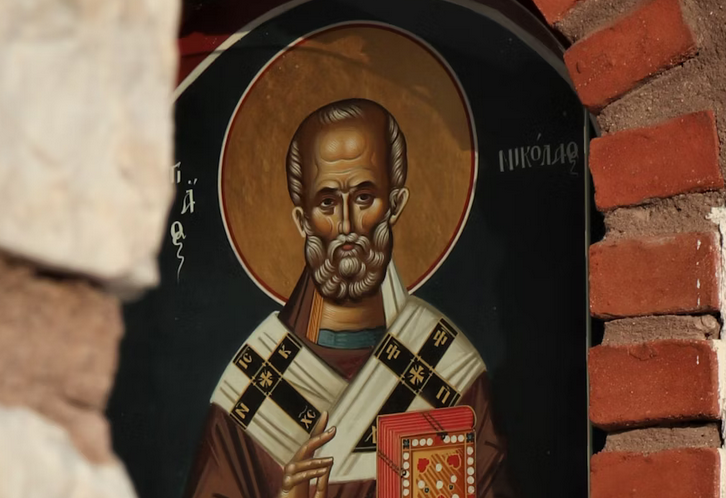
Let’s look at the passage in question:
14Enoch, the seventh from Adam, prophesied about them: “See, the Lord is coming with thousands upon thousands of his holy ones 15to judge everyone, and to convict all of them of all the ungodly acts they have committed in their ungodliness, and of all the defiant words ungodly sinners have spoken against him.”
Jude 1:14-15
(If you’re not familiar with Enoch, see Genesis 5:24).
This particular saying of Enoch was handed down through the generations in Hebrew culture and eventually included in the Book of Enoch (specifically chapter 1, verse 9), which was written in the period between the two Testaments. Jude was “carried along by the Holy Spirit” when he quoted it (2 Peter 1:21), which is why the Judeo-Christian Scriptures are called “God-breathed” (2 Timothy 3:16). In other words, Jude’s source for this information was the Holy Spirit and Judaic tradition, not the book of Enoch. The fact that it was recorded in the pseudepigraphical Book of Enoch didn’t make it false.
While this particular saying of Enoch is true and it’s recorded in the Book of Enoch, it doesn’t make the entire Book of Enoch Holy Scripture. After all, Paul quoted Cretan seer-poet, Epimenides, in Titus 1:12, but this doesn’t mean we should give authority to all of Epimenides’ writings as God-breathed Scripture.
Some suggest that Christ was partially quoting Enoch in Matthew 22:29-30, which was a prophetic word that may allude to tradition, but is not a quote from a specific text, like the Book of Enoch. For proof, compare the Lord’s words with the relevant passage from the Book of Enoch:
29Jesus replied, “You are in error because you do not know the Scriptures or the power of God. 30At the resurrection people will neither marry nor be given in marriage; they will be like the angels in heaven.
Matthew 22:29-30
But you from the beginning were made spiritual, possessing a life which is eternal, and not subject to death for ever.
Therefore I made not wives for you, because, being spiritual, your dwelling is in heaven.
1 Enoch 15:6-7
Clearly, the Messiah wasn’t quoting the Book of Enoch. As such, the passage from Jude is the only quote in Scripture from Enoch (which, again, just so happens to be cited in the Book of Enoch).
The many books in the apocrypha (ah-POK-rah-fah) & pseudepigrapha (soo-doh-PIG-rah-fah) are noncanonical writings from the intertestamental period, or “400 silent years” between the Old and New Testaments, and up to 300-400 AD. ‘Apocrypha’ means “hidden away” while ‘pseudepigrapha’ means “false writings,” mostly because the claimed author of the text is not the actual author. Some of what these books say is true, but some is questionable or false.
It’s similar to the gazillion of Christian books available today, depending on the author and their sectarian bias. Don’t get me wrong, there are many worthwhile Christian books out there, but the best ones are those that stick closely to the Scriptures and rightly-divide them (2 Timothy 2:15 & 3:16-17). In light of this, if you read any books from the apocrypha & pseudepigrapha, it’s necessary to “test them all; hold on to what is good,” as 1 Thessalonians 5:21 puts it. In other words, eat the meat and spit out the bones since they’re not Holy Scripture.
Speaking of which, stick with God’s Word in regard to Christian doctrine (belief) and practice, which explains Paul’s rule “Do not go beyond what is written” (1 Corinthians 4:6).
While there are a miniscule number of Ethiopian Jews and Ethiopian Christians who regard the Book of Enoch as Scripture, it’s considered non-canonical (non-inspired) by everyone else. What questions did leaders ask to verify which scrolls should be part of the canon of Scripture, whether Hebrew officials for the Hebraic Scriptures or Christian leaders for the New Testament? Obviously questions like:
Can the cited author be verified? Was the author closely linked to key members of the Judaic or Christian community? Does the doctrinal content correspond to already-acknowledged Scripture? Do the ethical standards comply with established Judeo-Christian morality? Was the text accepted by the Hebraic or Christian community at large up to that point? If not, why not?
The Book of Enoch was written between 300-100 BC (during the aforementioned “400 silent years,” well before the era of Christ & the early Church); it simply didn’t make the cut.
Related Topics:
Who Wrote the New Testament Books? Who Authorized Them as Scripture Canon?
What Does “Do Not Go Beyond What is Written” Mean in 1 Corinthians 4:6?
BEREAN SPIRIT — What Is It? How Do You Cultivate It?
HEBREWS / ISRAELITES / JEWS — Why Did God Choose Them?
What Did Paul Mean by “According to the Scriptures”?
What Is GLORY? Are There Different TYPES OF GLORY?
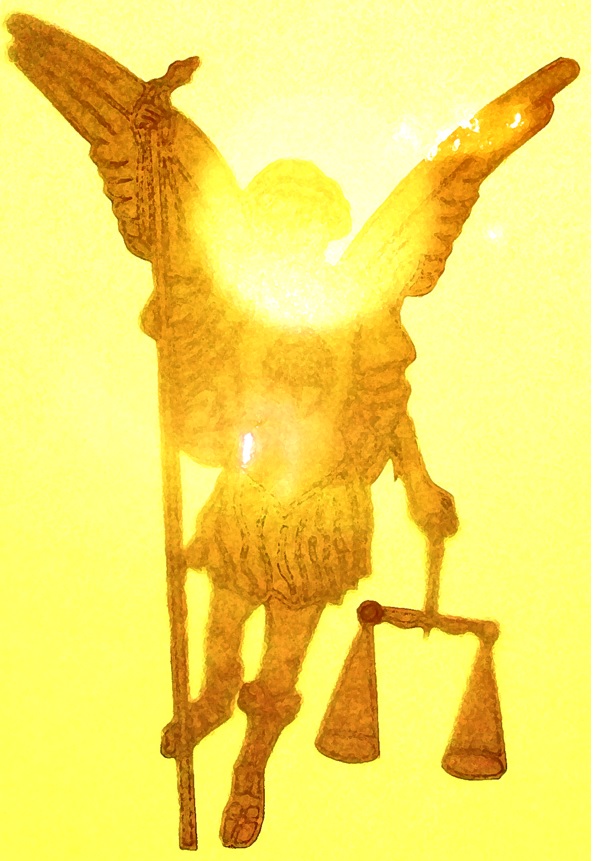
Light or splendor is what I immediately think of when I think of ‘glory.’ Both the Greek word and Hebrew word for ‘glory’ bespeak of God’s splendorous intrinsic substance or essence and the perfection or excellence thereof, whether moral or otherwise. It’s basically the opposite of darkness or sin. You could say ‘glory’ involves all the attributes related to the LORD—light, splendor, excellence, honor, perfection, truth, holiness, etc.
There are different kinds of glory depending on the context. (Remember, the hermeneutical rule “Context is King”). Here are some types of glory in the Scriptures:
- There’s the glory of God’s manifest presence, which theologians refer to as Shekinah glory (Leviticus 16:2, 2 Corinthians 3:18 & Ezekiel 43:2-5).
- There’s the residual glory of spending time in God’s presence (Exodus 34:29).
- There’s the glory of the original physical creation, before the entrance of sin and the corresponding curse (Genesis 1-3).
- Even this present fallen Earth is filled with God’s glory for anyone who opens their eyes (Isaiah 6:3, Psalm 19:1-4 & Romans 1:19-20).
- There’s the glory given to Adam & Eve and, by extension, humanity (Genesis 1:26-28, Psalm 8:4-6 & Hebrews 2:6-8).
- There’s the glory of the Old Covenant, which revealed the truth of the Creator and gave light as to what the LORD considers sin in black-and-white terms (2 Corinthians 3:7-11).
- There’s the greater light of the New Covenant (Hebrews 8:6), which made available spiritual regeneration, freedom from the flesh and eternal life thru the message of Christ (ditto).
- There’s the glory of Christ incarnated (John 1:4-5, 1:9 & 17:24).
- There’s the glory of the truth that He gave the disciples and, by extension, you & me (John 17:22).
- There’s the glory of our future resurrection bodies, which are called glorified (1 Corinthians 15:42-44 & Philippians 3:21).
- There’s the glory of the New Jerusalem and the eternal age-to-come (Revelation 21-22; see specifically 21:11 & 21:23).
Related Topics:
What Is GLORY in the Sense of God’s (Shekinah) GLORY?
ETERNAL LIFE (“Heaven”): Questions & Answers
What Is GLORY? Are There Different TYPES OF GLORY?
What Will the Believer’s GLORIFIED BODY Be Like?
Is CHRIST’S BODY After Resurrection PHYSICAL or SPIRITUAL (or Both)?
Can Believers Have TATTOOS, PIERCINGS and ODD HAIRCUTS?
Can believers have tattoos, piercings and odd haircuts and, if so, how far can they take it? How much is too much? Where do local assemblies draw the line in regard to style & dress at their services? Such questions naturally bring up connecting topics, such as the Christian’s ‘witness‘ to the culture at large, as well as subcultures within the general populace.
Let’s first consider what the Torah commanded the Hebrews on the issue:
27“ ‘Do not cut the hair at the sides of your head or clip off the edges of your beard.
28“ ‘Do not cut your bodies for the dead or put tattoo marks on yourselves. I am the Lord.
Leviticus 19:27-28
These laws were intended to prevent the Israelites from emulating the heathen practices of neighboring nations, some of which got tattoos, cut themselves or used disfiguring haircuts to illustrate humiliation and grief in order to win favor with their gods. A good example from the Bible is when Elijah faced off with the prophets of Baal on Mount Carmel. Notice what these prophets did when they desperately called upon their false god:
22Then Elijah said to them, “I am the only one of the Lord’s prophets left, but Baal has four hundred and fifty prophets. 23Get two bulls for us. Let Baal’s prophets choose one for themselves, and let them cut it into pieces and put it on the wood but not set fire to it. I will prepare the other bull and put it on the wood but not set fire to it. 24Then you call on the name of your god, and I will call on the name of the Lord. The god who answers by fire—he is God.”
Then all the people said, “What you say is good.”
25Elijah said to the prophets of Baal, “Choose one of the bulls and prepare it first, since there are so many of you. Call on the name of your god, but do not light the fire.” 26So they took the bull given them and prepared it.
Then they called on the name of Baal from morning till noon. “Baal, answer us!” they shouted. But there was no response; no one answered. And they danced around the altar they had made.
27At noon Elijah began to taunt them. “Shout louder!” he said. “Surely he is a god! Perhaps he is deep in thought, or busy, or traveling. Maybe he is sleeping and must be awakened.” 28So they shouted louder and slashed themselves with swords and spears, as was their custom, until their blood flowed. 29Midday passed, and they continued their frantic prophesying until the time for the evening sacrifice. But there was no response, no one answered, no one paid attention.
1 Kings 18:22-29
So, the LORD’s commands in Leviticus 19:27-28 were given to prevent the Hebrews from engaging in idolatry, which honored false gods above the true God, not to mention dishonored their bodies.
How do we distinguish which commands in the Mosaic Law, such as in the book of Leviticus, are applicable to believers today and which ones are not? Only the ones that apply to morality are applicable because universal moral laws are absolute, such as the prohibition against homosexuality (Leviticus 20:13), which is echoed in the New Testament (1 Corinthians 6:9-11). However, the wearing of clothes that blend two materials, like cotton and wool, is irrelevant to believers today (Leviticus 19:19), not to mention nothing about it is mentioned in the New Testament. In other words, laws concerning ceremony or irrelevant items are not applicable to the New Covenant believer, which is verified by this clear passage:
16Therefore do not let anyone judge you by what you eat or drink, or with regard to a religious festival, a New Moon celebration or a Sabbath day. 17These are a shadow of the things that were to come; the reality, however, is found in Christ.
Colossians 2:16-17
You can read details here.
Obviously, cutting yourself, which is called “self-harm” today, is a sin since it’s a case of unnecessarily harming the temple of the Holy Spirit (1 Corinthians 6:19). Meanwhile hairstyles are a cultural thing, which you can read about here.
In the New Testament, consider the example of Paul’s instructions to men concerning praying or prophesying without a head covering (a hat of some sort) wherein he exhorted women to do the opposite:
4Every man who prays or prophesies with his head covered dishonors his head. 5But every woman who prays or prophesies with her head uncovered dishonors her head—it is the same as having her head shaved.
1 Corinthians 11:4-5
Is this a moral issue applicable to all believers in the New Covenant era or was it a cultural issue only relevant to that particular region of southern Greece in the 1st century? The answer is the latter as explained here. After all, does God only hear the prayers of males who aren’t wearing hats? Does God only regard the prayers of females who are wearing hats? Answering ‘yes’ to either is ludicrous. Christ didn’t say a peep about hats in his key statements about prayer, like Matthew 7:7, Mark 11: 24 and John 16:24. On the contrary, it’s purely a matter of faith, which is belief.
As far as tattoos go, if a person with tattoos turns to the Lord and receives spiritual regeneration (Titus 3:5), he or she is pretty much stuck with the tattoos. Sure, they can be removed through surgery, but it’s very costly, not to mention risky. Why bother if the tattoos are not profane or blasphemous? Particularly since there’s no New Testament prohibition against them (assuming they’re not connected to some immoral practice, like idolatry).
Should an established believer get a tattoo? It’s between the individual and the LORD; and, more specifically, the leading of the Holy Spirit (John 16:13 & Romans 8:14). If God calls a believer to be a witness to a particular community, including subcultures, its usually necessary to “become all things” to effectively reach them (1 Corinthians 9:22). Consider Paul’s instruction:
Brothers and sisters, each person, as responsible to God, should remain in the situation they were in when God called them.
1 Corinthians 7:24
This is based on an obvious principle: The best people to reach a specific demographic are naturally those from that culture. Why? Because the people of that group can relate to them–they look the same, talk the same and so on.
This likewise applies to ear piercings and the wearing of earrings, as well as other such piercings and rings. While I have no piercings, my wife’s ears are pierced. Is this okay? In our culture, yes, assuming she follows the biblical parameters for a modest woman of God noted here.
If having tattoos, earrings, dreadlocks and other such haircuts aren’t prevalent in your area/culture then it’s a good idea not to have them or wear them if your purpose in Christ is to effectively reach as many people as possible with the truth, which would be hindered if people refuse to receive from you due to such items. However, if the LORD leads you to be a ‘witness‘ to a particular culture or subculture, do as you are led of the Spirit. This is the aforementioned “become all things” principle.
I personally don’t have tattoos and no part of my body is pierced. As for hairstyle, my head is completely shaved, so I usually wear some sort of head covering. Because I want to reach as many people as possible, I shoot for a generic, lowkey look. This brings up the approach ministries should take or not take in regards to the appearances of staff and believers in general…
Where do local assemblies draw the line in regard to style & dress at their services? Ideally, the population of any local assembly should reflect the cultural and racial demographics thereof. This was the case with a fairly large fellowship I was a member of for a decade during my youthful years as a believer. Not only did this assembly contain a good balance of people from the different ethnicities in the area, but culturally as well. For instance, subcultures were represented, such as bikers, metal/grunge aficionados and so forth. Many people dressed formally while others did not. This is healthy in light of this passage:
2Suppose a man comes into your meeting wearing a gold ring and fine clothes, and a poor man in filthy old clothes also comes in. 3If you show special attention to the man wearing fine clothes and say, “Here’s a good seat for you,” but say to the poor man, “You stand there” or “Sit on the floor by my feet,” 4have you not discriminated among yourselves and become judges with evil thoughts?
James 2:2-4
While these verses address discrimination based on income and the corresponding quality of apparel, the principle applies to our topic. We shouldn’t treat someone in fine apparel great and someone in grungy clothing contemptuously. Whether this is due to income status or cultural preference is irrelevant. The same applies to other items of appearance (again, assuming they’re not linked to immorality).
What about people dressed in too-scanty apparel? It’s a legitimate issue addressed here.
Lastly, there are some pastors who gear their ministry toward reaching a particular subculture. For instance, there’s a ministry in my area that focuses on reaching devotees of a particular style of music. Although this will naturally limit the kind of people they reach, and no doubt numbers as well, there’s nothing wrong with doing this if the Holy Spirit leads a minister thusly. A good example of this from the Bible is how Paul was led to focus on reaching the Gentiles of the eastern Mediterranean region whereas Peter concentrated on the Jews (Galatians 2:7).
Whatever the case, let’s not burden people with eye-rolling unbiblical rules, which Paul literally mocked in the Scriptures, led of the Holy Spirit:
20Since you died with Christ to the elemental spiritual forces of this world, why, as though you still belonged to the world, do you submit to its rules: 21“Do not handle! Do not taste! Do not touch!”? 22These rules, which have to do with things that are all destined to perish with use, are based on merely human commands and teachings. 23Such regulations indeed have an appearance of wisdom, with their self-imposed worship, their false humility and their harsh treatment of the body, but they lack any value in restraining sensual indulgence.
Colossians 2:20-23
Related Topics:
Law (Torah) — New Testament Believers are NOT Under the Law
Legalism — Understanding Its Many Forms
LEGALISM Creates Sheeple; CHRISTIANITY Creates Unique People