
Can You Fix Your SPIRITUAL FOUNDATION If It’s Faulty?

Growing believers might come to realize that some of the things they were taught or experienced at a particular ministry/sect are erroneous or unhealthy. This concerns the spiritual foundation that was built in their early years as believers. What do you do if you discern your foundation is flawed in some serious ways. Are you “damaged goods” for life or can you go back and fix your foundation? Absolutely you can fix it! The purpose of this article is to show you how.
As a prerequisite, please brush up on the Four Stages of Spiritual Growth so you’ll understand what I’m referring to by STAGE TWO, STAGE THREE and so on.
STAGE TWO refers to the stage when the believer sets a spiritual foundation as he or she learns from fivefold ministers at one ministry or another, such as pastors and teachers. This stage of Christian development is absolutely strategic to a healthy spiritual journey. It’s the stage where believers set a foundation for their lifelong spiritual walk and develop discipline with the service & supervision of more mature believers. It’s where they learn the ropes of basic Christianity and cultivate the character necessary to progress to maturity.
Consider this example from the Bible:
If you point these things out to the brothers and sisters, you will be a good minister of Christ Jesus, nourished on the truths of the faith and of the good teaching that you have followed.
Paul is talking to young pastor Timothy and he says “If you point these things out to the brothers and sisters, you will be a good minister of Christ Jesus.” Point what things out? The doctrinal truths he shared up to this point in his epistle, as well as warnings of various false teachings, like forbidding believers to marry and making them abstain from certain foods (see verses 3-5).
Look again at the phrase “If you point these things out to the brothers and sisters…” The key Greek word here is hupotithémi (hoop-ot-ITH-ay-mee), which is a compound word. Hupo means “underneath” and tithémi means “to place, position or lay a foundation.” So Paul’s instructing Timothy to lay a foundation for the believers under his care based on the Word of God he just gave him. If Timothy does this he will be a “good minister of Christ Jesus.” The point is that good ministers lay a quality foundation for believers in STAGE TWO because they know the rest of their spiritual walk depends upon it.
Paul goes on to describe Timothy as “nourished on the truths of the faith and of the good teaching that you have followed.” This is why Timothy was such an effective minister and why Paul entrusted him with missions of great importance, including the governing of churches. What was the foundation of this success?
Timothy was “nourished on the truths of the faith and… good teaching.” This refers to the spiritual foundation that was set in Timothy’s life. Who laid this strong foundation? Certainly Timothy’s grandmother and mother, Lois and Eunice when Timothy was a kid (2 Timothy 1:5), but also Paul himself as he later became Paul’s disciple and co-worker. Paul was sure to lay a solid understructure for Timothy and that’s why he was now being used so greatly in the LORD’s service.
Don’t Skip Out on STAGE TWO!
As pointed out in the prerequisite article, believers can get stuck in STAGE TWO, which isn’t good, but even worse are those who try to skip STAGE TWO and jump ahead to STAGE THREE. This includes prematurely leaving STAGE TWO. Believers who do this make a huge mistake. Why? Because they fail to set a solid foundation and without a good foundation you can’t build properly. Christ talked about this:
24“Therefore everyone who hears these words of mine and puts them into practice is like a wise man who built his house on the rock. 25The rain came down, the streams rose, and the winds blew and beat against that house; yet it did not fall, because it had its foundation on the rock. 26But everyone who hears these words of mine and does not put them into practice is like a foolish man who built his house on sand. 27The rain came down, the streams rose, and the winds blew and beat against that house, and it fell with a great crash.”
Matthew 7:24-27
Who is the Lord speaking of when he says “everyone who hears these words of mine and puts them into practice is like a wise man who built his house on the rock”? He’s talking about those in STAGE TWO because that’s the stage where believers are taught the Word of God and learn to put it into practice with the help of more mature believers. Those who cultivate the discipline necessary to regularly practice the word of truth—even in the face of temptation or trial—develop character. All this occurs in STAGE TWO. Believers who do this are “wise,” as Jesus said, because they “build [their] house on the rock,” meaning they lay a firm foundation for their spiritual journey, which the oncoming storms cannot destroy.
Foolish believers, by contrast, fail to develop the discipline and character necessary to put God’s Word into practice. So, as the Lord elsewhere said, “in the time of testing they fall away” (Luke 8:13). Please understand that trouble or persecution will automatically come to the believer after they’ve received the Word. This includes the salvation message of Christ (Matthew 13:21). Believers who fail to develop discipline with the feeding, supervision and example of ministers during STAGE TWO will not be able to stand in the time of testing. Doing so is like building a structure on sand. When the storms come the structure can’t handle it and therefore falls. This is what happens to believers who try to skip STAGE TWO or leave it prematurely.
So it’s vital to develop discipline and character in STAGE TWO in order to handle the independence, temptations and risk of STAGE THREE, as well as the hardships and increased persecution of STAGE FOUR. Those who try to skip STAGE TWO will either fall back to STAGE ONE completely or have one foot perpetually manacled to STAGE ONE, which of course will severely limit their walk with the Lord. Let me give two examples:
One young guy I knew for a number of months was a genuine believer with wide-eyed potential. I was able to spend some quality time with him on numerous occasions, discussing God and biblical topics at length, but then he left the area and I didn’t see him for over a decade. When I finally got back in touch with him I discovered that he had been struggling with drunkard-ness & pill-popping and, worse, was in trouble with the law. He explained to me that he never settled down with a church/ministry because he believed all churchgoers were “hypocrites,” which I found incredibly ironic in light of the fact that he had been engaging in substance abuse and criminal activity and yet he was a confessing believer.
The truth was that he used the “all Christians are hypocrites” lie as an excuse to avoid the time & effort requisite to STAGE TWO and instead waddle in the mud of STAGE ONE. The good news is that his serious problems were a wake-up call and, the last I talked with him, he was diligently studying the Bible and seeking the LORD. He was back to the beginning level of STAGE TWO where he’ll (hopefully) establish the necessary foundation and develop the character he’ll need to move on to STAGE THREE and FOUR.
Another example: A minister I knew was thoroughly in STAGE THREE with a finger in STAGE FOUR. Sometimes it was fascinating talking to him and hearing his spiritual insights, but other times it was like hanging out with a slab of flesh. I’m not being mean here; just honest. His constant bloviating, boasting and gossip were so nauseating I had to cut ties with him. Although he was very independent and self-motivated—signs of STAGE THREE—with leadership qualities and sometimes amazing insights from God’s Word—signs of STAGE FOUR (or, at least, higher level STAGE THREE)—it was clear that he didn’t work out some fleshly kinks on his Christian sojourn.
He told me of a ministry where his spiritual foundation was set but he obviously didn’t spend enough time in this stage. If he did he wouldn’t have been displaying the fleshly problems I witnessed. The good news is that I heard from him recently and he was hooked up with an assembly where he was fixing his foundation through some great ministry of the Word (Acts 6:1-4). Moreover, the LORD had severely disciplined him and so he was humbled and dedicated to producing fruit. Praise God!
While these two examples reveal the folly of skipping STAGE TWO or prematurely leaving it, they also show that 1. just because someone unwisely tries to skip STAGE TWO it doesn’t mean s/he can’t go back and do it right; and 2. just because someone prematurely leaves STAGE TWO it doesn’t mean s/he can’t go back and finish their foundation.
What About Those With a Flawed Foundation?
What about those who go through STAGE TWO and develop a flawed spiritual foundation due to false doctrine,* legalistic leaders, bad examples or some combination of these? The good news is that you can always go back and fix your foundation. This is awesome, of course, but there are a number of things to consider.
* “False doctrine” includes teachings/beliefs that are only partially true and therefore are partially false or, at best, inadequate.
While it’s understandable and common that believers regard the church/sect they hook up with in STAGE TWO as the “one true church” in that they feel their group is right about everything and does everything perfectly pleasing to the Lord, this is never the case no matter how excellent the ministry is. As such, it’s always necessary for believers to go back and fix their foundation after moving on to STAGE THREE and FOUR when they acquire more accurate information. In the natural we repair the foundations to structures all the time and it’s no different in the realm of the spirit. Remember, each of us is a temple of God (1 Corinthians 3:16) and together we also form the “house of God” (1 Peter 4:17; 1 Timothy 3:15; Hebrews 3:6; 1 Peter 2:5).
Some people go through STAGE TWO and the foundation that’s laid is so flawed it needs extensive repairs; or it’s severely incomplete and needs finishing. Sometimes their foundation is so amiss it nigh needs redone altogether and it’s amazing in such cases when the believer’s faith isn’t utterly destroyed by the lousy groundwork. This shows the importance of setting a quality foundation in STAGE TWO and why God holds ministers accountable to the job they do, as shown in 1 Corinthians 3:5-17. Make no mistake, ministers who harm or destroy believers with faulty “ministry” and false teaching will have to answer to the Almighty, which that passage makes abundantly clear.
One of the reasons it’s necessary to build a quality foundation in STAGE TWO is that it influences you for years to come and often the rest of your life. I know people who won’t change their view on an important doctrine even though there’s strong scriptural support disproving it because it goes against what they were (wrongly) taught in STAGE TWO. This indicates immaturity. While they may be in STAGE THREE or FOUR to some degree, such an immature mindset shows that they still have a foot in STAGE TWO.
The awesome news I want to drive home here is that a bad spiritual foundation doesn’t mean a believer is condemned to being “damaged goods” for life. This is a lie and don’t you believe it! You can always go back and repair flawed groundwork or even redo the foundation altogether, as necessary. We all have to do this to some degree no matter what church/sect from which we spring.
Laying a Good Foundation (STAGE TWO) and Inspecting It (STAGE THREE)
When I became a believer and consequently entered into STAGE TWO I visited several churches looking to establish the groundwork for the rest of my spiritual walk. I didn’t stay overly long in assemblies that had weak feeding (sermons/teachings) or were just plain sterile for one reason or another. I kept looking until I found a ministry that I knew would help lay a quality foundation and stayed there for a whole decade.
To this day I’m exceedingly grateful for this particular ministry (which is still going strong), but after ten years a solid biblical understructure was established in my life and the LORD moved me onward. Some people will stay in their foundational group/sect, depending on the Holy Spirit’s leading, but I was led to move on.
As awesome as the foundation was that I received in that ministry, it wasn’t perfect and I had to go back in the ensuing years to make some repairs. This is an important part of STAGE THREE—inspecting the legitimacy of the foundation set in STAGE TWO and making the necessary repairs or adjustments in light of what the Bible clearly and consistently teaches (keeping in mind that we’re under the New Covenant and not the Old one). This of course carries on into STAGE FOUR.
Any time you spot an error in your understructure you’ll need to go back and fix it to effectively move on. In fact, this is the very reason the Holy Spirit, the “Spirit of Truth” (John 16:13), will reveal error to you, not so you stubbornly go on your way naively believing that everything taught you in STAGE TWO was exemplary and is never to be questioned. Anyone who thinks like this will be stuck in STAGE TWO the rest of their lives, at least to some degree. Speaking of which…
Living and Dying in STAGE TWO
Too many believers live and die in STAGE TWO, sometimes because their pastors encourage it. In other words, their elders groom the congregants to be dependent on the organization. Why would they possibly do this? It’s their way of “holding on” to their current fold by intentionally keeping them in the dependent phase of STAGE TWO.
Pastors who do this are usually STAGE TWO themselves, albeit at a higher level than their congregants. You might wonder how a pastor or any other fivefold minister could be STAGE TWO, but they’re all over. Since these ministers are further along in STAGE TWO than their congregants they can certainly lead them, but because they themselves are primarily in STAGE TWO they can’t lead their disciples into STAGE THREE or FOUR.
What characterizes pastors and other ministers who are mainly in STAGE TWO? They’re typically “yes” men or women with a rigid sectarian spirit, regardless of the camp/sect, including Evangelical, Pentecostal, Charismatic and “non-denominational” ones. They may know the Bible, as far as their camp interprets it, and sometimes expertly so, but 1. because they’re not STAGE THREE they haven’t learned to think outside of the box of their sect, and 2. they don’t know the Writer of the Word they preach, at least not in an actual relational sense. This doesn’t mean they can’t have an anointing to some degree—and by anointing I mean God’s blessing and empowerment—but, if so, it’s a limited STAGE TWO anointing and marred by the inherent errors of their camp/sect.
Nor does it mean that STAGE THREE and FOUR believers can’t receive from ministers in STAGE TWO; that is, learn something from them. If you’re humble and have a teachable spirit you can learn from any number of people, which is simply part of being a wise disciple of Christ, however old you are in the Lord. I once received revelation from a 12 year-old girl in a fellowship, not to mention the LORD used a donkey to rebuke Balaam (Numbers 22:26-34).
However, just because STAGE THREE or FOUR believers can learn from a minster in STAGE TWO, it doesn’t mean they should hook up with their ministry and be subordinate to them. Such a scenario is a recipe for frustration simply because the STAGE THREE or FOUR believer is further along than the STAGE TWO minister. As such, the minister can’t lead this believer. How can a minister at a lower spiritual level lead believers at a higher level? STAGE THREE or FOUR believers should hook up with ministries that have pastors and elders in STAGE FOUR. Remember this: Ministers can only take you as far as they are; they can’t give what they don’t have. This is an axiom.
Returning to the main point, believers live and die in STAGE TWO all the time. It’s unfortunate, but it’s just the way it is. And it’s not always their pastor’s fault. Some precious souls won’t leave STAGE TWO even when pastors and elders do everything they can to inspire them to grow up spiritually. These believers simply don’t want to move on to the increasing independence of STAGE THREE and the inherent risks thereof or, even more harrowing (to them), Christ-led autonomy of STAGE FOUR.
These higher stages represent the unknown and people are naturally wary of the unknown. So they just stay within the comforts and limitations of STAGE TWO. There isn’t much you can do for them because they’re staying in STAGE TWO by their own choice. We all have the God-given power of volition and we have to respect it, even when we know the person is making a mistake and limiting his or her life. Just love ’em, pray for ’em and continue to encourage them through the Word and leading of the Spirit.
Also, always remember this wise and humbling instruction:
Who are you to judge someone else’s servant? To their own master, servants stand or fall. And they will stand, for the Lord is able to make them stand.
Where to Begin in Examining or Fixing Your Spiritual Foundation
I encourage believers to regularly examine their spiritual foundation in light of the rightly-divided word of God and leading of the Holy Spirit. The Scriptures actually encourage us to do this (2 Corinthians 13:5). I suggest starting by looking at the nine basics of biblical Christianity covered in this article and mastering them. Then proceed from there with the suggested topics listed below.
God Bless You as You Seek & Serve!
This article was edited from chapter 3 of…
- The print book is available here (258 pages, $9.95)
- or get the Kindle eBook for only $2.99!
Both links allow you to LOOK INSIDE the book.
Related Topics:
SPIRITUAL GROWTH: Darkness, Childhood, Youth & Maturity
The Seven Keys to SPIRITUAL GROWTH
SPIRITUAL GROWTH Is Like Climbing a Mountain
SPIRITUAL GROWTH: Darkness, Childhood, Youth & Maturity

Moved by the Holy Spirit, John referred to four stages of spiritual growth in this passage:
9Anyone who claims to be in the light but hates a brother or sister is still in the darkness. 10Anyone who loves their brother and sister lives in the light, and there is nothing in them to make them stumble. 11But anyone who hates a brother or sister is in the darkness and walks around in the darkness. They do not know where they are going, because the darkness has blinded them.
12I am writing to you, dear children,
because your sins have been forgiven on account of his name.
13I am writing to you, fathers,
because you know him who is from the beginning.
I am writing to you, young men,
because you have overcome the evil one.
14I write to you, dear children,
because you know the Father.
I write to you, fathers,
because you know him who is from the beginning.
I write to you, young men,
because you are strong,
and the word of God lives in you,
and you have overcome the evil one.
1 John 2:9-14
The phrase “in the darkness” in verses 9-11 refers to the condition of spiritual death where people are dead to God and therefore “in the darkness.” This is a reference to STAGE ONE of spiritual growth.
Verses 12-14 refer to the three stages a person goes through once they’re “made alive with Christ” (Ephesians 2:5 & Colossians 2:13):
- “Children” refers to STAGE TWO
- “young men” to STAGE THREE
- “fathers” to STAGE FOUR.
Since there’s neither male nor female in Christ (Galatians 3:28) we can broaden these terms as such: children, young people and parents or, better yet, childhood, youth and maturity:

(click image to enlarge)
Now let’s consider John’s distinctions of each of the Four Stages of Spiritual Growth:
STAGE ONE: “In the Darkness”
Notice again how the Holy Spirit through John describes being in STAGE ONE:
9Anyone who claims to be in the light but hates a brother or sister is still in the darkness. 10Anyone who loves their brother and sister lives in the light, and there is nothing in them to make them stumble. 11But anyone who hates a brother or sister is in the darkness and walks around in the darkness. They do not know where they are going, because the darkness has blinded them.
1 John 2:9-11
We can derive four things from this description. Those in STAGE ONE:
- are in the darkness.
- are inclined toward hatred to some degree (which doesn’t necessarily mean all people in STAGE ONE are inclined to hatred).
- do not know where they’re going beyond temporal ambitions.
- are blinded in a spiritual sense.
People in STAGE ONE are in the darkness whether they know it or not. While those at the higher levels of STAGE ONE can be very moral due to substitutionary forms of STAGE TWO (covered here) they’re still in the darkness because they’re separate from God due to the condition of spiritual death. This doesn’t mean that they don’t have a spirit but rather that their spirit is dead to God and therefore having a relationship with the Creator is impossible. No human effort—no religion—can change this condition, which is why Jesus answered his disciples’ inquiry about obtaining salvation thusly: “With man this is impossible, but not with God; all things are possible with God” (Mark 10:26-27). It is impossible for human religion to save people from eternal death and reconcile them to God. People can only be saved through the LORD’s prescribed method of salvation—spiritual regeneration via the gospel (John 3:3,6 & Titus 3:5).
Until this happens they are “in the darkness,” spiritually speaking. Why? Because we can only “see light” by being “in” God’s light, as this passage shows:
For with you [God] is the fountain of life; in your light we see light.
Psalm 36:9
For you are the fountain of life, the light by which we see.
Psalm 36:9 (NLT)
God is the Fountain of Life from which all life flows so it’s necessary to hook up with Jehovah in order to receive spiritual life. Why do you think Christ said “I have come so that [you] may have life and have it to the full” (John 10:10)? So if you want God’s abundant life flowing in your life it’s through Christ and his New Covenant message, not Mohammad, Confucius, Buddha or Sciencefictionology.
This isn’t to say, by the way, that every person who says they’re a Christian is in the light. Any deviation from biblical truth is darkness even if the person or group says they’re Christian, like Mormons. In fact, John is addressing believers in 1 John 2:9-11 and plainly says to believers that if any of them hates their brother or sister in the Lord they’re still in the darkness. So someone can be a part of a church fellowship, say they’re a Christian and even be in a position of authority, like a pastor or worship leader, and actually be in the darkness, which is STAGE ONE.
The fact that those in STAGE ONE are “in the darkness” explains why we see intelligent and otherwise moral people supporting so-called gay marriage and the mass-murder of unborn children. It’s why they support the free speech of every group, even Muslims, but not biblical Christians. It explains why good is now considered bad and evil is now good (Isaiah 5:20). It’s why the president of the USA will call a practicing homosexual and congratulate him for an openly sinful lifestyle, but puts genuine Christians on terror-watch lists.
This is why the passage refers to people in STAGE ONE as figuratively blind and therefore not knowing where they’re going. Because they’re separate from their Creator they don’t comprehend the meaning of life, at least not in a spiritual sense or eternal scope. Generally speaking, life to them is limited to this temporal world. Their basic attitude is “Let us eat and drink, for tomorrow we die” and so their lives reflect this limited mindset one way or another (1 Corinthians 15:32 & Isaiah 22:13).
Hating Others—Carnal Hostility
Lastly, hatred is a characteristic of those in STAGE ONE, which—again—isn’t to suggest that everyone in this stage actively hates others. John simply says, by the Holy Spirit, that Christians who actively hate their brothers and sisters in Christ are “in the darkness,” that is, still stuck in STAGE ONE to some degree. This includes those who constantly badmouth believers through gossip, slander, mocking and negative spinning. Why do you think Proverbs 26:28 says “A lying tongue hates those it hurts”? Because it’s true! Those who utilize their tongues as weapons against others—usually behind their backs—do so because they are hostile, envious or rivalrous of the people they’re attacking. In short, they hate them.
I should point out that I know people who are in STAGE ONE (because they’re not in Christ and are therefore spiritually un-regenerated), but they genuinely don’t walk in hatred, at least as far as I can tell. They’re even tolerant and accepting of believers and the Christian message to a degree. Such people could be considered high level STAGE ONE with a foothold in the other stages in a substitutionary sense, as detailed in this article.
Too often, however, I observe libertines give lip service to tolerance, but refuse to tolerate the biblical perspective because it’s offensive to them and therefore they regard believers as “bigots,” which seems to be their favorite word (rolling my eyes). This reveals their hatred—their hostility or enmity—toward Jesus Christ and genuine believers. It’s ironic that “bigot” is their favorite word because they’re bigots! Whether they know it or not, they’re “in the darkness.”
You’ll notice that I qualified hatred in this section as “carnal hostility.” Let me explain. There is such a thing as righteous enmity. For instance, Hebrews 10:13 references Christ’s “enemies” who will eventually be made his “footstool.” ‘Enemies’ in the Greek is echthros (ech-THROS), which is where we get the feminine echthra (EKH-thrah) translated as “hatred” in Paul’s list of works of the flesh in Galatians 5:19-21. So there’s such a thing as righteous hostility or righteous enmity; and this explains passages that say point blank that the LORD hates the arrogant, the violent, etc. (e.g. Psalm 5:5 & 11:5).
The wages of sin is death, which God must ultimately execute on those who reject his gracious offer of reconciliation and eternal life through the gospel; that is, those who refuse to repent (Acts 20:21). This is the “second death” that the unrepentant will face where “raging fire will consume the enemies of God” (Revelation 20:13-15 & Hebrews 10:26-27). Notice that those who refuse to repent are called the “enemies of God.” They’re God’s enemies by their own choice (James 4:4). The LORD must carry out this “second death” because He’s perfectly just; and divine justice demands the execution of the penalty of sin. However, God is also love, which is why He’s offering a way out for sinners; i.e. redemption. He doesn’t “want anyone to perish, but everyone to come to repentance” (2 Peter 3:9). “For God so loved the world that he gave his one and only Son, that whoever believes in him shall not perish but have eternal life” (John 3:16).
The reason I’m going into a little detail on this is because most believers are ignorant of these biblical truths and don’t realize that enmity can be righteous and justified. For instance, did you know that the LORD loves justice and hates crime (Isaiah 61:8)? This explains why God ordains human governments to punish wrongdoers; that is, criminals (Romans 13:1-4). Believers are called to imitate God (Ephesians 5:1) and therefore we are to love justice and hate crime as well, which involves seeing to it that criminals are apprehended and punished according to the God-ordained governing authorities.
However, carnal hostility (hatred) is different. It’s rooted in enmity based on arrogance, envy, jealousy and rivalry, which are all works of the flesh. People who regularly and unrepentantly walk in carnal hostility are “in the darkness”—STAGE ONE—even those who say they’re believers. That’s what John was getting across in 1 John 2:9-11.
STAGE TWO: Childhood
The Holy Spirit via John refers to STAGE TWO as the childhood stage of spirituality. This has nothing to do with the physical age of the person. Someone could be 90 years-old and be a child spiritually. My dad, for instance, didn’t get saved until his late 60s when I took him to several evangelistic meetings. He received Christ and was spiritually reborn—transferred from death to life—and his actions confirmed it. He just wept and wailed at every service throughout the worship and, again, during the closing altar call. The LORD ministered to his heart with His potent healing touch. It’s was incredible. While Dad was in his late 60s he was merely a child spiritually.
“Infants in Christ”
Infancy is the earliest level of STAGE TWO. Notice how Paul describes the believers in Corinth:
1Brothers and sisters, I could not address you as people who live by the Spirit but as people who are still worldly—mere infants in Christ. 2I gave you milk, not solid food, for you were not yet ready for it. Indeed, you are still not ready. 3You are still worldly. For since there is jealousy and quarreling among you, are you not worldly? Are you not acting like mere humans? 4For when one says, “I follow Paul,” and another, “I follow Apollos,” are you not mere human beings?
1 Corinthians 3:1-4
This was a soft rebuke to the Corinthian Christians because they had not yet even learned to live by the spirit and therefore weren’t producing the fruits of the spirit, at least not on a consistent basis (Galatians 5:22-23). Instead, they were walking in jealousy and the corresponding quarreling. They were flesh-ruled, not spirit-controlled. Moreover, they were developing a spirit of rigid sectarianism—faction-ism—where different believers favored different teachers and refused to receive from anyone else. This is a tell-tale sign of people in STAGE TWO. Do you see people who are extremely sectarian about their church/sect/ministry and who refuse to receive from genuine ministers outside their camp? Sometimes they won’t even acknowledge them as legitimate fellow believers (!). Make no mistake, such people are mere infants in Christ.
Infants in Christ would appear on the Four Stages diagram like so:

(click image to enlarge)
Notice what Paul said about infants in this passage:
11So Christ himself gave the apostles, the prophets, the evangelists, the pastors and teachers, 12to equip his people for works of service, so that the body of Christ may be built up 13until we all reach unity in the faith and in the knowledge of the Son of God and become mature, attaining to the whole measure of the fullness of Christ.
14Then we will no longer be infants, tossed back and forth by the waves, and blown here and there by every wind of teaching and by the cunning and craftiness of people in their deceitful scheming.
Ephesians 4:11-14
The fivefold ministry gifts are apostle, prophet, evangelist, pastor and teacher. The purpose of these anointings or callings is 1. to “equip” God’s people for “works of service,” meaning to prepare them for works of ministry, 2. to “build up” believers, and 3. to help Christians “become mature.” With this understanding, consider ministers who do the precise opposite: (1) they don’t prepare believers for works of ministry, (2) they tear them down rather than build them up and (3) they encourage spiritual immaturity, including dependency on the pastoral staff, rather than maturity indicated by independence from the pastoral staff. “Ministers” who do this aren’t fulfilling their commission and are therefore ignorant or, at worst, counterfeit.
Verse 14 shows what results when fivefold ministers perform their calling properly: Believers will no longer be infants, but instead become mature and, as such, will no longer be “tossed back and forth by the waves, and blown here and there by every wind of teaching.” What’s this indicate? Physical infants in the natural are completely dependent on their parents or guardians and have no wise parameters except those provided by their caregivers.
In my local area an infant wandered off and disappeared from the yard; they found his body nearby in an old uncovered well. Infant believers are like this. The ministers of their fellowship act as spiritual parents, which is why Paul referred to himself as the Corinthians’ “father” (1 Corinthians 4:15). Spiritual parents nurture those in STAGE TWO through the milk of God’s Word and, as they grow, solid food. Those who are at the infancy level can only handle milk, which is why Paul called the Corinthians “infants” and said: “I gave you milk, not solid food, for you were not yet ready for it” (1 Corinthians 3:1-2). It’s through the milk of the Word and, eventually, the meat of the Word that a spiritual foundation is established in believers’ lives. You can read more about the differences of “milk” and “solid foods” here.
Because those at the early levels of STAGE TWO lack a spiritual foundation it’s easy for them to be “tossed back and forth… and blown here and there by every wind of teaching.” Paul wrote the epistle of Ephesians a mere three decades after Christ’s resurrection and at that early juncture of the Church there were already all kinds of contradicting teachings spread by immature or misguided Christians and quasi-Christians, just like there are today.
Those who go on to spiritual maturity, however, aren’t blown here and there by every wind of teaching. This doesn’t mean they put God in a box and are unopen to revelation from the Word; it just means they won’t allow contradicting teachings to make them spiritually unstable. If they come across something they haven’t heard before they’ll investigate it in detail, like the Bereans in Acts 17:10-12. They’ll only receive that which they discern is thoroughly and clearly supported by the Scriptures. By doing this they protect themselves from false doctrine and also keep their spiritual walk from stagnating due to the lack of fresh revelation, which simply means more accurate data from God’s Word and the understanding thereof.
The biblical way to establish a surefire spiritual foundation is to master The Six Basic Doctrines of Christianity.
“Children” Only Relate to God in a Daddy Sense
Let’s now go back and reread John’s brief description of those in the childhood stage:
12I am writing to you, dear children,
because your sins have been forgiven on account of his name…
14I write to you, dear children,
because you know the Father.
1 John 2:12,14a
These verses describe those in the childhood stage in two simple ways: 1. Their sins have been forgiven, and 2. they know God as their Father. Concerning the first, the sins of those in STAGE TWO are forgiven because they embraced the message of Christ and received the forgiveness of sins through spiritual regeneration:
For he has rescued us from the dominion of darkness and brought us into the kingdom of the Son he loves, in whom we have redemption, the forgiveness of sins.
Colossians 1:13-14
Being “rescued from the dominion of darkness” refers to leaving STAGE ONE; and being “brought into the kingdom of the Son” refers to finding sanctuary in STAGE TWO as a child of God, obtaining “redemption, the forgiveness of sins.”
Concerning knowing God as their Father: Those in the childhood stage only know God as their father; that is, in the sense of a parent. Why? Because, spiritually speaking, they are children and, as such, it’s only natural that they relate to God strictly in a parental sense. This will change, of course, as they grow and come to know the LORD in many other ways.
We can relate this to our physical childhood: When we were infants we only knew our parents as parents—Mommy & Daddy. As we grew, however, we started to know them in other ways—as rulers of the household, friends, comforters, teachers, payers of allowance when we fulfilled our responsibilities, guides into adulthood, etc. As our relationships grew it didn’t negate the fact that they were still our parents, it just opened the door for us to know them in other, deeper ways.
It’s the same with our relationship with the Almighty. As infants and young children we only know God as a parent. How do immature children regard their parents? As providers. In other words, they think of them in terms of what the parent can give them. It’s an immature “gimme, gimme” mentality that God wants believers to eventually grow out of but, unfortunately, too many never do.
This immature mindset is why so many people automatically think of asking for things—petition—when they think of prayer. In reality petition is a miniscule aspect of prayer. Yes, it’s a type of prayer, but prayer—communion with God—is so much more than just petition! As we develop spiritually we come to know the LORD in so many other ways than merely Daddy who gives us things. We come to know God as our friend (John 15:14-15), our guide (John 16:13), our Comforter/Helper (John 15:26), our faithful deliverer (Psalm 144:2), the King of kings (Revelation 19:16), the Supreme Judge (James 4:12), the awe-inspiring Creator of all things (Revelation 10:6) and so on.
The fact that John refers to believers in STAGE TWO as “children” reveals why I decided to primarily refer to the stages in terms of “STAGE ONE,” “STAGE TWO,” and so forth in this article and its precursor. After all, no one wants to be referred to as a child, particularly men; so utilizing the ‘stages’ terminology eliminates this issue.
STAGE THREE: Youth
Let’s now consider how the Holy Spirit through John refers to those in STAGE THREE, the youth stage of spiritual growth:
I write to you, young men,
because you are strong,
and the word of God lives in you,
and you have overcome the evil one.
1 John 2:14b
John describes those in the youth stage as 1. being strong, 2. the Word of God lives in them, and 3. they have overcome the evil one (which is also stated in verse 13). Let’s consider all three.
“You Are Strong and the Word of God Lives in You”
Those in STAGE THREE are strong because they’ve successfully gone through the “Christian boot camp” of STAGE TWO. A spiritual foundation has been established and they therefore have stability in their Christian walk, at least as far as not being blown this way and that way by every wind of doctrine, as is typical of STAGE TWO.
The Word of God lives in them not only through the living Word (1 Peter 1:23), but the written Word now dwells in their hearts through the feeding they received in STAGE TWO from quality pastors and teachers, not to mention their own studies with the help of the Holy Spirit. For amazing insights on both, see this video.
The latter, by the way, is a characteristic of STAGE THREE, which shows that a STAGE TWO believer who regularly studies God’s Word is simultaneously growing in STAGE THREE. This is the way it’s supposed to be: No matter where we’re at in the Four Stages we shouldn’t be stagnant. We should always be progressing to the next stage or the next level of the stage we’re in. This creates momentum and an unstoppable spirit.
“You Have Overcome the Evil One”
Those in STAGE THREE “have overcome the evil one” in more ways than just spiritual rebirth and salvation from eternal damnation, which are applicable in STAGE TWO. Through the Word they’ve learned and the discipline they’ve acquired with the supervision of their spiritual mentors they’ve overcome the flesh. Remember the flesh is the sinful nature and could also be called the satanic nature because anyone who practices the desires of the flesh is not only living for the devil, but living like the devil.
They’ve also “overcome the evil one” because they’ve escaped another one of his favorite traps—legalism. What exactly is legalism? It’s the belief and practice that eternal salvation can be attained through obedience to religious law or good works. That’s the common definition. Its broader definition has to do with its root word legal, which of course refers to law or rules. Legal-ism could hence be called law-ism or rule-ism. It’s the obsession with moral or religious laws and therefore legalists primarily judge others based on strict adherence to the rules they deem important, many of them being unbiblical. Furthermore, legal-ism emphasizes the letter of the law rather than its spirit.
You could say that legalism is the mentality that godliness is an outward job. Hence, legalists focus on the outer at the expense of the inner. To them a person’s outward façade is more important than the inward reality. For instance, as long as an individual goes to every church service throughout the week, and all that goes with it—wearing the “right” dress clothes, carrying the Bible, saying “Amen” at the appropriate moment, putting something in the offering, seeking the favor of the pastor, etc.—it’s okay to be a malicious, lying, envious, arrogant, blustering, abusive, sexually immoral, gossiping, slanderous, drunken, chattering fool the rest of the time (not that any one person would likely be all these things). Simply put, legalism is religious hypocrisy. It’s putting on an act. It’s fake Christianity.
It’s easy to fall into the rut of legalism in STAGE TWO if you’re not progressing forward with a finger or hand in the next two stages. This is especially so if you go to a fellowship where the pastoral staff foolishly encourages ongoing dependency. Believers who genuinely advance to STAGE THREE have escaped this huge satanic pitfall. For anyone who argues that legalism isn’t satanic, remember what Christ said to the Pharisees, the quintessential example of legalism in the Bible: The Pharisees claimed that God was their Father, but Jesus plainly told them they were children of the devil, the father of lies (John 8:41-44). In other words, they were counterfeits.
For more info on legalism see this article.
STAGE THREE “Boot Camp”
We’ve talked about the “boot camp” of STAGE TWO, but STAGE THREE has its own boot camp. It’s not like the boot camp in STAGE TWO, which is experienced with others within the institution and under the supervision of pastors. STAGE THREE boot camp is where you are sent to the “desert” and it’s just you and God. Some good biblical examples include Joseph, Moses, Job, Naomi, Ruth, David, Daniel, Jeremiah, Jesus Christ and Paul. They all went through such a wilderness “boot camp.”
Take Moses, for instance, he was exiled to the desert for forty years where he prepared to be used of God to deliver the Israelites from Egypt, which was his figurative “promised land.” The Hebrews whom Moses delivered went through their own wilderness experience before they entered their literal promised land and many didn’t make it due to unbelief and a spirit of fear. The ones who made it, Joshua and Caleb, did so because they had a “different spirit,” a spirit of bold faith (Numbers 14:24,30). Every believer who successfully “graduates” to STAGE THREE will have their own wilderness experience. As long as you have a spirit of faith and endurance, like Joshua and Caleb, you’ll eventually enter your “promised land.”*
* By the way, “The promised land” is not figurative of the believer’s eternal state (or “heaven”), as some erroneously suggest. After all, there were hostile nations and giants in the promised land and there will be no such conflict in the new heavens and new earth (2 Peter 3:13). The “promised land” is figurative of walking in the blessings of your covenant and fulfilling the dreams/courses/ assignments the Holy Spirit puts on your heart as you seek the LORD. See this article or this video for details on how to discern and attain your promised land.
This is why the Holy Spirit encourages us in the Word to “imitate those who through faith and patience inherit what has been promised” (Hebrews 6:12). It’s not just faith, but faith and patience, which is perseverance or endurance. For details see this article.
Things to keep in mind about your wilderness experience:
- If you want the mountaintop you’ll have to go through the valley.
- If you want the oasis, you’ll have to go through the desert.
- If you want spiritual power, you’ll need to flex your spiritual muscles in the wilderness.
- If you want to walk in the realm of the impossible, you must be willing to walk in faith with the LORD in impossible situations.
The fact that 1 John 2:14 describes those in STAGE THREE as “strong” believers in whom “the word of God lives in” them and they “have overcome the evil one” shows that those who use STAGE THREE as an excuse to regress to STAGE ONE never truly entered STAGE THREE. They really just fell back to STAGE ONE, which is “backsliding.” There could be a number of reasons for this: 1. Their own folly, 2. they unwisely left STAGE TWO prematurely or 3. they failed to establish a quality spiritual foundation in STAGE TWO due to ineffective or counterfeit “ministry.”
While STAGE THREE can be an exhilarating phase in your spiritual journey due to the increased independence, freedoms and responsibilities, it can also be difficult, just like the teenage years and early 20s are sometimes tough. This is due to its inherent growth pangs and awkwardness.
One thing that’s great about STAGE THREE—even exciting—is that you get to inspect the foundation that was laid in STAGE TWO in view of God’s Word and the counsel of the Holy Spirit. It’s where you “eat the meat and spit out the bones” in regards to what you learned in STAGE TWO (1 Thessalonians 5:21). While this process is challenging as well, it’s also thrilling and inspiring as you adjust your foundation and make repairs in light of more accurate and biblically-balanced information. Believers who fail to do this never truly graduate from STAGE TWO because they’re locked in a faction-ist mode. Of course, this doesn’t mean they can’t have a foot or hand in STAGE THREE or FOUR while stuck in STAGE TWO, but this will be the limit of their spiritual growth due to the infection of rigid sectarianism, i.e. faction-ism.
STAGE FOUR: Maturity (Parenthood)
Let’s now look at how the Holy Spirit via John describes believers in STAGE FOUR:
13 I am writing to you, fathers,
because you know him who is from the beginning…
14 …I am writing to you, fathers,
because you know him who is from the
beginning
1 John 2:13,14
John refers to believers in STAGE FOUR twice in 1 John 2 and, as you can see, the same way both times. Those in STAGE FOUR are “fathers” because 1. it’s the spiritual stage of adulthood or maturity, and 2. it’s the stage where believers are able to reproduce and properly rear other believers, that is, disciple them. Those in STAGE THREE are also able to reproduce, of course, but they’re not mature enough to effectively disciple converts, which is why new believers need to hook up with a ministry where they’ll be exposed to mature believers—believers in STAGE FOUR—who can function as spiritual fathers or mothers, like Paul was with the Corinthians (1 Corinthians 4:15). These mature believers can properly disciple them, which includes establishing a sound foundation for them through the “ministry of the Word” (Acts 6:1-4).
I should add that believers at any stage or level can theoretically help less mature believers get to where they are spiritually. For instance, someone at high-level STAGE TWO can help someone at low-level STAGE TWO and someone at mid-level STAGE THREE can assist someone at high-level STAGE TWO. This corresponds to the axiom: You can only give what you’ve got. If you don’t have it, you can’t give it. If you’re not in STAGE FOUR you can’t help someone get there. This works in the natural as well as the spiritual.
I’m of course talking about helping people get to a higher spiritual level and not assisting them in some other way, like giving money or food, or performing a good deed, like fixing an appliance. Anyone can do these types of things for anyone regardless of their stage/level, as long as they have the physical means or skills to do so.
Knowing God Beyond Just Daddy
Now observe how John describes mature believers as “knowing Him who is from the beginning.” This is different than those in STAGE TWO—the childhood stage—who only know God as their Father, their Daddy. Those in STAGE FOUR, by contrast, know the LORD as the One who “is from the beginning.” In other words, they know the Creator in a deeper fashion, in a more eternal sense.
Think about it in terms of how you knew your natural father as a child and contrast that with how you know (or knew) him as an adult. As a child you just knew him as Dad, the one who works, makes money and gives you things. As an adult you know him in a much deeper way: You know the details of what he does (or did) for a living, you know his history and his dreams, you know him as a friend. It’s the same thing with the LORD. When you transfer into STAGE THREE and, especially, STAGE FOUR you come to know God in such a deeper way than when you simply knew Him as your dad in STAGE TWO. The same goes for the Holy Spirit and Jesus Christ. All three are one, but separate (Matthew 28:19 & 2 Corinthians 13:14), which you can read details about here.
The differences between the believer’s perception of God in STAGE TWO and STAGE FOUR can be observed in his/her attitude toward prayer. Believers in STAGE TWO are children, spiritually speaking, and therefore perceive the LORD in a parental sense, as their Daddy. There’s nothing wrong with this as it simply reflects where they’re at spiritually. However, because their perception of God is limited to a parental role they regard prayer accordingly.
Hence, prayer to them is mainly asking for things that they need or desire. This is petition, which is certainly a form of prayer (Matthew 7:7-11), but it’s only one of several types of prayer, and one of the minor ones at that, at least as you mature. Christ said that believers who learn to seek God first—not only, but first—will automatically have their needs met, which frees up their prayer time for more important things (Matthew 6:25-33).
Believers in STAGE FOUR view prayer as what it is—communion with the Creator—an occasion to hook up with the very Fountain of Life and receive the life, light and empowerment thereof (Psalm 36:9), not to mention help others through intercession.
The Different Types of Prayer
Prayer simply means communion with God—it’s talking with your Creator. Jesus’ disciples asked him how to pray and this was his response:
“This then is how you should pray:
Our Father in heaven,
hallowed be your name,
your kingdom come,
your will be done on earth as it is in heaven.
Give us today our daily bread.
Forgive us our debts, as we also have forgiven our debtors.
And lead us not into temptation, but deliver us from the evil one.
For yours is the kingdom and the power and the glory forever. Amen”
Matthew 6:9-13
This is typically referred to as “the Lord’s prayer” and people sometimes pray it word-for-word, particularly when the occasion calls for a ritualistic or brief prayer to open or close ceremonies. This is fine for such occasions, but it’s really not a prayer to be spoken by rote. “The Lord’s prayer” is actually an outline of different types of prayer. In other words, it’s a prayer skeleton that needs to be filled in with the “flesh” of our spontaneous prayers according to our unique expressions, communion, needs or desires and the specific people and situations touching us. The outline can be broken down as such:
- “Our Father in heaven” = Communion or fellowship with God.
- “Hallowed be your name” = Praise & worship.
- “Your kingdom come, your will be done on earth as it is in heaven” = Binding & loosing or intercession, that is, releasing God’s will and kingdom into people’s lives and situations on earth, including your own.
- “Give us today our daily bread” = Petition, that is, praying for your needs and righteous desires.
- “Forgive us our debts as we also have forgiven our debtors” = Repentance, venting, and forgiveness where applicable.
- “And lead us not into temptation, but deliver us from the evil one” = Armoring up, protection, watchfulness, speaking in faith, and deliverance.
- “For yours is the kingdom and the power and the glory forever. Amen” = Return to praise and close.
As you can see, each part of “the Lord’s Prayer” refers to a specific type of prayer. Let’s look at four of them a little closer:
“Our Father in heaven” refers to communion with God since the believer is addressing God as his or her “Father.” ‘Father’ indicates familial relation and relationship requires communication, hence fellowship. Christianity at its core is a relationship with the Creator of the Universe, which is why the gospel is referred to as the message of reconciliation in 2 Corinthians 5:18-20. I encourage all believers to cultivate an intimate relationship with their heavenly Father where you’re in constant communion throughout the day, even when you’re in bed (Psalm 63:6). Paul referred to this as “praying without ceasing” (1 Thessalonians 5:17 KJV) and the “fellowship of the Holy Spirit” (2 Corinthians 13:14).
“Hallowed be your name” refers to praise & worship. To ‘hallow’ means to honor as holy and venerate, that is, treat with respect and reverence. God’s name—YaHWeH—represents the Creator Himself so we are to hallow the Great “I Am” (Exodus 3:13-14). The only way you can accomplish this in prayer is by telling the LORD. Praise is celebration and includes thanksgiving, raving and boasting, whereas worship is adoration. Praise naturally attracts God’s presence and is in accordance with the law of respect: What you respect moves toward you while what you don’t respect moves away from you. Worship, on the other hand, is adoration or awe, and is the response to being in His presence. See Psalm 95:1-7 and Psalm 100 for verification.
We could further differentiate praise & worship as such: Praise celebrates God whereas worship humbly reveres Him; praise lifts God up while worship bows when He is lifted; praise dances before God whereas worship pulls off His shoes; praise extols God for what He’s done while worship adores Him for who He is; praise says “Praise the Lord” whereas worship demonstrates that He is Lord; praise is thanksgiving for being a co-heir in Christ while worship lays the crown at His feet.
Every believer is called to deeper praise & worship. It will literally revolutionize your life, as it has mine and continues to do so. For more details on praise & worship see the section Offering Your Body as a Living Sacrifice in this article.
“Your kingdom come, your will be done on earth as it is in heaven.” This is not talking about praying for Christ’s return and the set-up of his kingdom on earth, whether in the Millennium or eternally, it’s talking about the principle of binding & loosing in this “present evil age” (Galatians 1:4). This means now. Do you want God’s kingdom to reign in your life and the lives of others? You have to release it through prayer. Do you want God’s will to be done in your life and the lives of others? You have to loose it via prayer.
In other words, God’s kingdom will not come and reign on this earth unless a believer releases it through prayer and action; and God’s will is not done on earth unless the church looses His will via prayer and action. Simply put, believers have the power to bind the kingdom of darkness and loose the kingdom of light. See Matthew 16:19 & 18:18-19.
The principle of binding & loosing is covered in detail in here.
“Forgive us our debts, as we also have forgiven our debtors.” When in prayer believers need to be honest and transparent with their Creator. God knows everything anyway so you might as well be transparent. Only a fool would attempt to hide something from the all-knowing Almighty. Cultivate and maintain a humble, pliable heart that’s open to correction. We need to always be willing to search our hearts—our attitudes, motives and actions—and make adjustments where necessary. Never put off repentance; make it a priority (1 John 1:8-9). This keeps our spiritual arteries clear and life flowing, whereas unconfessed sin will clog them up and block God’s power. Humility attracts God’s favor and He forgives the repentant (James 4:6, 1 Peter 5:5 & Proverbs 3:34).
Similarly, we need to extend grace to those who sin against us and humbly repent. That’s what this type of prayer refers to: forgiving those we should forgive. It shouldn’t be misinterpreted to mean we are obligated to forgive everyone for everything all the time, no conditions whatsoever, because Jesus didn’t teach this and the Bible doesn’t support it. Take, for instance, the unrepentant brother in Christ’s illustration from Matthew 18:15-17. Since the man refused to repent Jesus instructed that his sin should be held against him: He was to be dis-fellowshipped and regarded as a non-believer until he repents. Paul dealt with a real-life situation like this and instructed the Corinthians to do the same (1 Corinthians 5:1-5). Thankfully, the man later repented and so Paul encouraged the believers to warmly welcome him back into their fellowship (2 Corinthians 2:6-11). Luke 17:3-4 is another example.*
* For details see this article.
The other types of prayer from the Messiah’s outline are self-explanatory and I encourage you to practice and develop in each area.
Communing With God
Let’s focus on the first two types of prayer: Communion with God and praise & worship. It’s no accident that these are the first two kinds of prayer Jesus mentions in his outline (Matthew 6:9-13). They’re simply the most important. After all, what does the average father or mother want to hear from their children, particularly as the children grow and develop? Not, “Gimme, gimme,” but rather simple communion: “Hi Dad! How are you doing today? You’re awesome!” “Do you have time? I’d like to just hang out with you.” “Mother, I have something I’ve been thinking a lot about and I’d like to share it with you to see what you think.” “Mom, you’re so beautiful!” “Dad, tell me more about that project you’re working on in the yard; it’s lookin’ great so far.” Etcetera. If this is the kind of communion our earthly parents prefer why would we think it’s any different with our heavenly Father?
You can have these types of conversations with God throughout the day, every day—when you wake up in bed, when you’re in the shower, when you’re driving, when you’re walking down the hall, in the evening, etc. As noted earlier, Paul referred to this as “praying without ceasing” (1 Thessalonians 5:17 KJV) and the “fellowship of the Holy Spirit” (2 Corinthians 13:14). We have to get away from this religious idea that we only encounter God when we go to church gatherings once or twice a week. This is an old covenant mentality.
Although the Holy Spirit was active among the Israelites in Old Testament times, it was much different than the way it is with believers in the New Testament. The Holy Spirit’s work in that earlier era was limited and selective because the Israelites were spiritually un-regenerated. However, they did have a covenant with God and there are glimmerings of what the Spirit’s function would be in the new covenant. David, for instance, was a type of the New Testament believer. Yet there was no spiritual rebirth, no indwelling and no baptism of the Spirit, at least not in the thorough scale we enjoy today.
Simply put, the Israelites were not temples of the Holy Spirit as believers are in the new covenant because they weren’t spiritually regenerated. The temple of God was a literal temple—a building—and before that, a tent tabernacle. Both the Tabernacle of Moses and the Temple of Solomon housed God’s presence via the Ark of the Covenant (Exodus 25:22). These structures were literally God’s house (although His presence was hidden in the Holy of Holies where the Ark was located, and the High Priest would only enter once a year). Unless they had an altar experience, for the Israelites to encounter God they literally had to go to the Tabernacle or Temple, but—Praise God—this isn’t the way it is in the New Testament period because believers are literally the temples of God through spiritual rebirth (1 Corinthians 3:16)!
So attending church gatherings at a church facility is not the primary way to connect with God in the New Testament era, although it is a way due to the corporate anointing, which Jesus spoke of in Matthew 18:20, not to mention the anointing of fivefold ministry gifts, detailed in Ephesians 4:11-13. Experiencing this “corporate anointing,” however, doesn’t require going to a specific building. It can take place wherever believers meet—a park, a street corner, the mall, someone’s house, a vehicle, the workplace, etc. Even better: Since every believer is the temple of God in this New Covenant period we can encounter the LORD every day. If you’re not doing it already, I encourage you to get in the habit of fellowshipping with the LORD on a continual basis, 24/7. It’ll revolutionize your walk.
Communing With God in Solitary Places
There’s a difference between the 24/7 fellowship noted above and personal prayer sessions. Regarding the latter, Christ said “when you pray, go into your room, close the door and pray to your Father, who is unseen. Then your Father, who sees what is done in secret, will reward you” (Matthew 6:6). Yeshua was simply talking about finding a solitary place for prayer sessions, known only to you and the LORD. This is in contrast to religious hypocrites who love to pray in front of others, which really isn’t communion with God, but rather putting on a show to impress people, which is fakeness, (Matthew 6:5). ‘Hypocrite’ literally means “actor.” This isn’t to say, by the way, that it’s wrong to pray with other believers, as is shown in the Bible (Acts 12:12), just that’ it’s wrong for believers to pray in front of others for the purpose of impressing them and proving how supposedly godly they are.
When Christ said to “go into your room, close the door and pray” he was simply talking about finding a solitary place where it’s just you and the LORD. It’s interesting that Jesus “as was his habit” often went to solitary places in the wilderness to pray, as shown in Mark 1:35, Matthew 14:23 and Luke 22:39-41. How come? Because there’s something about nature that’s conducive to encountering the Creator.
I think this is why men in particular are attracted to outdoor activities—like hunting, hiking, kayaking, fishing, etc.—because on some primal level they encounter God who is revealed in creation (Psalm 19:1-4, 97:6 & Romans 1:20).
Let me bring something up that all hard-working ministers can relate to: Recently someone insinuated that it must be great to be a full-time minister because of all the supposed time off. I just smiled and allowed him to continue in his arrogant ignorance (although my wife humbly spoke of the constant work and devotion necessary for serving in full-time ministry). The guy simply wasn’t aware of what it takes to run a world outreach ministry, including the determination and focus it takes to write books, many of which are over 250 pages.
Later that night the Holy Spirit ministered to me and said that the man was ignorant of what it took to even start a world-reaching ministry let alone run one. Images flashed through my mind of literal years going out to pray in wilderness areas North, South, East and West of my home, seeking the LORD and interceding, etc. This was well before I had any intention of starting a ministry. Often I would drive an hour to get to a good spot, sometimes 90 minutes or more. Images of these prayer locations and the sweet communion I had with the Lord flashed through my mind.
Of course, this man was completely unaware of all this because I never informed him. Messiah said to keep your prayer sessions to yourself and God. I’m only sharing it here as 1. an example to believers (1 Peter 5:1-4) and 2. to illustrate that those who seek the LORD will find Him (Jeremiah 29:13). As you make the LORD first priority—not your only priority, but the first priority (Matthew 6:33)—God will “direct your paths” (Proverbs 3:5-6).
Do you want an easy-to-understand scriptural way to discern God’s will and fulfill it in any stage or level of spiritual growth? See this article and the corresponding 15-min video.
This article was edited from chapter 4 of…
- The print book is available here (258 pages, $9.95)
- or get the Kindle eBook for only $2.99!
Both links allow you to LOOK INSIDE the book.
Related Topics:
What Did Christ Mean When He Instructed Us to WATCH?

Here’s one example of where the Lord instructed us to “watch”:
32“But about that day or hour no one knows, not even the angels in heaven, nor the Son, but only the Father. 33Be on guard! Be alert! You do not know when that time will come. 34It’s like a man going away: He leaves his house and puts his servants in charge, each with their assigned task, and tells the one at the door to keep watch.
35“Therefore keep watch because you do not know when the owner of the house will come back—whether in the evening, or at midnight, or when the rooster crows, or at dawn. 36If he comes suddenly, do not let him find you sleeping. 37What I say to you, I say to everyone: ‘Watch!’ ”
Mark 13:32-37
The Greek word for ‘watch’ here is grēgoreúō (gray-gor-YOO-oh), which literally means to “stay awake” and, figuratively, to be vigilant in a responsible, watchful sense. Notice that ‘watch’ is used in contrast to “sleeping” in verse 36. This same word is used when the Messiah said:
“Watch and pray so that you will not fall into temptation. The spirit is willing, but the flesh is weak.”
Matthew 26:41
The Lord also stressed how disciples need to keep ‘watch’ in his punchline to The Parable of the Ten Virgins:
1“At that time the kingdom of heaven will be like ten virgins who took their lamps and went out to meet the bridegroom. 2Five of them were foolish and five were wise. 3The foolish ones took their lamps but did not take any oil with them. 4The wise ones, however, took oil in jars along with their lamps. 5The bridegroom was a long time in coming, and they all became drowsy and fell asleep.
6“At midnight the cry rang out: ‘Here’s the bridegroom! Come out to meet him!’
7“Then all the virgins woke up and trimmed their lamps. 8The foolish ones said to the wise, ‘Give us some of your oil; our lamps are going out.’
9“ ‘No,’ they replied, ‘there may not be enough for both us and you. Instead, go to those who sell oil and buy some for yourselves.’
10“But while they were on their way to buy the oil, the bridegroom arrived. The virgins who were ready went in with him to the wedding banquet. And the door was shut.
11“Later the others also came. ‘Lord, Lord,’ they said, ‘open the door for us!’
12“But he replied, ‘Truly I tell you, I don’t know you.’
13“Therefore keep watch, because you do not know the day or the hour.
Matthew 25:1-13
Jesus likens the kingdom of God to ten virgins who were part of a wedding party, waiting for the bridegroom to arrive. While all ten got drowsy and fell asleep since the bridegroom was a long time coming, only five wisely had oil for their lamps and were thus in a state of preparation when he finally arrived. The five foolish ones, however, were not prepared. In short, the kingdom of God on Earth is the Church and genuine believers are characterized by a state anticipation — waiting and ready for Christ’s return.
Now observe how the Lord explains watchfulness in the Gospel of Luke by relating it to Church leaders, e.g. pastors:
42The Lord answered, “Who then is the faithful and wise manager, whom the master puts in charge of his servants to give them their food allowance at the proper time? 43It will be good for that servant whom the master finds doing so when he returns. 44Truly I tell you, he will put him in charge of all his possessions. 45But suppose the servant says to himself, ‘My master is taking a long time in coming,’ and he then begins to beat the other servants, both men and women, and to eat and drink and get drunk. 46The master of that servant will come on a day when he does not expect him and at an hour he is not aware of. He will cut him to pieces and assign him a place with the unbelievers.”
Luke 12:42-46
The “master” is symbolic of the Lord while the “manager” he puts in charge of his “servants” refers to fivefold ministers and particularly pastors. Similar to the Parable of the Ten Virgins (above), verses 43-44 contrast the wise pastor with the foolish pastor of verses 45-46, the latter of whom engages in gluttony & drunkard-ness and, worse, abuses the “servants,” aka subordinate believers in the congregation.
Obviously the foolish pastor is not operating in a state of watchfulness, that is, anticipation of the Lord’s return, and hence walks in the flesh and abuses believers in the assembly. Jesus is giving an extreme example here since this particular pastor is flogged and assigned with the unbelievers, meaning losing eternal salvation and suffering eternal death, which is the wages of sin (Romans 6:23, Matthew 10:28, 2 Thessalonians 1:9 & Hebrews 10:26-27).
Then Christ shows how this principle applies to every believer and not just pastors and other fivefold ministers:
47“The servant who knows the master’s will and does not get ready or does not do what the master wants will be beaten with many blows. 48But the one who does not know and does things deserving punishment will be beaten with few blows. From everyone who has been given much, much will be demanded; and from the one who has been entrusted with much, much more will be asked.”
Luke 12:47-48
The Lord says that some “servants” will be beaten with many blows and some with few blows based on their level of spiritual maturity and awareness, which you can find scriptural proof for here. The Messiah refers to these people as “servants” and not hypocrites as is the case with the abusive minister noted in verses 45-46. So Jesus is talking about legitimate Christians who will be judged and penalized at the Judgment Seat. We can confidently conclude this because only believing Christians can be referred to as Christ’s “servants,” not unbelievers.
The abusive minister in verse 45 is initially referred to as a “servant” but is exposed as a hypocrite, which literally means ‘actor.’ So we’re talking about a person who is only pretending to be a servant of Christ. In short, he or she is a fake. This person may have begun as a legitimate Christian servant but somehow became corrupt over time. Position, power, pride, money and lust can easily corrupt any of us and cause us to fall away from the Lord if we fail to guard our hearts (Proverbs 4:23). This refers to apostasy, which is “the sin that leads to death.” Of course this brings into question the “once saved, always saved” doctrine, which you can read about here.
Keeping “Watch” Means to Walk in the Spirit and Be Spirit-Controlled Rather Than Flesh-Ruled
So maintaining a state of watchfulness means keeping oneself ready for the Lord’s return, which simply refers to walking in a state of belief. Those who don’t believe, by contrast, will naturally fall back into the flesh and be flesh-ruled. We’re not talking about a believer who misses it and gets back up à la 1 John 1:8-9, but rather someone who’s living in the flesh on an ongoing basis without regard to repentance and is susceptible to the obvious spiritual dangers thereof (Galatians 6:8). This is “sleeping” in a spiritual sense (1 Thessalonians 5:6).
A brother from Africa asked a good question: “But how can we make — discipline — our spirit to keep watching?” It’s not a matter of disciplining your spirit to keep watching since the believer’s spirit is the “new self, created to be like God in true righteousness” (Ephesians 4:22-24). In other words, the believer’s regenerated spirit was reborn “like God” when he/she turned to the Lord (John 3:3, John 3:6, Titus 3:5, 1 Peter 1:23 & James 1:18) and is therefore already righteous, which means you don’t have to discipline your spirit — your “new self” — to keep watch. Rather, you discipline yourself to live out of your spirit with the help of the indwelling Holy Spirit and thus be spirit-controlled rather than flesh-ruled, which you can read details about here.
This is how the believer keeps “watch” on a continuing basis.
Related Topics:
How to Walk FREE OF THE FLESH by being Spirit-Controlled
Spiritual Growth is Like Climbing a Mountain
Can Christian Women Wear MAKEUP and JEWELRY?

Inspired by the Holy Spirit, Peter gave these instructions to women in the Church:
3Your beauty should not come from outward adornment, such as elaborate hairstyles and the wearing of gold jewelry or fine clothes. 4Rather, it should be that of your inner self, the unfading beauty of a gentle and quiet spirit, which is of great worth in God’s sight.
1 Peter 3:3-4
The encouragement was for women to not focus on “outward adornment,” but rather on the true attractiveness of her “inner self, the unfading beauty of a gentle and quiet spirit, which is of great worth in God’s sight.”
He wasn’t saying that female believers can’t wear attractive clothing, makeup or jewelry in a moderate and modest sense, just that their focus should be on the true beauty that stems from a spiritual heart, which Paul also stressed in 1 Timothy 2:9-10. This is what attracted me to Carol, my wife, when I first met her. Of course I found her physically attractive, but she didn’t dress like a courtesan and didn’t need to. It was her gentle, quiet, godly spirit that shown like the midday sun and captured my attention.
This is in contrast to some women of Zion in Isaiah’s day. The prophet denounced them for their haughtiness (Isaiah 3:16-24). Hence their focus on outward ornamentation was the byproduct of vain, snobbish hearts. Keep in mind that pride is sin numero uno (Proverbs 8:13; 16:18). Lucifer’s insurgency in Heaven was due to pride and can be observed in his five “I will” statements, which reveal satan’s arrogance (Isaiah 14:13-14). This was the first sin ever committed. You’ll notice in that passage that sin is traced to what’s going on in one’s heart, which is corroborated by Christ in the New Testament (Mark 7:20-23). No wonder Jesus emphasized this in the Sermon on the Mount (Matthew 5:21-22, 27-28).
At the end of the day female believers are to be led of the Holy Spirit (John 16:13; John 14:26; John 16:17; 1 Peter 1:2) and make their own decisions on apparel, makeup and jewelry as they grow spiritually. Obviously the wisdom of moderation will be at play as they mature in the LORD. Please be careful of rashly reprimanding ladies in the Church on such things unless she is dressed or acting like a brazen prostitute and, even then, it’s important to correct in a sensitive way so she’ll receive it.
Religionists go awry with their “holiness” teachings because they lose sight of what the Bible itself calls worldly. Worldliness is any sin that springs from three things: the lust of the eyes, the lust of the flesh and the pride of life (1 John 2:15-17). With this understanding, a lot of activities or behaviors are only worldly depending upon the intent of the person’s heart. For example, two females might wear the exact same scanty apparel, but one does so merely because it’s the style she grew up with and she is comfortable with it while the other does so to incite lust. I’m not saying that the former girl shouldn’t learn to dress more modestly, which is a matter of wisdom, but she’s not guilty of worldliness if her intentions are pure and she simply doesn’t know any better. The intent of the heart makes all the difference.
Speaking of which, even something considered good can be worldly if the intent of the heart is fleshly. Giving a sermon is good, but what if the pastor uses the occasion to brag on himself and tear down others (2 Corinthians 13:10)? Ministering at a revival is good, but what if the evangelist’s main interest is fleecing the flock and making a lot of moolah from the gig (Luke 12:15)? Both the pastor and the evangelist are guilty of worldliness even though they’re doing something good.
Elaboration on “a Gentle and Quiet Spirit”
By praising “the unfading beauty of a gentle and quiet spirit” Peter wasn’t encouraging women to be shy pushovers, but rather admonishing against being obnoxious loudmouths, like odious LIEberals and their opinionated falsities & slander (the hosts on The View is a relevant example). There’s a pleasantness to a gentle, quiet spirit that doesn’t constantly bloviate and isn’t rash with jumping to conclusions.
While Carol has a palpable gentle and quiet spirit in this manner, she has no qualms about wisely holding me accountable to the Word of God; and I do the same with her, which is a form of tough love. This kind of love doesn’t fail to correct others when necessary, in love and led of the Spirit. Yet the Scriptures don’t just encourage women to be gentle and quiet as these are positive attributes for both men and women. For instance:
- Paul said to all the believers at Philippi: “Let your gentleness be evident to all” (Philippians 4:5).
- James instructed “Everyone should be quick to listen, slow to speak and slow to become angry” (James 1:19).
- The book of Proverbs says “The one who has knowledge uses words with restraint, and whoever has understanding is even-tempered” (Proverbs 17:27).
In short, the Scriptures exhort both men and women to not be loathsome loudmouths. Yet this doesn’t mean there isn’t a time & place for righteous reprimand and Holy Ghost-inspired preaching.
Related Topics:
Women of the Bible / Women in Ministry
Hermeneutics — Proper Bible Interpretation
Legalism — Understanding its Many Forms
What Are THE BASICS of Christianity?
What Does BECAUSE OF THE ANGELS Mean in 1 Corinthians 11:10?
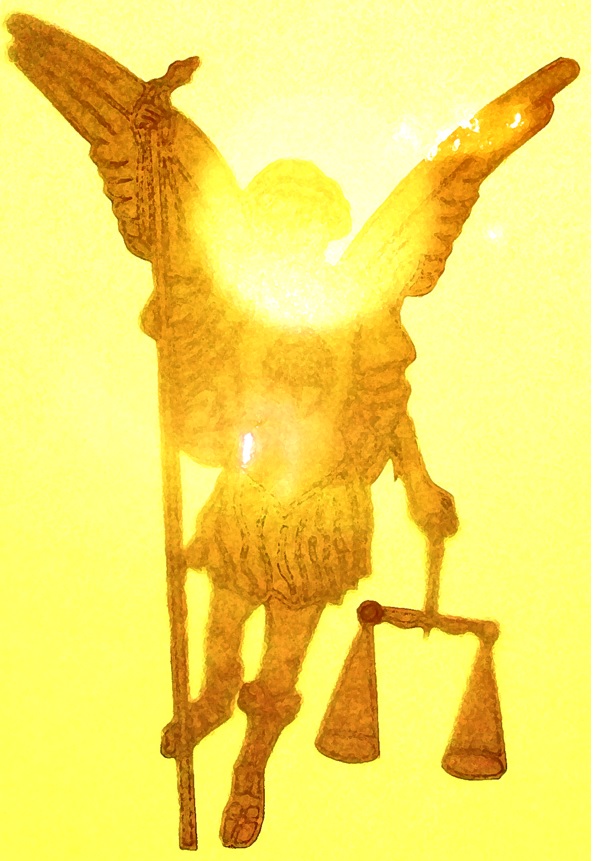
In 1 Corinthians 11:3-16 Paul addresses the cultural issue of wives wearing a head covering while praying & prophesying at the fellowship. Within this context he makes the puzzling statement:
It is for this reason that a woman ought to have authority over her own head, because of the angels.
What exactly does “because of the angels” mean here? There is no clear interpretation since Paul neglects to explain it. As such, the most obvious reading is likely the answer, which is that angels in the spiritual realm participate in worship with humans on earth, specifically the believers of whom they’re assigned (Matthew 18:10 & Psalm 91:11), although it could also refer to the angels assigned to watch over that particular fellowship in Corinth (e.g. Revelation 2:1 & 3:1).
This makes sense when you consider that angels participated in praise & worship when God created the earth & universe (Job 38:4-7). If this reading is true, the angels in the scenario of 1 Corinthians 11:3-16 would evidently be offended by wives disrespecting their husbands in that culture by not wearing a head covering while praying or prophesying. (See this article for why it’s not wise to provoke angels).
Related Topics:
Should Women Cover Their Heads When They Pray & Prophesy?
ANGELS — What Are They? What’s Their Purpose?
How to Enlist the HELP OF ANGELS
Should Women COVER THEIR HEADS When They Pray & Prophesy?

Paul gave a curious instruction to members of the church in Corinth that wives should wear head coverings when they pray & prophesy (1 Corinthians 11:3-16). Is this a universal law for all the churches throughout Christian history or was it simply a cultural thing pertaining to the customs of a certain time & place?
The answer is the latter since Paul’s instruction had to do with respecting the customs of a particular region: Wives in the Corinth church were to show respect for their husbands by having their heads covered when they prayed or prophesied at the gathering, which obviously didn’t apply to single women. Please understand that the Greek word for “woman” or “women” in the New Testament is guné (goo-NAY), which is also the same word used for wife/wives, as observed in verses like Matthew 1:20,24.
A woman wearing a head covering in that culture signified that she was married; in other words, it acknowledged the fact that she had a husband and was therefore ‘taken.’ It’s comparable to a wedding ring in our culture. Or consider the Amish custom of males not having beards unless they’re married. These types of things signal if the person is available or not available in the corresponding culture. Just as going to a formal social occasion without one’s wedding ring would be disrespectful to the spouse in our culture, so a wife not wearing a head covering at the Corinth assembly would be disrespectful to her husband.
Let’s face it, there is nothing intrinsically spiritual about wearing a head covering — a hat of some sort — or not wearing one. So the issue of married women wearing a head covering in public was a cultural thing, just like the length of men’s hair (11:14). It’s also a love-walk issue as was the case with eating meat that had been sacrificed to idols, which Paul covered earlier in chapter 8. Eating meat that was sacrificed to idols and then sold in the marketplace was permissible for believers with strong consciences, but the open practice of it could cause a fellow believer with a weak conscience to fall, which isn’t love, so mature believers had to be wise in the matter, as explained by Paul.
This all ties into the two greatest commands (with three applications): Love God and love others as you love yourself (Matthew 22:35-40). If doing something in a certain situation or culture is going to create unnecessary social havoc and possibly cause a brother or sister to stumble, it’s not walking in love and not conducive to the ministry of God’s Word, both of which link to the believer’s prime directive.
Consider the example of men taking off their hats when entering an abode. This used to be a custom in America, but not anymore. Now we see men wearing hats indoors all the time. Back in the 80s a friend of mine was asked to leave a big fellowship in Columbus because he refused to remove his hat. This was a rule this particular assembly had, possibly because their services were recorded & televised (it was Rod Parsley’s fellowship). By not complying with this custom my friend caused undue strife in the situation (even though he had understandable reasons for not removing his hat). While a small number of churches in America may still have this rule it’s no longer the customary trend for men to automatically take off their hats indoors.
Obviously if you’re at a service of a ministry that has certain rules, the best policy is to go along with the relevant customs for the sake of peace and effective ministry; and even more so if you want to minister to the people and have them receive from you. Keep in mind that Paul wasn’t talking about issues of morality and God’s commands thereof, but rather issues of customary practice, which explains Paul’s reference to “practice” in the context of his instructions (1 Corinthians 11:16).
Say a Scottish assembly had a custom about men having to wear a kilt, particularly if they want to minister in one way or another (e.g. pray, prophesy, teach or preach). This has zero to do with morality, but rather culture. If you’re a guy and you want to minister at this hypothetical Scottish fellowship, what would you do — make waves by objecting to their custom or put on the kilt and serve the people? Obviously the latter. It’s the same principle.
If you’re at a service where the pastor adheres to the belief that women must wear a head covering when ministering (praying, prophesying, whatever) due to Paul’s instructions in 1 Corinthians 11:3-16 then I suggest complying since the pastor is the head of that particular fellowship in the sense of an under-shepherd — under Christ of course (Colossians 1:18, 2:10, 2:19 & 1 Peter 5:1-4). The Bible puts it this way: “everything that does not come from faith [belief] is sin” (Romans 14:23). So, if the pastor believes something is intrinsically wrong — even though it’s not — please respect their belief/custom when functioning at that particular fellowship. It’s a matter of humbly walking in love, peace and harmony for fruit-bearing Christian service.
This is different from complying with a legalistic rule that actually hinders effective ministry. For instance, the Pharisees had a rule against healing on the Sabbath, which Christ refused to obey when a man desperately needed a healing (Mark 3:1-6). In such cases, don’t follow the rule, but rather minister to the people as led of the Holy Spirit and let the stuffy legalists be offended. Such people need rebuked (Proverbs 27:5 & 27:17).
Speaking of legalism, Paul was concerned about wives respecting their husbands during a church assembly in Corinth, which corresponds to his instructions in Ephesians 5:33. In that culture a wife wearing a head covering in public showed respect for her husband, which is good, but such a rule can become uselessly legalistic if the wife just goes through the motions of “respecting her husband” by following the custom, but otherwise has a disrespectful attitude. The Lord denounced this kind of legalism because it’s hypocritical, aka putting on an act (Matthew 23:28 & Mark 7:6).
Related Topics:
Hermeneutics — Proper Bible Interpretation
Legalism — Understanding its Many Forms
Spiritual Growth — The Four Stages
Women of the Bible / Women in Ministry
Bible—Is it Full of Contradictions? Does it Promote Slavery, Tyranny and Discrimination?
Should You PUT OUT A FLEECE to Determine God’s Will?

“Putting out a fleece” refers to trying to determine God’s will in a matter through a sign in an arranged scenario. The phrase comes from Gideon’s actions in this passage:
36Gideon said to God, “If you will save Israel by my hand as you have promised— 37look, I will place a wool fleece on the threshing floor. If there is dew only on the fleece and all the ground is dry, then I will know that you will save Israel by my hand, as you said.” 38And that is what happened. Gideon rose early the next day; he squeezed the fleece and wrung out the dew—a bowlful of water.
39Then Gideon said to God, “Do not be angry with me. Let me make just one more request. Allow me one more test with the fleece, but this time make the fleece dry and let the ground be covered with dew.” 40That night God did so. Only the fleece was dry; all the ground was covered with dew.
Judges 6:36-40
The LORD called Gideon to deliver the Israelites from the oppressive Midianites (verse 14). Yet, despite the Angel of the LORD literally appearing to him in verse 12, Gideon was so humble and understandably unsure of his qualifications (verse 15) that he required further confirmation in order to carry out God’s instructions, which is why he arranges the test with the wool fleece and the dew; not once, but twice.
Since accounts chronicled in the Old Testament serve as lessons to us, the worldwide Church (Romans 15:4; 1 Corinthians 10:11), should New Covenant believers “put out a fleece” to determine God’s will in a situation? I suppose they could if, like Gideon, they are humbled in the situation and have serious doubts, keeping in mind that God deals with us according to the light we have, which corresponds to one’s level of spiritual growth (John 9:39-41, 15:22 & 15:24).
Yet I can’t recommend “putting out a fleece” in good conscience because, unlike Gideon, we believers have the Holy Spirit residing within us for the purpose of divine guidance (John 16:13; Acts 16:6). The Bible says to “let the peace of Christ rule in your hearts” (Colossians 3:15). In other words, what do you have a peace about doing or not doing in a particular situation?
Let me give a recent example. The Lord ministered to me concerning doing something, but I joked with my wife, Carol, about “putting out a fleece” on the matter. Of course I didn’t need to “put out a fleece” because the Spirit had already directed me in my spirit and I had a peace about it (Ephesians 3:16; Romans 8:16). Thus the decision was already made.
Related Topics:
ALTARS & ALTAR CALLS and How They’re Relevant
Is the Holy Spirit God or a Divine Force?
How God Sees YOU (video)
What Are THE BASICS of Christianity?
Who Should You Receive from—OFFICIAL Ministers or INDEPENDENT Ones?

I remember an occasion where I went to the hospital to visit someone. It was in the heat of the summer and so I naturally wore shorts, sandals and a t-shirt (with cut-off sleeves). By happenstance, the woman in the elevator with me was clearly a member of some religious sect in light of her apparel.
Official ministers tend to wear some outward sign that they’re a minister, like a clerical collar; not always, but more so than independent ministers. The latter tend to take the more casual approach in order to fit in à la 1 Corinthians 9:19-23. Despite our polar opposite approaches, both of us were at the hospital for the very same reason, to visit the sick and minister accordingly.
So who do you receive from — official ministers or independent ones? Why not both since the Bible includes each type in the Old and New Testaments? Learn to “eat the meat and spit out the bones,” whether you’re receiving from an official minister or an independent one. This is a modern rephrasing of something encouraged in the New Testament (1 Thessalonians 5:19-21).
Be aware of the strengths and potential weaknesses of both official and independent ministers. Reject the problematic or dubious, but receive the good. If you’re not sure something is scriptural put it on the back burner, so to speak, until you acquire more detailed information in order to draw a proper conclusion.
But don’t just blindly accept whatever your camp/sect/assembly says is true, because it might not be. Keep in mind that all fivefold ministers are human beings with individual quirks. All of them have a downside, all of them. There’s no such thing as a perfect minister, just like there’s no such thing as a perfect church/camp/sect.
However, the minister should be free of sin as a lifestyle and it’s important that they show evidence of the fruit of the spirit on a consistent basis (Matthew 7:15-23; Galatians 5:19-23). They must be completely freed-up from major sin and, when they miss it in smaller areas, they should be humble enough to admit it and spiritual enough to quickly ’fess up, receive forgiveness, and move on (1 John 1:8-9).
If you sense in a minister an abusive, accusatory or rigidly legalistic spirit with little evidence of fruit of the spirit, head to the hills, whether it’s an official minister or an independent one. This is what Christ instructed us to do (Matthew 15:14). Since pride is sin numero uno, arrogance is the worst indicator (Proverbs 16:5 & 8:13). I’m talking about a pompous, boastful, condescending spirit that refuses to ever admit they’re wrong and loves to manipulate.
The starkest evidence of arrogance is when a supposed minister insists that only he/she and their particular group is the “one true church” and every minister/assembly outside their group is false. These types are quick to call anyone a “false teacher” who happens to disagree with their conclusions on any jot or tittle of Scripture. Of course they justify such rash pomposity under the guise of “spiritual boldness.” It’s both eye-rolling and cult-ish.
Needless to say, if you come across one of these types flee for your spiritual welfare. Even if they’re right on a particular issue, so what? Everyone is right about something. Their gross arrogance tells you everything you need to know. Leave them (Matthew 15:14).
Lastly, the doctrines (teachings) a minister teaches/preaches should be as biblical as possible because the Holy Scriptures are the LORD’s blueprint for authentic Christian doctrine and practice (1 Corinthians 4:61; 2 Timothy 3:16-17). Ministers should be held accountable to what God’s Word teaches based on sound hermeneutics.
For biblical evidence to support both official ministers and independent ones see this article.
This article and much more is featured in…

- You can purchase the print book here for only $7.38 (175 pages).
- Or get the Kindle eBook here for only 99¢
Both links allow you to LOOK INSIDE the book.
Related Topics:
Prophets — New Testament and Old Testament (There’s a Difference)
SECTARIANISM — What Is It? What’s Wrong With It?
Ministerial Abuse — The Diotrephes Spirit vs. the Davidic Spirit
Ministerial Pitfalls and Abuses
Should Ministers Be Addressed with Titles?
Legalism — Understanding its Many Forms
Kingdom of God — What Does it Mean?
Roman Catholicism – Is it the “Original Church”? (No)
Why LOYALTY (Faithfulness) Is Important

I remember a couple of old movie stars, like Kirk Douglas, making statements that they didn’t believe men can be monogamous. But this is a copout to commit adultery or live in fornication. It explains why the bride & groom vow to be faithful to one another. In other words, yes, humans — and especially males — have a predilection for successive romantic/sexual partners and this is precisely why it’s necessary for married couples to vow to be committed to one another till death do them part (Proverbs 18:21).
To be faithful is to be loyal. In other words, faithfulness is loyalty. It’s a fruit of the spirit and therefore the opposite of a work of the flesh (Galatians 5:19-23).
Loyalty is underrated these days. Honor the one who wears your ring. Write loyalty on the tablet of your heart — i.e. “love and faithfulness” (Proverbs 3:3) — and your marriage will last, assuming your partner feels the same way. Proverbs 20:28 says that love & faithfulness are crucial to the security of any “throne,” meaning any position of significance. This would include the husband or wife, the nucleus of any healthy family. Speaking of which…
Proverb 19:22 says “unfailing love” is what a person most desires in another. In other words, they want loyalty, faithfulness. Yet Proverbs 20:6 notes how hard it is to find a faithful person. In short, it’s a rare trait.
When looking for a spouse, loyalty should be high up on your list of preferences since it is one of the most priceless qualities for a secure, happy marriage. Perhaps the worst thing for a husband or wife to experience is an impenitent unfaithful spouse. Unfortunately it’s relatively common in this ignoble age.
You could say the same thing about finding a ministry associate or business partner.
Of course, loyalty or faithfulness doesn’t mean there isn’t a time and place for constructive criticism (Proverbs 9:8-9 & Proverbs 27:5-6), which is a form of tough love. Spouses should never condone godless carnality in their mates; and neither should ministry associates or business partners. It’s important to hold one another accountable, assuming it’s in a godly manner as opposed to a legalistic (Pharisaical) spirit.
For more on what the Bible says about love, romance, marriage & sex, pick up a copy of…


- The print book is available here for only $7.26 (171 pages)
- The Kindle eBook is available here for just 99¢!
Both links allow you to LOOK INSIDE the book.
Related Topics:
What’s the Secret of a Successful Marriage?