
What Does It Mean to TAKE UP YOUR CROSS DAILY?

Let’s read the passage in question:
22And he said, “The Son of Man must suffer many things and be rejected by the elders, the chief priests and the teachers of the law, and he must be killed and on the third day be raised to life.”
23Then he said to them all: “Whoever wants to be my disciple must deny themselves and take up their cross daily and follow me. 24For whoever wants to save their life will lose it, but whoever loses their life for me will save it. 25What good is it for someone to gain the whole world, and yet lose or forfeit their very self?”
Luke 9:22-25
The Lord first informs his disciples the grim reality of his ultimate mission on Earth — to die for humanity as a substitutionary sacrifice, which of course opened the door to reconciliation with God and eternal life (Romans 5:10; John 3:16). He then switches to what is expected of his disciples: To deny themselves and take up their cross daily and follow him. To “deny yourself” means to deny the flesh or sinful nature, which you can read about here. It also includes throwing off any “weights” that hinder your service in the Lord (Hebrews 12:1), which you can read about here.
Christ’s instruction to “take up their cross daily” was no doubt startling to his followers since “taking up a cross” literally meant facing the humiliation and horrible pain of Roman crucifixion wherein the condemned were often required to literally carry their cross to the place of execution (and the corresponding hole in the ground where the pole fit).
The difference between the Messiah and condemned criminals of the Roman Empire was that Yeshua laid down his life voluntarily (John 10:15). He asks us to do likewise in a figurative sense: To commit our lives wholeheartedly to the LORD, accepting any humiliation, ridicule and hardship that this eventually brings.
Since starting this ministry in late 2011, for instance, I’ve had to face humiliation and ridicule from arrogant people & slanderers and even lose relationships. These types of challenges are plainly chronicled in the Scriptures:
3Have mercy on us, Lord, have mercy on us,
for we have endured no end of contempt.
4We have endured no end
of ridicule from the arrogant,
of contempt from the proud.
Psalm 123:3-4
29“Truly I tell you,” Jesus replied, “no one who has left home or brothers or sisters or mother or father or children or fields for me and the gospel 30will fail to receive a hundred times as much in this present age: homes, brothers, sisters, mothers, children and fields—along with persecutions—and in the age to come eternal life. 31But many who are first will be last, and the last first.”
Mark 10:29-31
Carol & I have also had to sacrifice certain luxuries, which I won’t go into, but nothing we’ve experienced compares even slightly to the myriad challenges that Paul had to face in service of God’s Kingdom, as detailed in 2 Corinthians 11:16-33.
This is what it means to take up your cross daily and follow the Lord. Keep in mind, however, that God deals with people according to the light they have and this naturally corresponds to the individual’s stage of spiritual growth and calling. If you’re a half-pint, live up to being a half-pint; if you’re a gallon, live up to being a gallon; if you’re a two-ton tank, live up to being a two-ton tank.
Related Topics:
Deny Yourself or Love Yourself — Which is It? (Both)
How to keep BALANCED in every area of Life
How to Walk FREE OF THE FLESH by being Spirit-Controlled
What Are THE BASICS of Christianity?
Should Pastors Schedule OTHER FIVEFOLD MINISTERS at Services?

Pastors of local fellowships should make sure the flock under their care (1 Peter 5:1-4) is regularly exposed to the other fivefold offices, which are detailed in this passage:
11So Christ himself gave the apostles, the prophets, the evangelists, the pastors and teachers, 12to equip his people for works of service, so that the body of Christ may be built up 13until we all reach unity in the faith and in the knowledge of the Son of God and become mature, attaining to the whole measure of the fullness of Christ.
14Then we will no longer be infants, tossed back and forth by the waves, and blown here and there by every wind of teaching and by the cunning and craftiness of people in their deceitful scheming.
Ephesians 4:11-14
The service of the five ministry gifts — apostle, prophet, evangelist, pastor and teacher — enable believers to be fully equipped for service (ministry) in God’s Kingdom, which includes building them up and helping them mature spiritually. Hence pastors should schedule such ministers from time to time.
I was part of a great fellowship in my area from 1986-1996, Carol too (my wife), and the pastor always made sure to schedule other fivefold ministers to serve the congregation and “supply what is lacking in [their] faith” (1 Thessalonians 3:10). Doing this makes for balanced believers rather than off-kilter ones. Why is this important? Because believers who are unbalanced and immature can do more harm than good for God’s kingdom.
Unfortunately, some pastors ignore the other offices in the body of Christ for one reason or another (apostles, prophets, evangelists, teachers) and so believers in these kinds of assemblies are going to have to venture outside their local assembly to feed from these gifts for their own spiritual welfare.
For instance, when I was attending the aforementioned fellowship in my youth I supplemented my spiritual diet with books and tapes by other fivefold ministers, like Hal Lindsey, who’s a teacher in the body of Christ. (Sure, he’s not right on every jot and tittle, but who is? In his areas of expertise he’s exceptional. As they say, “eat the meat and spit out the bones” à la 1 Thessalonians 5:21).
Sometimes the issue for pastors not enlisting the services of other ministers is lack of funds to pay them for teaching/preaching, but there are usually quality fivefold ministers available who will do the work of the ministry without a price tag, keeping in mind that there is no perfect minister or ministry in this fallen world. Yet this doesn’t mean they aren’t skilled ministers who can bless God’s flock in their areas of expertise.
For important details on the fivefold ministry gifts…

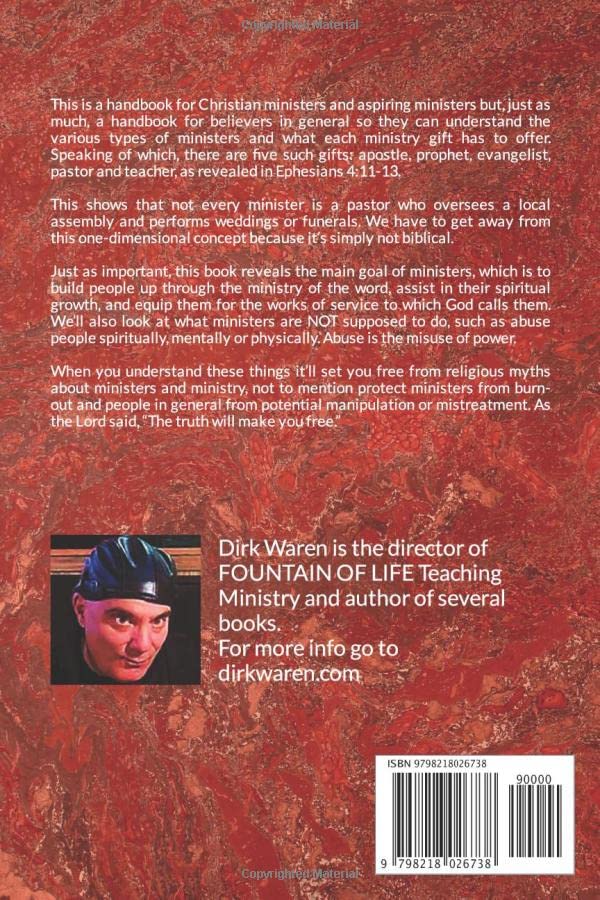
- You can purchase the print book here for only $7.38 (175 pages).
- Or get the Kindle eBook here for only 99¢
Related Topics:
What’s the Difference Between TEACHING and PREACHING?
Who Should You Receive from—Official Ministers or Independent Ones?
OFFICIAL Prophets (Ministers) and INDEPENDENT Prophets (Ministers)
Legalism — Understanding its Many Forms
Religion and Christianity — What’s the Difference?
What Are THE BASICS of Christianity?
INTIMACY WITH GOD and Its Benefits

At its heart, Christianity is about reconciliation with the Creator and therefore relationship with God. The word ‘intimacy’ is usually associated with sex, but what about intimacy with the LORD?
Intimacy just means closeness or warm familiarity and there are different kinds of closeness. For instance, when a man hires a prostitute, they obviously have physical intimacy, but not mental/spiritual intimacy. Job spoke of his friendship with God that he enjoyed in his abode (Job 29:4); he was talking about the intimate communion they had (under an inferior covenant to ours), which explains why the LORD literally boasted of Job in Heaven (Job 1:8 & 2:3). Moses likewise had a close friendship with God (Exodus 33:11; Numbers 12:8).
How do you get close to any person? Spend time with them and honestly communicate, right? As you make a priority of coming near to that person, that person will naturally draw near to you (assuming your intentions are noble). It’s the same thing with the LORD (James 4:8). So, prayer (communion) is key, including praying in the spirit (Ephesians 6:18), but so is soaking yourself with God’s Word and meditation, aka chewing on the Word and the corresponding reflection. The Almighty will speak to you through the Holy Scriptures as you grow in the Word.
Getting quiet with your Creator will enable you to “hear” the Spirit’s “still, small voice,” aka “gentle whisper” (1 Kings 19:11-12). Of course God can speak to us in other ways as well, like through a person or dreams.
The fact that we get close to the LORD through 1. cultivating a personal relationship and 2. growing in God’s Word reveals the distinction of…
- The person of God
- The principles of God’s Kingdom
I encourage developing in both areas equally, as elucidated in this video:
Interestingly, “to know someone” in the Bible is an idiom for having sexual intercourse with him/her (Genesis 4:1). Spiritually speaking, believers are the “bride” of Christ (2 Corinthians 11:2; Ephesians 5:22–33; Revelation 21:2), which bespeaks of a loving relationship with an element of passion, even romance.
In the Old Testament, when the Hebrews foolishly turned to idols, the LORD accused them of adultery, even prostituting themselves to other “gods” (e.g. Jeremiah 2:20; Hosea 2:2). This lover’s kind of passion can also be seen in the New Testament:
4Adulterers and adulteresses! Do you not know that friendship with the world is enmity with God? Whoever therefore wants to be a friend of the world makes himself an enemy of God. 5Or do you think that the Scripture says in vain, “The Spirit who dwells in us yearns jealously”?
James 4:4-5 (NKJV)
Lastly, consider this:
Seclusion is necessary for intimacy;
intimacy is necessary for conception;
conception is necessary for increase;
increase is necessary for
pleasure.
By “conception” I’m referring to the birth of an idea or mission/purpose in any area of your life. You conceive as a result of spending time alone with your Creator (Matthew 6:6). Christ regularly practiced this when he was on Earth (Mark 1:35; Luke 6:12-13; Matthew 14:23; Luke 22:39-41).
Meanwhile increase only manifests when you put your corresponding plan into motion. It means not being lazy; it means getting off your butt. This takes discipline. Remember, God is your “helper,” not your do-everything-for-you-so-you-don’t-have-to-do-anything-at-all-er (Hebrews 13:6; Psalm 121:2).
As you progress in your assignment you will experience the “increase” thereof, which naturally produces pleasure. This can be observed in the Lord’s statement:
“My food,” said Jesus, “is to do the will of him who sent me and to finish his work.”
Christ’s “food” — his sustenance that gave him energy and fed motivation — was to carry forth the assignments the LORD gave him and complete those works. Getting tight with God, discerning God’s will and then carrying out the corresponding assignments is awesome! It creates exciting momentum. This video provides scriptural details on how to do this.
Take Joshua, Moses’ aide: Joshua would often venture into the Tent of Meeting with Moses to experience the presence of the Most High. When Moses departed, Joshua would stay in God’s presence (Exodus 33:11). It’s important sometimes to just be still and know that the LORD is God (Psalm 46:10), which cultivates a “peace that transcends understanding” (Philippians 4:6-7).
What was Joshua’s “conception” and “increase” as a result of this intimacy with the LORD? None other than leading the Hebrews into the Promised Land of Israel to conquer it (Numbers 27:23; Joshua 1). While this was a challenging undertaking, it was also his “pleasure” to fulfill it. And that’s why we’re here talking about Joshua almost 3500 years later!
Related Topics:
Is Christianity a “RELATIONSHIP With God”?
Praise & Worship—What’s the Difference? Why are they Important?
Hermeneutics—Proper Bible Interpretation
What Can We Learn From JOB’S “FRIENDS”?

In the first two chapters of the book of Job we observe Job being hailed by God as a blameless, upright man with “no one on earth like him” (Job 1:8). Satan responds by arguing that Job was devout simply because God blessed him. In other words, he was “in it” solely for the blessings. Thus the LORD allows the devil to attack Job in which the man winds up losing all his children, his great wealth, his numerous employees except for four and even his health as his entire body is afflicted with painful boils (Job 1-2).
Job’s three friends — Eliphaz, Bildad and Zophar — hear about his extraordinary troubles and come to sympathize with him and comfort him. The main body of this unique book of the Bible consists of Job dialoguing back-in-forth with these three “friends” (although quite a bit of what Job says is directed at the Almighty).
No less than 9 chapters are devoted to the verbiage of these three individuals and 15 when you include the fourth friend, a young guy named Elihu. This is in comparison to 20 chapters for Job. The question is, what can we learn from these four men in these numerous chapters wherein they seemingly “minister” to the suffering Job?
Here are a few insights…
Be Careful NOT to Make Rash Judgments and Accuse Accordingly
I have no doubt that the initial intention of Eliphaz, Bildad and Zophar was to comfort their agonizing friend — Elihu too — but they quickly fell into myopic judgments and accusations of great sin. The problem with making erroneous judgments based on limited information and then voicing the conclusions is that it’s a form of slander, which naturally poisons the minds of listeners against a person who’s not guilty of the things said. Keep in mind that satan is the false accuser of brothers & sisters in Christ (Revelation 12:10) and, in fact, the Greek word for ‘devil’ literally means “slanderer” or “false accuser” (which you can observe here). In other words, any one who practices false accusation is acting like satan!
Do you want to be like satan? Obviously not. Then please resist making rash judgments & the corresponding fallacious accusations about things in which you have limited knowledge.
This is the main reason the LORD was angry with Job’s friends (Job 42:7). They didn’t have access to what went down in the spiritual realm before Job’s great trial, so they arrogantly assumed Job committed some heinous sin, which brought about his terrible losses and sufferings (Job 15:5, 22:5 & 22:10). The problem with this is that it wasn’t true, not even remotely! In truth, Job was the most blameless, upright man of the face of the Earth at the time and God literally boasted of him in Heaven (Job 1:8)! Even more, his righteousness is what attracted the great satanic attack.
Speaking of which, for anyone who thinks Job opened the door to his satanic attacks through fear, see this article.
Be Careful NOT to Cite General Principles as Absolutes
The bulk of what the four friends say to Job is true, as far as general principles go (similar to the sayings in the book of Proverbs), and this explains why Paul quoted Eliphaz in the New Testament (1 Corinthians 3:19). Yet general principles aren’t always true. For instance, consider Eliphaz’ statement:
7“Consider now: Who, being innocent, has ever perished?
Where were the upright ever destroyed?
8As I have observed, those who plow evil
and those who sow trouble reap it.
Job 4:7-8
To sin means to “miss the mark” by failing morally and so the practice of sin naturally brings negative results to which there are consequences (Numbers 32:23, Romans 6:23 & James 1:15). This is a general truth. A person who “plows evil” will reap trouble if s/he doesn’t repent (and, even then, there are often natural consequences to sin even though God forgives the penitent, like after committing sexual immorality or a crime). However, it’s not absolutely true that the innocent never perish prematurely and the upright are never destroyed.
Some bad things that happen are simply accidents in a fallen world (Luke 13:1-5) while other misfortunes are the result of contact with a person who chooses to sin, such as being the victim of a criminal. Also, some sufferings are actually the consequence of practicing truth and living a godly life (Matthew 13:21 & 2 Timothy 3:12). For example, righteous Stephen was stoned to death after being slandered by false witnesses (Acts 6:8-7:59) and of course the sinless Christ was unjustly executed (Hebrews 4:15 & 1 Peter 3:18).
The simplistic theology of Job’s friends boiled down to: God blesses the godly and punishes the ungodly. They had no category for what was happening to Job and erred due to their ignorance.
Be Compassionate When Someone Is Suffering
To be compassionate means to have sympathetic understanding toward those who are suffering in some way. Rather than sympathize with Job and console him, the three friends wasted no time in designating him as their opponent in a big theological debate. Focused on winning, they pounded away at Job’s perceived flaws with their pride being at stake; young Elihu wasn’t much different.
Related Topics:
TEMPTATION, TRIALS and TESTS — What’s the Diff?
SPIRITUAL WARFARE — Do You Know What You’re Fighting For?
Spiritual Development — The Four Stages
Spiritual Growth is Like Climbing a Mountain
Spirituality — How to be Spirit-Controlled Rather than Flesh-Ruled
TEMPTATION, TRIALS and TESTS — What’s the Diff?

Let’s define each…
Temptation is due to the cravings of one’s flesh or sinful nature, which is the satanic nature (James 1:14).
Trials are separate from temptations, although you can of course undergo a temptation during a trial. For instance, Christ experienced hunger during his 40-day fast in the desert and so his flesh no doubt tempted him to break it (Matthew 4:1-4).
Tests are related to one type of trial. To explain, there are three kinds of trials:
- Self-Inflicted Trial (SIT)
- Discipline-Intended Trial (DIT)
- Maturity-Intended Trial (MIT).
God’s tests for any believer only apply to the third type, a Maturity-Intended Trial, aka an MIT. Here’s an explanation of each:
- SITs are obvious; they’re the result of one’s own folly, like being injured due to reckless driving and the resulting wreck or suffering physically due to a junk food diet. In both cases the person’s travails are not due to some satanic plot, but simply his/her foolish choices. The answer to SITs is simply learning wisdom.
- A DIT means that one (or more) of the five curses of the law is hitting you due to disobedience, whether a sin of commission or a sin of omission. The five general curses of the law are detailed in Deuteronomy 28:15-68: 1. physical ailments, 2. mental maladies, 3. defeat to human enemies, 4. premature death and 5. financial lack. If you are hit with one of these curses and you discern it’s due to sin and is not a Maturity-Intended Trial (a MIT, described below), immediately ’fess up and God will dismiss the charge (1 John 1:8-9); then take up your spiritual weapons and fight the good fight of faith until the curse departs (Ephesians 6:10-18; 1 Timothy 6:12).
- An MIT means that the curse is striking you for righteousness’ sake (not disobedience) and the LORD is allowing the enemy to assault you in order to test your character and, once your character is proven, turn the negative situation around to your good (Romans 8:28). That’s the genius of MITs: God takes something in which the enemy intends to destroy you with—or, at least, hinder you—and ultimately turns it around to your good, making you “strong, firm and steadfast” “after you have suffered for a little while” (1 Peter 5:8-10). Of course, this is providing you fulfill your role by fighting the good fight of faith and enduring. (Remember: the LORD is your “helper,” not your do-everything-for-you-so-you-don’t-have-to-do-anything-at-all-er). This is precisely what happened with Joseph (Genesis 50:20).
However, not every one of God’s tests involves a curse striking you. The LORD could simply give you a challenging instruction to see whether or not you obey it, like God’s instruction for Abraham to sacrifice his child Isaac, which was a type of Father God sacrificing the Son for the sins of the world (Genesis 22:1-18; John 3:16).
As for persecutions, these are simply the result of putting God’s Word into practice and living a godly life (Matthew 13:21; 2 Timothy 3:12). This naturally draws satanic attack because the believer automatically becomes a threat to the kingdom of darkness. Since practicing the truth and walking in godliness relates to growing spiritually, and therefore spiritual maturity, persecutions for righteousness’ sake would fall under the category of MITs.
For important details on these things, see this article:
Related Topics:
Spiritual Development — The Four Stages
Spiritual Growth is Like Climbing a Mountain
Spirituality — How to be Spirit-Controlled Rather than Flesh-Ruled
What Are THE BASICS of Christianity?
SPIRITUAL REBIRTH: Is Being “Born Again” Biblical?
It amazes me when I come across believers, especially ministers, who play down or write-off spiritual regeneration as core to the Christian experience. Let’s start with the fact that the doctrine of baptisms is the third doctrine of Christianity, according to Hebrews 6:1-2, and the very first baptism that a believer experiences is spiritual baptism, which is the baptism into Christ.
Notice what Scripture says about this baptism:
26So in Christ Jesus you are all children of God through faith, 27for all of you who were baptized into Christ have clothed yourselves with Christ.
Galatians 3:26-27
Or don’t you know that all of us who were baptized into Christ Jesus were baptized into his death?
This baptism is not water baptism, but rather refers to being spiritually born-again through Jesus Christ.
He saved us, not because of righteous things we had done, but because of his mercy. He saved us through the washing of rebirth and renewal by the Holy Spirit
Water baptism isn’t as important as the baptism into Christ since water baptism is merely the symbolic testimony of what has already taken place spiritually through the baptism into Christ. What’s more important, the inward baptism or the outward baptism that represents it?
The reason the baptism into Christ is a foundational doctrine of Christianity is because it’s impossible to be a Christian apart from this new spiritual birth. If someone says they’re a believer, but aren’t spiritually regenerated then they’re a Christian in name only and aren’t genuinely saved.
Notice that this spiritual rebirth is by the Holy Spirit, which was also corroborated by the Lord:
3Jesus replied, “Very truly I tell you, no one can see the kingdom of God unless they are born again. ”
4“How can someone be born when they are old?” Nicodemus asked. “Surely they cannot enter a second time into their mother’s womb to be born!”
5Jesus answered, “Very truly I tell you, no one can enter the kingdom of God unless they are born of water and the Spirit. 6Flesh gives birth to flesh, but the Spirit gives birth to spirit.”
While the Holy Spirit gives spiritual rebirth, it’s through the imperishable seed of the Word of God, which is Christ (John 1:1-2):
For you have been born again, not of perishable seed, but of imperishable, through the living and enduring word of God.
Although ‘seed’ in the Greek here is spora, it’s a different Greek word in this verse:
No one who is born of God will continue to sin, because God’s seed remains in them; they cannot go on sinning, because they have been born of God.
Those who are “born of God” cannot “go on sinning” in the sense of practicing sin as an unrepentant lifestyle. We know this is the proper interpretation because other verses plainly point out that all believers miss it from time to time, but are expected to “keep with repentance” by ‘fessing up and receiving God’s forgiveness (Matthew 3:8; 1 John 1:8-9).
Notice the reference to “God’s seed.” All genuine believers are born of the imperishable seed of Christ through spiritual rebirth. The difference between this verse and 1 Peter 1:23 (above) is that the Greek word for ‘seed’ is sperma, the Greek word for sperm. In other words, believers are born-again spiritually via the imperishable sperm of Jesus Christ!
Here are some additional verses for those who require further evidence of spiritual rebirth in the Scriptures:
He chose to give us birth through the word of truth, that we might be a kind of firstfruits of all he created.
Praise be to the God and Father of our Lord Jesus Christ! In his great mercy he has given us new birth into a living hope through the resurrection of Jesus Christ from the dead,
“The wind blows wherever it pleases. You hear its sound, but you cannot tell where it comes from or where it is going. So it is with everyone born of the Spirit.”
12Yet to all who did receive him, to those who believed in his name, he gave the right to become children of God— 13children born not of natural descent, nor of human decision or a husband’s will, but born of God.
Therefore, if anyone is in Christ, the new creation has come: The old has gone, the new is here!
It is through spiritual regeneration by the Holy Spirit through the seed (sperm) of Christ that believers become children of God and are thus “new creations.”
Needless to say, if you come across any minister or group that says people don’t have to be spiritually reborn to be a Christian they should be rejected as false teachers. As Christ said about the false teachers of his day:
“Leave them; they are blind guides. If the blind lead the blind, both will fall into a pit.”
Related Topics:
The Six Basic Doctrines of Christianity
The Fall of Man (Humanity) and Slavery to Satan
REDEMPTION — God’s Plan of Liberation for Humanity & Creation
How to Keep Yourself BLAMELESS (While Not Being SINLESS)
What Is the Doctrine THE LAYING ON OF HANDS?

The laying on of hands is the fourth basic doctrine of Christianity, as detailed here:
1Therefore let us move beyond the elementary teachings about Christ and be taken forward to maturity, not laying again the foundation of repentance from acts that lead to death, and of faith in God, 2instructions about on baptisms, the laying on of hands, the resurrection of the dead, and eternal judgment.
Hebrews 6:1-2
This doctrine refers to the transference of four things through physical contact:
- Blessing,
- Anointing and consecration for service, i.e. ministry,
- The baptism of the Holy Spirit,
- Healing or deliverance.
Healing or deliverance includes physical, mental and spiritual healing/deliverance, not just physical.
To illustrate how important this often neglected doctrine is, allow me to share a personal story…
Around 1992 I was a growing believer (since turning to the Lord in March, 1984, at the age of 20). I found myself in a spiritual malaise. No, I wasn’t in sin, but I felt a darkness enveloping me. I was able to function and go to work, etc. but there was a pall of depression over me wherein I had lost my peace and joy. Prayer and Bible reading at home wasn’t breaking the malaise so I went to a night service at my local assembly, hoping for deliverance. The Praise & Worship was great as usual as was the ministry of the Word, not to mention the fellowship.
Yet, as I walked down the hallway to depart the service the malaise was still upon me. That’s when I ran into an associate pastor and we exchanged pleasantries. Being somewhat desperate, I told him about the malaise I was experiencing and he wasted no time in taking me to a nearby room in which he said a simple prayer and then touched my abdomen with his finger. I discerned power flowing from his fingertip into my torso and then throughout the rest of my body, every limb. The dark malaise was absolutely gone and I walked out of the facility healed and blessed.
The point is that praise & worship didn’t deliver me in this situation, neither did the ministry of the Word nor fellowship. I received deliverance solely through the ministry of the laying on of hands.
For anyone who doesn’t believe such holy power is biblical, keep reading, particularly the fourth section below, Healing and Spiritual Deliverance.
Now let’s look at each of the four purposes of the laying on of hands:
Blessing (or General Prayer)
Christ placed his hands on children and blessed them (Mark 10:13,16 & Matthew 19:13,15). To ‘bless’ someone means “to speak positive words that have a productive impact.” The official priestly prayer supports this definition (Numbers 6:22-27) and you can find these types of prayer/blessings all over the Bible, e.g. Romans 15:13 and Colossians 1:9-12.
Blessing or prayer in this manner is so important because words “have the power of life and death” (Proverbs 18:21). Whether people know it or not, our words bring life or death, blessing or cursing. Proverbs 12:18 reinforces this: “Reckless words pierce like a sword, but the tongue of the wise brings healing.”
Needless to say, the idea that “words can never hurt me” is a lie.
Kids and youths are especially vulnerable to “reckless words” or verbal abuse, particularly from authority figures in their lives (Colossians 3:21). Adults who continually berate, belittle and call children names are speaking a prophecy of death and destruction over them (!).
Blessing, by contrast, is a prophecy of life, which is why the Lord laid his hands on children and blessed them.
Words are powerful by themselves and adding the dimension of touch magnifies their impact.
Anointing/Separation for Ministry
Hands are to be lain on those called of God to special service. Biblical examples include the Levites (Numbers 8:10-11), Joshua, (Numbers 27:18-23), Stephen & six others (Acts 6:1-6) and Saul & Barnabas (Acts 13:2-3).
Obviously the people who qualify for such a rite of passage should already be full of faith, God’s Word and the Spirit, as was the case with Joshua and Steven in the aforementioned examples. The laying on of hands simply provides a stronger anointing to fulfill their God-given assignment.
Paul instructed his young protégé, Timothy, to not be “hasty in the laying on of hands” (1 Timothy 5:22) because potential ministers must be tested for character and faithfulness and there’s no test like the test of time. Those who hastily confirm untested ministers share responsibility for the damage they eventually do to people and will have to give account to the Lord at the Judgment Seat (2 Corinthians 5:10).
The Holy Spirit Baptism
Hands are to be laid on believers to receive the baptism of the Holy Spirit, which is evidenced by speaking in tongues (Acts 19:1-7).
While this powerful gift is typically received this way—i.e. through someone who has it—a believer can also receive it simply through faith in God’s Word (Luke 11:9-13). In other words, believers don’t absolutely need a human conduit for the gift to be transferred. We’ll look at this more in the next section.
For details on the Holy Spirit baptism and glossolalia see this article.
Healing and Spiritual Deliverance
Christ said that believers “will place their hands on sick people, and they will get well” (Mark 16:17-18).
The book of Acts says “God anointed Jesus of Nazareth with the Holy Spirit and power, and… he went around doing good and healing all who were under the power of the devil, because God was with him” (Acts 10:38). We see evidence of this throughout the Gospels. A few good examples of the Holy Ghost power available to believers for ministry to those in need include:
One day Jesus was teaching, and Pharisees and teachers of the law were sitting there. They had come from every village of Galilee and from Judea and Jerusalem. And the power of the Lord was with Jesus to heal the sick.
and the people all tried to touch him, because power was coming from him and healing them all.
But Jesus said, “Someone touched me; I know that power has gone out from me.”
Here are some other examples plus important additional info:
- The Lord laid hands on sick people and healed them or exorcized demons from them (Luke 4:40-41).
- A woman who was subject to bleeding for twelve years heard about Jesus’ anointing to heal and therefore had faith to receive healing from him (Mark 5:25-34). When the woman touched his cloak the Messiah sensed “power had gone out from him” (verse 30).
- Christ had an anointing to heal, but his ministry was very limited in his hometown because of the people’s lack of faith due to a “spirit of familiarity”—meaning they were so familiar with Jesus during his first three decades that they couldn’t acknowledge his divine anointing and receive from it (Mark 6:1-6). This example reveals that receiving a healing is a matter of faith in regards to the person praying (i.e. the human conduit of God’s power), as well as the recipient of the healing, which shows that receiving a healing via a human conduit involves a combination of faith. Needless to say, there’s power in agreement (Matthew 18:20 & Leviticus 26:8).
- People with the greatest faith, however, do not require hands to be laid on them for healing or deliverance. This type of faith accepts the LORD at His Word, like the centurion from Matthew 8:5-10,13. In other words, they don’t require a human conduit to receive healing or deliverance from God, which you can get details on in this video. As noted earlier, the Baptism of the Holy Spirit can be received this way (Luke 11:13).
Important Points on Transmitting the Anointing, aka God’s Holy Power
Here are several things to keep in mind when you lay hands on people to bless, pray, heal or deliver:
- Only make physical contact when you are ready to release your faith, as can be observed with Paul in Acts 28:8.
- While praying over someone, you will sense your faith reaching its peak; that’s when you should make contact.
- Children may freak out a bit when you lay hands on them because the anointing—God’s power (Luke 5:17, 6:19 & 8:46)—is new to them, but don’t let it derail you. Be at peace and keep ministering in faith, as led of the Holy Spirit.
- God’s anointing is like electricity flowing through you and your hand is the conductor for this power like an electricity cable.
- When you experience the anointing you’ll naturally get excited, which is great; just be careful not to absorb it through excessive shouting, laughing and leaping; rather channel it to those who need it. In short, don’t waste the anointing—get your hands on someone!
- Since your words and hands are the primary vehicles in which the Spirit transmits the anointing to others don’t waste words or motions. Watch your words and actions and be careful not to do anything that will drain or lose the anointing, including grieving the Holy Spirit (Ephesians 4:30).
- Put your words and motions in a direct line and use them to bring healing or deliverance to those in need. It’s akin to using a rifle: You aim it at the appropriate target in order to hit it. Wasting words and motions will cause you to miss the target.
- If you want God’s power to operate strongly in your life, as was the case with The Christ (Acts 10:38), you must discipline yourself to spend time with the LORD. In other words, saturate yourself with God through praise, worship, the Word and prayer. You can’t run around gabbing and doing frivolous things—watching TV, playing golf or computer games, etc.—right before a ministry engagement and expect the anointing to be strong when you minister.
- The anointing flows out of your inmost being like rivers of living water out of the very core of your soul/spirit (John 7:37-39). As such, you must protect the anointing so that it’ll be there when you need it.
- You can’t give something if you don’t have it and therefore you can’t expect the anointing to flow out of you if you haven’t prepared yourself beforehand to operate in God’s power. You must never allow people or things to rob you of your worship/Word/prayer time, particularly before you’re scheduled to minister. Turn off your phone.
Many Christians unfortunately don’t know much about the laying on of hands. This article reveals its importance.
Related Topics:
The Six Basic Doctrines of Christianity
Can the Power/Anointing of God Rest on an Object?
“SLAIN IN THE SPIRIT”—Is It Biblical?
WORDS have the Power of Life and Death
Dunamis (Dynamite) POWER — Is Within YOU!
What Is the BETTER RESURRECTION Noted in Hebrews 11:35?

The Hall of Faith chapter of the Bible makes a statement that some have found puzzling:
Women received back their dead, raised to life again. There were others who were tortured, refusing to be released so that they might gain an even better resurrection.
The contrast in this verse is between:
- Women in the Old Testament period who received back their dead, such as the widow of Zarephath’s son in 1 Kings 17:17-24,
- And those in the Old Testament era who were persecuted in captivity, refusing to deny their faith in the LORD for quick release so that they might acquire an even better resurrection.
To explain, the widow only received her son back to this temporal life whereas the latter people were looking forward to the resurrection unto eternal life, which is obviously the better resurrection (John 5:29). Keep in mind that contextually Christ was specifically referring to the resurrection of Old Testament saints (Daniel 12:2; Matthew 19:28).
Which is preferable: Being brought back from death to this fallen world with an aging, perishable body or being resurrected to eternal life in the New Heavens and New Earth with a glorified, imperishable body (1 Corinthians 15:42-44)? There’s no comparison. The latter is the “better resurrection” by far.
Related Topics:
What Will the Believer’s GLORIFIED BODY Be Like?
RESURRECTIONS: Firstfruits, Harvest & Gleanings
The Believer’s INTERMEDIATE STATE (Between Physical Death and Bodily Resurrection)
Q&A on SHEOL / HADES, the Intermediate State of the Unsaved
How Often Should You Say “IN THE NAME OF JESUS” in Prayer?

Christ taught that we are to pray to the heavenly Father in the famous prayer outline from Matthew 6:5-13. He likewise noted this principle in the gospel of John, adding that we are to pray in His name:
In that day you will no longer ask me anything. Very truly I tell you, my Father will give you whatever you ask in my name.
The Lord also stressed this in John 15:16.
All of this reveals prayer protocol: We are to pray…
- to the Father
- in the name of the Son
- by the help & leading of the indwelling Holy Spirit (John 16:13 & Romans 8:14).
It might help to understand that, while the LORD is one (Deuteronomy 6:4 & Isaiah 45:5,6,18), there’s a tri-unity within that Oneness, which explains why Christ said “Anyone who has seen me has seen the Father” and “I and the Father are one” (John 14:9, John 12:45 & John 10:30).
If we are to pray in the name of Jesus Christ, why didn’t the Lord mention this when he taught the disciples how to pray in Matthew 6:5-13? Likely because he was talking about believers praying to the heavenly Father alone, as observed in verse 6 and verse 9.
In other words, when you are praying alone with God you don’t necessarily have to throw in “in the name of Jesus” because the LORD – who indwells you by the Holy Spirit (1 Corinthians 3:16 & Romans 8:9) – already knows you’re praying in Jesus’ name because you are in relationship, a core truth of Christianity.
Whilst Christ was referring to an ‘official’ prayer session with your Creator in Matthew 6:5-13, you can be in constant fellowship (communion, prayer) with the LORD throughout your day, even when you’re in bed (Psalm 63:6). Paul referred to this as “praying without ceasing” (1 Thessalonians 5:17 KJV) and the “fellowship of the Holy Spirit” (2 Corinthians 13:14).
I’ve learned to do this in my daily walk and it’s wonderful, adding warmth and a sense of communion to your solitary mundane activities throughout the day. This explains why Danny Chambers cries out “I’m never alone” in this song.
I’ll be doing something around the house or yard, or lying down, and say something like “I love you, Lord.” I bring this up to make a point. Wouldn’t it be silly for me to add “in the name of Jesus” every time I merely shared something with the LORD in the course of my day? For instance, “O God, I’m so thankful [for this or that]; I say this in the name of Jesus, so there’s no misunderstanding.” Are you following?
However, if you’re with other believers, I’d definitely include “in the name of Jesus” or “in Christ’s name” somewhere in the prayer, like “Heavenly Father, we come to you in the name of Jesus Christ…” or conclude with it. That way there’s no mistake to anyone present that it’s a Christian prayer addressing the Judeo-Christian God through Jesus Christ.
Speaking of which, an outstanding pastor I know in my area was asked to say a prayer at a public event. He spoke a good prayer over the proceedings and everything was fine until he closed with “in the name of Jesus Christ we pray, amen.” Backstage he was rebuked by the city officials for including that particular statement because – being a public event – there were many non-Christians present, including those who embraced Judaism.
This brings up the question: Should you omit saying “in the name of Jesus Christ” on such occasions? You’ll have to be led of the Holy Spirit and do what you have a peace about doing (Colossians 3:15). Personally, I don’t have a problem omitting the line in such a scenario since, if you refuse to omit it, the officials will simply get someone else to say a prayer for the event, which could be someone of, say, dubious theology. Keep in mind that God knows in such a situation that you’re praying in the name of Jesus and so do most other believers present. As for unbelievers, it could lead to one asking you about the LORD, which would open the door to sharing the gospel.
Related Topics:
When You Should Pray “IF IT BE YOUR WILL” and When You Shouldn’t