
Is There Such a Thing as RIGHTEOUS ANGER?

We tend to look down on anger and for good reason in light of passages like these:
A fool gives full vent to his anger, but a wise man keeps himself under control.
An angry person stirs up conflict, and a hot-tempered person commits many sins.
As such, the Bible discourages being a hot-tempered fool while emphasizing self-control (Proverbs 16:32) and the wisdom of turning away anger in tense situations (Proverbs 29:8).
However, there is a place for righteous anger on occasion, like when Christ was angry with the legalists who objected to his healing a man’s hand on the Sabbath:
1Another time Jesus went into the synagogue, and a man with a shriveled hand was there. 2Some of them were looking for a reason to accuse Jesus, so they watched him closely to see if he would heal him on the Sabbath. 3Jesus said to the man with the shriveled hand, “Stand up in front of everyone.”
4Then Jesus asked them, “Which is lawful on the Sabbath: to do good or to do evil, to save life or to kill?” But they remained silent.
5He looked around at them in anger and, deeply distressed at their stubborn hearts, said to the man, “Stretch out your hand.” He stretched it out, and his hand was completely restored. 6Then the Pharisees went out and began to plot with the Herodians how they might kill Jesus.
Mark 3:1-6
Another good example is when the Lord cleansed the Temple like a holy terror on two occasions (separated by three years):
13When it was almost time for the Jewish Passover, Jesus went up to Jerusalem. 14In the temple courts he found people selling cattle, sheep and doves, and others sitting at tables exchanging money. 15So he made a whip out of cords, and drove all from the temple courts, both sheep and cattle; he scattered the coins of the money changers and overturned their tables. 16To those who sold doves he said, “Get these out of here! Stop turning my Father’s house into a market!” 17His disciples remembered that it is written: “Zeal for your house will consume me.”
John 2:13-17
15On reaching Jerusalem, Jesus entered the temple courts and began driving out those who were buying and selling there. He overturned the tables of the money changers and the benches of those selling doves, 16and would not allow anyone to carry merchandise through the temple courts. 17And as he taught them, he said, “Is it not written: ‘My house will be called a house of prayer for all nations’ ? But you have made it ‘a den of robbers.’ ”
18The chief priests and the teachers of the law heard this and began looking for a way to kill him, for they feared him, because the whole crowd was amazed at his teaching.
Mark 11:15-18
Since the Messiah was “without sin” (Hebrews 4:15), he did not sin on these occasions despite his anger. In short, you can be angry and not sin (Ephesians 4:26).
The key is to 1. always be led of the Spirit (Romans 8:14) and 2. “do everything in love,” even when you’re doing something bold or radical:
13Be on your guard; stand firm in the faith; be courageous; be strong. 14Do everything in love.
1 Corinthians 16:13-14
This is in line with the law of Christ. To explain, the only law New Covenant believers are under is the law of Christ, which is the law of love (Galatians 6:2; 1 Corinthians 9:21). This law corresponds to the two greatest moral commands of the Bible, as revealed here:
36“Teacher, which is the greatest commandment in the Law?”
37Jesus replied: “ ‘Love the Lord your God with all your heart and with all your soul and with all your mind.’ 38This is the first and greatest commandment. 39And the second is like it: ‘Love your neighbor as yourself.’ 40All the Law and the Prophets hang on these two commandments.”
Matthew 22:36-40
There are three applications to these commands:
- Love God
- Love others
- As you Love yourself
Anyone who does this automatically fulfills all the moral law of the Torah. As it is written: “Love does no harm to a neighbor. Therefore love is the fulfillment of the law” (Romans 13:10).
Yet there is such a thing as walking in tough love when necessary and led of the Spirit. Thus when Christ radically cleared the temple it was an act of love – love for God and love for the people. It wasn’t a time for gentle, soft love; it was time to break out the whip and render tough love by the dynamite power of the Holy Spirit!
Make no mistake, Yeshua did those ungodly clods a favor when he sternly rebuked them and drove them out of the Temple on the two separate occasions. Those who possessed even an iota of wisdom learned an unforgettable life-changing lesson. Remember:
5Better is open rebuke
Than love that is concealed.6Faithful are the wounds of a friend,
But deceitful are the kisses of an enemy.Proverbs 27:5-6
There are other examples of biblical saints walking in righteous anger on relatively rare occasions, like Nehemiah (Nehemiah 13:23-27), Peter (Acts 8:18-24) and Paul (Acts 13:8-12).
While all this is true, it’s not an excuse to fly into a carnal fit of rage. After all, fits of rage – outbursts of carnal anger – are works of the flesh while self-control is a fruit of the spirit (Galatians 5:19-23). We are discussing righteous anger here, not carnal anger.
So be careful not to sin when you experience righteous anger (Ephesians 4:26). Resist the temptation to be a hotheaded, reckless fool (Proverbs 14:16 & 14:17) and always shun the fleshly bent toward authoritarianism and machismo posturing, including authoritarian tactics like bluster, intimidation and unnecessary insults. Channel your righteous anger positively as led of the Spirit, like Christ, Peter and Paul.
Related Topics:
Is There Such a Thing as RIGHTEOUS HATRED or RIGHTEOUS ENMITY?
The Four Types of LOVE in the Bible
Jesus Christ — Milksop or Mighty Lord?
What Does Love “Always Protects” Mean?
Ministerial Pitfalls and Abuses
What Are THE BASICS of Christianity?
FRUIT THAT WILL LAST & Why It’s Linked to Answered Prayer

The Lord made this interesting statement:
“You did not choose me, but I chose you and appointed you so that you might go and bear fruit—fruit that will last—and so that whatever you ask in my name the Father will give you.”
What exactly is “fruit that will last? And why did he link it to answered prayer? The answers are a little convoluted, but everything makes sense once we put the pieces of the puzzle together…
The Greek word for ‘fruit’ in this verse is karpos (kar-POSS), which is the same word for the fruit of the spirit in Galatians 5:22-23. Producing the fruit of the spirit—love, joy, peace, patience, kindness, etc.—is the result of walking in spirit as opposed to walking in the flesh; in other words, being spirit-controlled rather than flesh-ruled.
In certain contexts ‘fruit’ can be a work too, such as the sacrifice of praise being the “fruit of lips” that confess Christ in Hebrews 13:15. Or consider the “harvest” of new believers Paul talked about in Romans 1:13-16. Literally speaking, a ‘harvest’ doesn’t just apply to a crop of grains, but fruits or vegetables as well.
Bearing Fruit in Every Good Work
I bring up fruit and works because the Bible exhorts believers to “bear forth fruit in every good work” (Colossians 1:10), which shows that we’re to produce fruit of the spirit while performing whatever good work we do. This reveals that it is possible to do a good work and not produce fruit of the spirit doing it, like love, which is the primary fruit of the spirit and “binds them all together in perfect unity” (Colossians 3:14). In short, you can do a good work in the flesh, such as give to the poor, go to assembly, sing a worship song, teach a sermon or preach the message of Christ.
For instance, Carol & I were treated out to eat at a fancy restaurant by a couple, but the husband’s heart obviously wasn’t into it. He was doing a “good work,” sure, but he wasn’t walking in the spirit doing it. While the food was good, fellowshipping with the guy wasn’t enjoyable. Carol & I would much rather eat lesser food in a more modest environment with a spirit of love à la Proverbs 15:17.
Works That Will Last vs. Works That Will Be Burned Up
The works we produce will be tested at the judgment seat of Christ wherein any works produced from the flesh or fleshly motives will be categorized as “wood, hay and straw” and burned up. In other words, they won’t last. This can be observed here:
11For no one can lay any foundation other than the one already laid, which is Jesus Christ. 12If anyone builds on this foundation using gold, silver, costly stones, wood, hay or straw, 13their work will be shown for what it is, because the Day will bring it to light. It will be revealed with fire, and the fire will test the quality of each person’s work. 14If what has been built survives, the builder will receive a reward. 15If it is burned up, the builder will suffer loss but yet will be saved—even though only as one escaping through the flames.
1 Corinthians 3:11-15
Although this passage contextually refers to the testing of the work of pastors and teachers, aka fivefold ministers, we can apply it to all Christians because every believer is called to serve the Lord on this Earth, even though the majority is not called to pastoral/teaching ministry. Each Christian will have works that God calls him or her to do and these works will be appraised at the Judgment Seat of Christ (2 Corinthians 5:10).
For example, God will call Christians to witness to certain people in their lives; this work will ultimately be tested at the Judgment Seat. Their motives will be evaluated: Did they witness to these people because they love them as God loves them and are following the leading of the Holy Spirit or did they witness to them to fulfill an evangelistic quota or to appear pious? Both of these smack of religious legalism as opposed to genuine Christianity. Needless to say, works produced from fleshly motives are “wood, hay and straw” and will be burned up.
For anyone who doubts that good works can be rooted in the flesh see Philippians 1:15-17.
Produce Fruit in Keeping With Repentance
Another key verse to consider is Matthew 3:8, which states that we are to “produce fruit in keeping with repentance” (also in Luke 3:8). You see, we can only produce the “fruit of righteousness” (Philippians 1:11) if we’re “keeping with repentance” à la this passage:
8If we claim to be without sin, we deceive ourselves and the truth is not in us. 9If we confess our sins, he is faithful and just and will forgive us our sins and purify us from all unrighteousness.
1 John 1:8-9
This text shows that humble confession/repentance is necessary to be forgiven of sin and cleansed of unrighteousness on a daily basis and thus walk in a state of righteousness before God in Christ, i.e. a state of grace. You see, unconfessed sin clogs up your spiritual arteries while humbly keeping ‘fessed up ensures God’s grace (favor) flowing in your life (Psalm 36:9) for “God opposes the proud but shows favor to the humble” (James 4:6 & 1 Peter 5:5).
Faith Works in Love
Yet another key text to consider is Galatians 5:6, which reveals that faith works in love. Let’s read this verse from a few translations:
For in Christ Jesus neither circumcision nor uncircumcision counts for anything, but only faith working through love.
English Standard Version
For in Jesus Christ neither circumcision availeth any thing, nor uncircumcision; but faith which worketh by love.
King James Version
For [if we are] in Christ Jesus neither circumcision nor uncircumcision means anything, but only faith activated and expressed and working through love.
The Amplified Bible
To explain, our covenant with God is a contract of faith. As such, everything we receive in our covenant is by faith, including salvation (Ephesians 2:8) and answers to prayer (Mark 11:24 & James 1:6). If we walk in the flesh rather than walk in the spirit, we won’t be walking in the primary fruit of the spirit, which is agape love. Since “faith works in love,” if we’re not walking in love, it naturally cancels out our faith and will thus hinder our prayers, as well as our Christian service in general.
The only law New Covenant believers are under is the law of Christ, which is the law of love (Galatians 6:2 & 1 Corinthians 9:21). This law corresponds to the two greatest moral commands of the Bible, as revealed here:
36“Teacher, which is the greatest commandment in the Law?”
37Jesus replied: “ ‘Love the Lord your God with all your heart and with all your soul and with all your mind.’ 38This is the first and greatest commandment. 39And the second is like it: ‘Love your neighbor as yourself.’ 40All the Law and the Prophets hang on these two commandments.”
Matthew 22:36-40
There are three applications of these two commands: LOVE GOD and LOVE OTHERS as you LOVE YOURSELF. Anyone who does this automatically fulfills all the moral law of the Torah. “Love does no harm to a neighbor. Therefore love is the fulfillment of the law” (Romans 13:10).
Please keep in mind, however, that there’s such a thing as walking in tough love when necessary. In other words, walking in agape love does not mean being a doormat to abuse, which you can get details on here.
Reading John 15:16 With All of These Things in Mind
Let’s now reread our main text with a better understanding of the things it entails:
“You did not choose me, but I chose you and appointed you so that you might go and bear fruit—fruit that will last—and so that whatever you ask in my name the Father will give you.”
Believers who are bearing righteous fruit that will last are the believers who are “bearing fruit in every good work” that they do. This means they’re walking in the spirit as opposed to walking in the flesh, which includes “keeping with repentance.” Not only will such works “survive” when we stand before the Lord (2 Corinthians 5:10 & 1 Corinthians 3:12-15), our prayers will be answered during our service on Earth since “faith works in love” and faith is the requisite for answered prayer.
It helps to remember that, while we are saved by God’s graciousness through faith and not by works (Ephesians 2:8-9), that passage goes on to say:
For we are God’s handiwork, created in Christ Jesus to do good works, which God prepared in advance for us to do.
In short, our Creator expects to see a harvest of good works, albeit done while walking in the spirit (as opposed to the flesh) and the fruit thereof.
‘Isn’t This Too Hard?’
Some of these things we’ve gone over might strike believers who are not very familiar with the basics of New Covenant Christianity as “too hard.” This kind of response is understandable and can even be observed in the Bible, with some disciples unfortunately deciding to leave the Messiah (John 6:60 & 6:66).
But be encouraged and please keep in mind that God relates to people according to the light they have (John 9:39-41,). For instance, the Lord deals differently with a believer who is in his/her first few years of salvation as opposed to someone who’s been a believer for 37 years and is very versed in the Scriptures along with much experience in the things of God in general.
The Creator takes into consideration things like the person’s stage of spiritual growth, their talents, calling, and access to knowledge, as well as understanding of that knowledge. As Yeshua said, “From everyone who has been given much, much will be demanded; and from the one who has been entrusted with much, much more will be asked.” (Luke 12:48).
You could put it this way: If you’re a half-pint, live up to being a half-pint; if you’re a gallon, live up to being a gallon; if you’re a two-ton tank, live up to being a two-ton tank.
Let me close by emphasizing that God is love (1 John 4:16) and therefore is greatly compassionate & merciful with his children:
8 The Lord is gracious and compassionate,
slow to anger and rich in love.
9 The Lord is good to all;
he has compassion on all he has made.
Psalm 145:8-9
Therefore, since we have a great high priest who has ascended into heaven, Jesus the Son of God, let us hold firmly to the faith we profess. 15 For we do not have a high priest who is unable to empathize with our weaknesses, but we have one who has been tempted in every way, just as we are—yet he did not sin. 16 Let us then approach God’s throne of grace with confidence, so that we may receive mercy and find grace to help us in our time of need.
Hebrews 4:14-16
Related Topics:
God Deals With People According to the Light They Have
How to Walk FREE OF THE FLESH by being Spirit-Controlled
TEMPTATION, TRIALS and TESTS — What’s the Diff?
Seven Proofs That JESUS CHRIST IS GOD

What are the main proofs in Scripture that Jesus Christ is God? Let’s look at seven of the most glaring proofs and the support texts thereof:
1. Christ Plainly Said He and the Father Are One
This can be observed here:
“I and the Father are ONE”
And is implied here:
“…Anyone who has seen me has seen the Father…”
2. Christ Plainly Said He Was “I AM”
This can be observed in the Messiah’s debate with some Pharisees who opposed Him:
56“Your father Abraham rejoiced at the thought of seeing my day; he saw it and was glad.”
57“You are not yet fifty years old,” they said to him, “and you have seen Abraham!”
58“Very truly I tell you,” Jesus answered, “before Abraham was born, I am!” 59At this, they picked up stones to stone him, but Jesus hid himself, slipping away from the temple grounds.
John 8:58-59
Christ wasn’t just saying that he existed prior to Abraham since, if that were the case, he would’ve said, “Before Abraham was born, I was.”
Instead, he boldly said, “before Abraham was born, I Am!” This was:
- A statement of eternal self-existence.
- A reference to the name God gave to Moses at the burning bush to describe Himself, “I Am Who I Am” (Exodus 3:14). Jesus just shortened it to the first and last Hebrew words of the phrase/name, “I Am.”
Since Yeshua was clearly claiming to be God, the Pharisees & their followers naturally responded by trying to stone him to death for blasphemy.
Christ also revealed that he was I AM earlier in the chapter:
“I told you that you would die in your sins; if you do not believe that I am he, you will indeed die in your sins.”
He likewise testified that he was I AM just before his execution, as observed in John 18:5.
Speaking of the Son’s eternal self-existence…
3. Christ Is the Living Word of God, Who Was With God in the Beginning and IS GOD
This is plainly chronicled here:
1In the beginning was the Word, and the Word was with God, and the Word was God. 2He was with God in the beginning. 3Through him all things were made; without him nothing was made that has been made.
John 1:1-3
Further proof that Yeshua is the “Word of God” can be observed in Revelation 19:13.
4. Christ Is Immanuel, Meaning “God With Us”
One of the Messiah’s names is Immanuel (Isaiah 7:14; Matthew 1:23), which means “God with us.” How much clearer can Yeshua’s deity be stated?
You see, Christ is “the Word” who was “with God” “in the beginning” and the Word “was God” (John 1:1). This Word was made flesh when Mary was impregnated by the Holy Spirit (Matthew 1:18 & Luke 1:35) and gave birth to Jesus, which is the incarnation and is pointed out as the first chapter of John continues:
The Word became flesh and made his dwelling among us. We have seen his glory, the glory of the one and only Son, who came from the Father, full of grace and truth.
5. The LORD (YHWH) Is the First and the Last, Both Father and Son
Notice what the LORD says in the book of Isaiah:
“This is what the LORD says—
Israel’s King and Redeemer, the LORD Almighty:
I am the first and I am the last;
apart from me there is no God.”
The same terminology is used in reference to Jesus Christ in the New Testament:
When I saw him, I fell at his feet as though dead. Then he placed his right hand on me and said: “Do not be afraid. I am the First and the Last.”
“To the angel of the church in Smyrna write:
These are the words of him who is the First and the Last, who died and came to life again.”
This next verse from the final chapter of Revelation says the same thing, but adds that Christ is the “Alpha and Omega,” which refer to the first and last letters of the Greek alphabet:
“I am the Alpha and the Omega, the First and the Last, the Beginning and the End.”
Compare this with who is said to be the “Alpha and Omega” in the first chapter of Revelation:
“I am the Alpha and the Omega,” says the Lord God, “who is, and who was, and who is to come, the Almighty.”
Wow, you’d have to be spiritually blind to not see Christ’s deity!
6. Angels Refused Worship From People While Christ Accepted It
Because angels are supernatural beings they’re fascinating creatures and we should appreciate them and take advantage of their services, but we must not entertain any temptation to worship them. ‘Worship’ is proskuneó (pros-koo-NAY-oh) in the Greek, which literally means “to acknowledge and adore via prostration.” The apostle John was tempted to do this twice with an angel while he was receiving the revelation of Jesus Christ imprisoned on the Island of Patmos. Notice what this angel says to John on these occasions:
So I fell at his feet to worship to him. But he told me, “Do not do that! I am a fellow servant with you and your brothers who rely on the testimony of Jesus. Worship God!”
But he said to me, “Don’t do that! I am a fellow servant with you and with your fellow prophets and with all who keep the words of this scroll. Worship God!”
It’s important to understand this because the Bible warns us that the worship of angels stems from an “unspiritual mind” and it is an identifying mark of those who try to mislead believers (Colossians 2:18). Cults thus put undue emphasis on either heavenly angels or fallen spirits. Do not be misled by such false teachers. Let your worship be reserved for God alone, as this particular angel instructed John.
The angel’s corrective response shows that these spiritual beings are adamant about our attention being focused on the Lord, their ‘employer,’ not them. They prefer to stay in the background and let the Mighty LORD have the throne. As created beings, they know their rightful place and their purpose: To worship and serve the Creator, not be worshipped themselves.
Also, notice how this angel described himself in each of his responses to John: He said “I am a fellow servant with you”. We must get ahold of this fact: Angels are “ministering spirits”—serving spirits—sent by God (their ‘Boss’) to serve people (Hebrews 1:14). People, by contrast, do not serve angels; they serve us. In fact, we will judge angels in the age-to-come (1 Corinthians 6:3).
The Lord Christ is not an angel in the commonly understood sense, but since ‘angel’ means “messenger,” the Son is The Angel of the LORD because he’s the Living Word of God — God’s message to humankind. In contrast to angels, Jesus Christ allowed himself to be worshipped as observed with this born-blind man that he healed:
35Jesus heard that they had thrown him out, and when he found him, he said, “Do you believe in the Son of Man?”
36“Who is he, sir?” the man asked. “Tell me so that I may believe in him.”
37Jesus said, “You have now seen him; in fact, he is the one speaking with you.”
38Then the man said, “Lord, I believe,” and he worshiped him.
John 9:35-38
This is the same Greek word for ‘worship’ noted above.
Later, when doubting Thomas met the resurrected Lord, he exclaimed, “My Lord and my God!” (John 20:28), which both reveals Christ’s nature and bespeaks of worship (reverence, honor, submission). The Greek word for ‘Lord’ here is kurios (koo’-ree-os), which we’ll examine closer in the next section.
Lastly, worship has to do with adoration and reverence, not to mention honoring someone greater than yourself and the corresponding submission. Notice what Christ said about honor:
22Moreover, the Father judges no one, but has entrusted all judgment to the Son, 23that all may honor the Son just as they honor the Father. Whoever does not honor the Son does not honor the Father, who sent him.
John 5:22-23
In short, the same honor that we are to bestow on the Father, we are to offer the Son. Why? Because both Father and Son are the Almighty LORD, YHWH. Speaking of which…
7. The Hebrew Word for ‘LORD’ in the Old Testament, YHWH, Is Used in Reference to Christ in the New Testament
Romans 10:13 says “Everyone who calls on the name of the Lord will be saved.” While ‘Lord’ here is the Greek word for Lord, kurios (KOO-ree-os), Paul was quoting Joel 2:32 wherein the Hebrew word for Lord is YHWH , pronounced either Yahweh (Yah-WAY) or Yahovah (Yeh-ho-VAH). The question is: Who is the “Lord” in Romans 10:13? Let’s read the surrounding verses for the obvious answer:
Moses writes this about the righteousness that is by the law: “The person who does these things will live by them.” 6 But the righteousness that is by faith says: “Do not say in your heart, ‘Who will ascend into heaven?’ ” (that is, to bring Christ down) 7 “or ‘Who will descend into the deep?’ ” (that is, to bring Christ up from the dead). 8 But what does it say? “The word is near you; it is in your mouth and in your heart,” that is, the message concerning faith that we proclaim: 9 If you declare with your mouth, “Jesus is Lord,” and believe in your heart that God raised him from the dead, you will be saved. 10 For it is with your heart that you believe and are justified, and it is with your mouth that you profess your faith and are saved. 11 As Scripture says, “Anyone who believes in him will never be put to shame.” 12 For there is no difference between Jew and Gentile—the same Lord is Lord of all and richly blesses all who call on him, 13 for, “Everyone who calls on the name of the Lord will be saved.”
14 How, then, can they call on the one they have not believed in? And how can they believe in the one of whom they have not heard? And how can they hear without someone preaching to them? 15 And how can anyone preach unless they are sent? As it is written: “How beautiful are the feet of those who bring good news!”
Romans 10:5-15
Again, Paul was quoting the prophet Joel in verse 13 and the Hebrew word translated as “LORD” in that Old Testament passage is YHWH. Hence, we are to call upon the name of YHWH. But the verses before and after reveal that Paul was talking about calling upon the name of the Lord Jesus and believing in Him. “Jesus” is the Greek rendition of the Hebrew Yeshua (or Joshua), which means “Yahweh saves” or “Yahweh is salvation.”
Jesus Christ is the topic of this section of Scripture, as verified by verses 6, 7 and 9; and Jesus is even referred to as “Lord” in verse 9. This is the aforementioned Greek word kurios, which is the very same word used to translate the Hebrew YHWH from Joel 2:32 in verse 13! In other words, the same Greek word for “Lord”—kurios—is used to translate the Hebrew YHWH and is used as a reference to Jesus Christ in the same context. Plus keep in mind what Christ said: “Anyone who has seen me has seen the Father” and “I and the Father are ONE” (John 14:9 & John 10:30).
There’s more evidence of Christ’s deity, of course. For instance, He said “Destroy this temple, and I will raise it again in three days” (John 2:19; Acts 5:30-31; Ephesians 1:20); Romans 9:5 is another example. I just wanted to limit the proofs to seven for this article.
Before we close, let’s consider a couple common arguments against Christ being God:
‘The Scriptures Refer to Christ as God’s “Firstborn” ‘
This argument is based on these two verses:
And again, when God brings his firstborn into the world, he says,
“Let all God’s angels worship him.”
The Son is the image of the invisible God, the firstborn over all creation.
Cults like the Jehovah’s False Witnesses use these texts to support their belief that Jesus was the first created being of the LORD; and then God used Jesus to create everything else. However, Scripture interprets Scripture and we know from other passages examined in this article that Jesus is Yahweh (YHWH), albeit the Son, not the Father.
So what do these verses mean by describing Yeshua as the “firstborn.” The apostles, like Paul, borrowed this term from their Hebraic upbringing wherein “firstborn” meant especially honored. For instance, the nation of Israel was referred to as God’s “firstborn,” but this obviously didn’t mean Israel was the first nation that ever existed (Exodus 4:22).
Similarly, God referred to David as His “firstborn” when he was hardly the first male God created, not to mention David was the youngest of Jesse’s eight sons (Psalm 89:20 & 89:27). Furthermore, David was the second king of Israel. In light of all this, when Christ is referred to as the “firstborn” it simply means that the Son has a place of honor before the Father, shared by no one else; as well as a place of honor over all creation.
There are several other reasons for rejecting the idea that Christ was God’s first created being. Here are two obvious ones:
- Jesus cannot be both “first created” and “one and only Son” (John 1:14 & 1:18, 3:16 & 3:18; 1 John 4:9).
- John 1:3 says that “Through him [Christ] all things were made; without him nothing was made that has been made.” If Yeshua is the Creator of all things he cannot also be the first created. It’s simple logic.
‘But the Bible Says God Is ONE’
Yes, the Scriptures emphasize that God is one (Deuteronomy 6:4 & Isaiah 45:5, 45:6, 45:18), but there’s obviously a triunity within that oneness consisting of Father, Son and Holy Spirit, which you can learn more about here.
This article is available in chapter 4 of…

- The print book is available here for only $11.99 (299 pages)
- The Kindle eBook is available here for just 99¢!
Both links allow you to “look inside” the book.
Related Topics:
THE Angel of the LORD — Mighty Angel or Pre-Incarnate Christ?
Christ: “The Anointed One” — What Does it Mean? What Does “Jesus” Mean?
Demons Vs. Jesus Christ — No Contest!
Jesus Christ — Milksop or Mighty Lord?
Does God have a Feminine side?
What Are THE BASICS of Christianity?
“LAW is Made NOT for the Righteous”
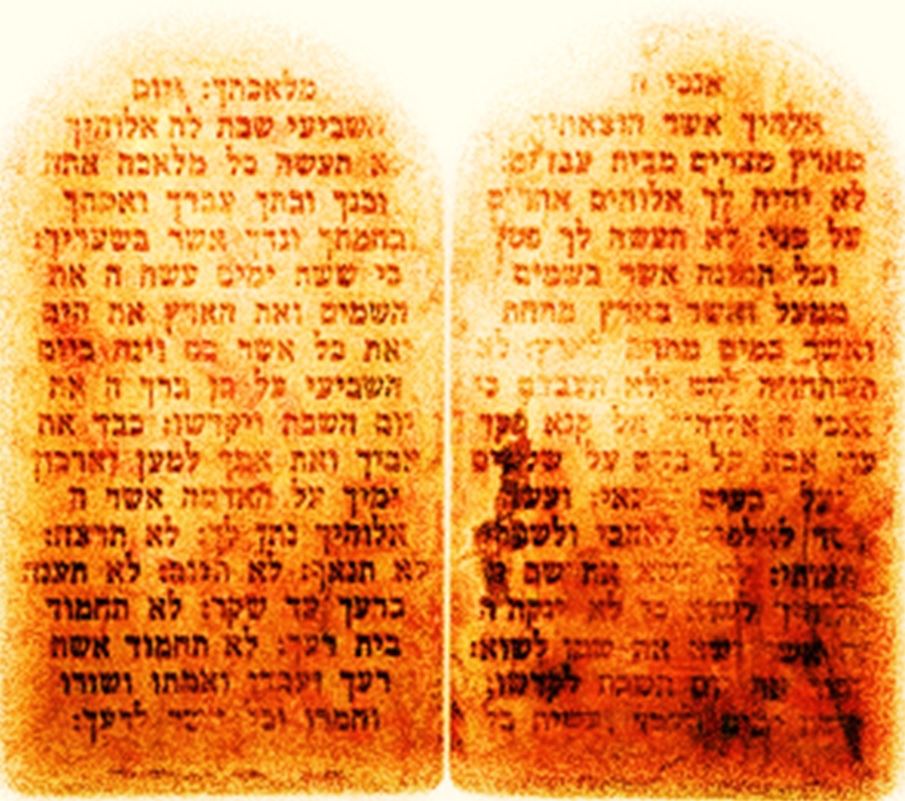
Many believers may find this surprising, but the Old Testament Law—the Torah—was not made for the righteous. Note what the Bible says in this regard:
We know that the law is good if one uses it properly. 9 We also know that law is made not for the righteous but for lawbreakers and rebels, the ungodly and sinful, the unholy and irreligious; for those who kill their fathers or mothers, for murderers, 10 for adulterers and perverts, for slave traders and liars and perjurers—and for whatever else is contrary to the sound doctrine 11 that conforms to the glorious gospel of the blessed God,
1 Timothy 1:8-11
This passage starts off by declaring that the Law is good, but only if it’s used properly. This means that the Law is inherently “holy, righteous and good,” as Paul pointed out in Romans 7:12, but it is only good for people if it is utilized properly. In other words, in and of itself the Law is good, but it’s only good for us when used appropriately.
The remaining verses reveal what this means: The Old Testament Law is not for the righteous, meaning believers who are made righteous in Christ through spiritual rebirth:
God made him who had no sin to be sin for us, so that in him we might become the righteousness of God.
2 Corinthians 5:21
Jesus Christ never sinned, but he became sin for us on the cross so that in him we might become the righteousness of God. ‘Become’ in the Greek is a form of ginomai (JIN-oh-may), which means “to come into being, to be born” (Bullinger). Whether you know it or not, when you turned to the LORD in repentance and faith you were spiritually reborn and, consequently, your spirit was born the righteousness of God. This explains why we are instructed to put off the flesh and put on the “new self”:
You were taught, with regard to your former way of life, to put off your old self, which is being corrupted by its deceitful desires; 23 to be made new in the attitude of your minds; 24 and to put on the new self, created to be like God in true righteousness and holiness.
Ephesians 4:22-24
This means to live out of our reborn spirit that was “created to be like God in true righteousness and holiness.” When we do this we’ll be spirit-controlled rather than flesh-ruled. We’ll naturally bear forth fruits of the spirit rather than works of the flesh—we’ll walk in “true righteousness and holiness”!
This is the key to living according to the Old Testament Law, not putting the Law in front of us and trying to force our flesh to comply, which is being “under the law.” This never works. In fact, it will actually increase the sin problem. Why do you think Paul said, “The law was added so that the trespass might increase” (Romans 5:20)? He said it because this is the reason the Law was given to humanity—to increase the sin problem and drive us to the Savior in whom we can have spiritual regeneration (Titus 3:5).
Once we’re reborn in this way all we have to do is learn to put off the flesh daily (or, as the Lord put it, “deny yourself”) and live out of our spirits empowered and guided by the Holy Spirit. This includes transforming our thinking so that it corresponds to who we are in our spirit, covered in this video. ‘Repentance,’ by the way, means to change your mind—your thinking—corresponding to the truth in question. As such, those who try to turn away from a sin without changing their thinking are doomed to repeat the transgression.
Putting off the old man and putting on the new self is being spirit-controlled rather than flesh-ruled. It’s living by the spirit with the help of the Holy Spirit as opposed to living by the flesh. This is the answer to the sin problem , not putting a list of hundreds of laws in front of us and trying to force our carnal nature to conform. Again, this doesn’t work and never will because the flesh is the sinful nature. It’s utterly futile to try to make it produce righteousness! The entire Old Testament is testimony to this.
The passage goes on to stress that the moral law was made “for lawbreakers and rebels, the ungodly and sinful, the unholy and irreligious” (verse 9). Paul then provides a list of various sinful lifestyles, like fornicators, sodomites and liars (see the NKJV rendering of 1 Timothy 1:8-11).
God’s moral law was “made for” such people in that it reveals to them that they’re in sin, which can lead them to the Savior, the gospel, spiritual regeneration and the attainment of righteousness in Christ. At which point they won’t need the Law anymore; they’ll just need to learn how to put off the “old self” and put on the “new self” because—when they do this—they’ll walk in “true righteousness and holiness” (which you can learn more about in this video). Obviously if someone’s walking in “true righteousness” they have no need for the Law.
This, by the way, explains a mysterious statement Paul made after listing the fruits of the spirit:
But the fruit of the Spirit is love, joy peace, patience, kindness, goodness, faithfulness, 23gentleness and self-control. Against such things there is no law.
Galatians 5:22-23
When believers learn how to live out of their new natures as led of the Holy Spirit they’ll be spirit-controlled rather than flesh-ruled and naturally produce the fruit of the spirit, which are the fruits of God’s very nature! Such people need no external law to produce these godly attitudes and behaviors!
This is why the Bible says that the Law is not for the righteous, but the unrighteous. The righteous have no need of the Law. Why? Because they’re already producing the fruits of righteousness through living out of their spirits by the Holy Spirit. They’re spirit-controlled, not flesh-ruled. It’s the unrighteous who need the Law. This would include Christians who are practicing sin with no concern to repent.
Say, for example, if believers are living in adultery, fornication, homosexuality, lying, slander or strife. We can show them through God’s moral law that they are in sin and need to repent. This is using the Law lawfully or properly. Once they humbly repent, God forgives them and they are cleansed from “ALL UNRIGHTEOUSNESS.” At which point they’ll no longer need the Law because they’re righteous, as this passage clearly shows:
If we claim to be without sin, we deceive ourselves and the truth is not in us. 9 If we confess our sins he is faithful and just and will forgive us our sins and purify us from all unrighteousness.
1 John 1:8-9
As long as believers “keep with repentance” in this manner (Matthew 3:8) they walk in the grace of God’s forgiveness and are righteous in Christ because God purifies them “from all unrighteousness” when they confess. If the LORD cleanses repentant believers of all unrighteousness, what’s that make them? Completely righteous. As such, they have no need of the Law because the Law was made for the unrighteous, not the righteous.
This article was edited from Chapter 3 of…


- The print book is available here for a special low price (291 pages)
- The eBook is available here for just $2.99!
Both links allow you to “Look inside” the book.
Related Topics:
Legalism — Understanding Its Many Forms
Law (Torah) — New Testament Believers are NOT Under the Law
Libertinism — What’s Wrong with It and How to Walk FREE
Sabbath — What is it? Should Believers Observe It?
Spirituality — How to be Spirit-Controlled Rather than Flesh-Ruled
Holidays—Which Ones Should Christians Observe or Not Observe?
What Are THE BASICS of Christianity?
Legalists Are Obsessed With THE LETTER OF THE LAW

Legalists by definition are obsessed with strict adherence to the letter of the law, whether the rule in question is biblical or extrabiblical. This would include things they feel the Lord instructed them to do or not do.
A good example from the New Testament is when the Pharisees objected to Jesus’ mere intention of healing a man’s deformed hand on the Sabbath (Mark 3:1-6). The Pharisees were so ridiculously detailed and rigid with their rules concerning “working” on the Sabbath that they objected to Christ doing any type of healing “work” on that day. The Lord was so disgusted by their stubbornness that he shot them all a glance of anger. This was righteous anger, of course, but anger nevertheless. He then proceeded to heal the man despite their legalistic objections. This was a wordless reprimand and the Pharisees were so offended they decided to murder him!
Can you imagine people being so blinded by legalistic zeal that they object to an incredible healing? Make no mistake, this is what the poison of legalism does when people are seriously infected. Those who are not contaminated, by contrast, are ever-ready to praise God when people are miraculously healed and set free. Take, for instance, the occasion where blind Bartimaeus received his sight through faith and immediately glorified God. The passage goes on to say, “And all the people, when they saw it, gave praise to God” (Luke 18:43 NKJV). This is how normal people react to incredible healings and life-changing miracles. Not so with legalists. They’re so corrupted by rule-ism they can’t see the forest for the trees!
Here’s a more mundane example: Say you feel inspired to declare a two-day fast and at around 46.5 hours you have a peace after accomplishing everything you intended, but you sit there for 90 minutes watching the clock until exactly the 48-hour mark to break the fast. This is letter-of-the-law-ism, which is a form of legalism. It’s stupid and unnecessary. If the Spirit inspires you to take a two-day fast and you feel peace and release to break it at 46.5 hours, please do so. You’re not committing a grievous sin by not waiting till precisely the 48-hour mark.
To have this attitude with scriptural laws is bad enough, but legalists obsess over the many nitpicky, joy-sapping rules they continually dream-up. For instance, the Messiah and his disciples were walking through the fields one Sabbath and picked some heads of grain to quell their hunger. Since it was the Sabbath, the Pharisees argued that the disciples were guilty of working because they plucked the grain and rubbed it in their hands before eating. To their legalistic way of thinking this was equal to reaping and threshing. The Law did forbid working on the Sabbath but it was intended to be a blessing not a burden. The Sabbath was supposed to be a welcomed rest and celebration of God after a 6-day work week, not a joyless ritual observing man-made technicalities. Christ’s simple-yet-brilliant response says it all: “The Sabbath was made for man, not man for the Sabbath” (Mark 2:27).*
* You can compare the three accounts of this occasion as shown in Matthew 12:1-8, Mark 2:23-28 and Luke 6:1-5.
God is always interested in blessing people by setting them free whereas religionists are intent on burdening others and putting them into spiritual bondage. Concerning the Teachers of the Law and the Pharisees, Christ said: “They tie up heavy loads and put them on men’s shoulders, but they themselves are not willing to lift a finger to move them” (Matthew 23:4). By contrast, the Bible says:
This is love for God: to obey his commands. And his commands are not burdensome, 4 for everyone born of God overcomes the world. This is the victory that has overcome the world, even our faith.
1 John 5:3-4
All of God’s moral laws in the Old Testament can be condensed into two basic commands with three applications: Love God and love people as you love yourself (Matthew 22:37-40). That’s it — it’s the law of Christ, the law of love. And these commands are not burdensome because believers are born of God and have the spiritual nature to fulfill them with joy. The only believers who can’t do this are those who fail to put off the flesh and are therefore flesh-ruled. As such, the “law of sin and death” is at work in their lives and this is no fun because sin’s reward is death. But those who walk in the spirit are spirit-controlled and therefore the “law of the Spirit of life” is in motion, which is a higher law than the law of sin and death (Romans 8:2).
To illustrate, did you ever marvel at how huge aircrafts are able to defy the law of gravity and soar above the landscape? How do they do this? It’s simple: They activate a higher law, the law of lift and propulsion, which neutralizes the law of gravity. As long as the higher law is in motion the lower law is rendered powerless. Just as the physical law of lift and propulsion enables people to conquer gravity and fly, so the law of the Spirit of life deactivates the law of sin and death when it is in motion. This is “walking in the spirit” or “participating in the divine nature.” This law is not burdensome, but human religion is.
Notice what Christ said on this matter:
“Come to me, all you who are weary and burdened, and I will give you rest. 29 Take my yoke upon you and learn from me, for I am gentle and humble in heart and you will find rest for your souls. 30 For my yoke is easy and my burden is light.”
Matthew 11:28-30
Yes, there is a yoke and burden to serving the Lord, but unlike the yoke of the flesh or the burden of religion Jesus’ yoke is easy and his burden is light. How so? Because that’s the nature of the law of love and love is the fulfillment of the Law (Romans 13:8-10).
Speaking of joy-sapping rules…
Legalism Saps Life, Freedom and Joy Because “the Letter Kills”
The problem with obsession to the Law—“the letter”—is that this mentality kills:
[God] has made us competent as ministers of a new covenant, not of the letter, but of the Spirit; for the letter kills, but the Spirit gives life.
Focusing on rules above relationship with God, including extra-biblical rules, will naturally sap life, freedom and joy because “the letter kills.” Why should believers focus on relationship with God? Because 1. loving God is the first and greatest command, and 2. God is the Fountain of Life and therefore only in the light of his presence are we able to see spiritual light (Psalm 36:9). Consequently, the further we get away from the Creator, the further we get away from the life and light that only God gives. Life, freedom and joy will diminish and ultimately die once on the path of spiritual darkness, which is any path that distances oneself from the presence of the LORD.
I heard a minister put it like this: “Worldliness is anything that cools your affection for God.” This includes anything that comes under the brackets of “the lust of the flesh, the lust of the eyes and the pride of life” (1 John 2:15-16).
In the mid 1st-century, the churches in Galatia were infiltrated by the Judaizers who were legalists that insisted on circumcision and obedience to religious laws to inherit salvation and please God. Once the Galatians were infected by legalism their joy was sapped, which is why Paul asked them, “What happened to all your joy?” (Galatians 4:15). Why was their joy sapped? Because “the letter kills”!
Simply put, legalists are joy-stealers. They’re grumps. When Christ made his triumphal entry into Jerusalem the crowd of disciples began to joyfully “praise God in loud voices” whereupon the Pharisees commanded Jesus to make them stop! This can be read in Luke 19:37-39. You see, legalists are never happy in the midst of exuberant believers. Whether they know it or not they’re not being godly—“like God”—because joy is actually a trait of God. It’s a “fruit of the Spirit” and therefore a part of the LORD’s character.
As such, it comes as no surprise that God wants his people to be filled with joy. As it is written: “the joy of the LORD is your strength” and “in [God’s] presence is fullness of joy” (Nehemiah 8:10; Psalm 16:11). Needless to say, the presence or absence of joy is a good indicator of where you’re at spiritually. If you have little or no joy, be sure to examine yourself to see if you’re infected by legalism in some way (or in bondage to the flesh, i.e. libertinism).
If not, your problem may be that you need to go deeper into praise & worship. Praise is celebration, which ushers in the presence of the LORD while worship is adoration, the natural response to being in his presence (Psalm 95:1-7 & Psalm 100). Regularly experiencing God’s presence is conducive to joy because in his presence is fullness of joy (Psalm 16:11).*
* I used to struggle with depression for years and shared it with a couple Christian counselors. They told me I needed “to be on medication.” In other words, “take a pill” (and, of course, another pill to counteract the side effects of that one and so on) Around this same time I was at my back door one day when I heard the Spirit say, “This shall be a house of praise & worship unto my Name.” I reflected on it for a moment and responded, “Okay.” Although I was already a praise & worshiper I upped the ante. I started blasting praise & worship music at my house 24/7. I no longer praised & worshipped the LORD now and then; I became a praise & worship warrior! It became a 24-7 thing more and more (Hebrews 13:15). God inhabits the praises of his people (Psalm 22:3) and so my house naturally became a habitation for the manifest presence of God. Not just my literal house, but also the house of my body. In other words, praise & worship wasn’t just reverberating through the confines of my house and property, it was playing in my heart and mind. This solved my depression problem because light naturally displaces darkness: the light of joy displaced the darkness of depression—Praise God!
To further illustrate that the letter kills, let me share a couple examples from everyday life:
Carol & I were at a NFL game years ago where a beach ball was being bounced around in the stands before the game. The people were having a blast hitting the ball high into the air, which would then land on others yards away. They would do the same, and so on. It didn’t take long for a security person to come along and try to confiscate the ball. He was having a hard time because the ball kept bouncing around at giant leaps as he chased it through the stands. Of course he wasn’t happy about the situation; in fact, he was totally grumpy.
At one point someone in the stands held the ball and waited for him to come and confiscate it but, as soon as the sourpuss arrived, the guy hit the ball into the air and everyone laughed all the louder. Mad as a hatter, the curmudgeon continued to chase the big bad beach ball until he finally apprehended it.
Yes, I understand that the stadium probably had rules about beach balls bouncing around in the stands, but the game wasn’t playing and the people were having a good time, which is what these events are all about. Besides, the ball was light and harmless. The sourpuss could have eased up on the rules a bit, but like all staunch legalists he was hell-bent on enforcing the law to the letter.
Another good example would be NFL refs who are so obsessed with the rules of the game that they throw their flags at the slightest possibility of an offense. It’s just so frustrating to see great plays canceled out due to some overzealous ref. This slows the game down and saps the life out of the players and audience.
In a recent game, a defending player was flagged for supposedly roughing the passer in the middle of the 4th quarter, which cost the defending team a whopping 15-yard penalty. When the announcers showed the replay it was clear that the man didn’t do anything to warrant the penalty and they stressed this. But nothing could be done and the entire course of the game shifted because of some gung-ho ref and his little yellow flag. Just the same, legalists can derail an entire church or sect with their stubborn obsession to the letter of the law.
If you watch football you know exactly what I mean—incredible plays called back because of some trivial contact that even the announcers admit wasn’t really an infraction. It happens all the time. Similarly, legalists in the church prevent spiritual growth, miracles and great moves of the Spirit with their fanatical rule-ism. They sap the life, freedom and joy from the people of God! And then we wonder why believers get disillusioned and leave the church because it’s so sterile, routine and impotent.
Am I saying game rules are wrong in football? Absolutely not. Rules are necessary for obvious reasons. What I’m objecting to is overzealous refs throwing their flags at the slightest appearance of an infraction, which unnecessarily bogs down the game. I’m also objecting to the ever-increasing rules added for the sake of safety or what have you. Dreaming up more and more life-stifling rules isn’t the answer. If the players can’t stand the heat they should get out of the kitchen.
The same can be applied to government. Politicians keep passing more and more laws to the point that society is stifled. How many laws do we need anyway? We’re over-regulated, pure and simple, and some laws are so useless they’re a joke, but we keep passing more and more. It’s absurd and it’s sapping the life out of the citizenry and economy.
As previously stressed, Christianity is so simple: Love God and love people as you love yourself. Obviously if a person truly loves God they’ll surrender to his means of salvation and spirituality and not their own, which is religion. When believers fulfill these two simple laws they automatically fulfill all the moral law (Matthew 22:36-40). Of course, this isn’t accomplished by trying to force our flesh to comply, but rather by putting off the flesh and its deceitful desires and putting on the “new self” (Colossians 3:9-10).
This article was edited from Chapter 3 of…
- The print book is available here for a special low price (291 pages)
- The eBook is available here for just $2.99!
Both links allow you to “Look inside” the book.
Related Topics:
Law (Torah) — New Testament Believers are NOT Under the Law
Libertinism — What’s Wrong with It and How to Walk FREE
Sabbath — What is it? Should Believers Observe It?
Spirituality — How to be Spirit-Controlled Rather than Flesh-Ruled
Holidays—Which Ones Should Christians Observe or Not Observe?
What Are THE BASICS of Christianity?
Was Mighty SAMSON “Ungodly”?

Samson was called by the LORD before his mother even conceived to “begin the deliverance of Israel from the hands of the Philistines” (Judges 13:3-5). He led Israel for 20 years after 20 years of oppression by the Philistines (15:20), not as a king, but as a ‘judge’ in the sense of a fierce warrior who judged Israel’s foreign rulers as evil and boldly delivered them. The entire account of Samson is just four chapters, Judges 13-16.
The extraordinary thing about Samson, of course, is that he was anointed by God with great strength on occasion to slay a lion and 30 men with his bare hands, kill a thousand soldiers with just a jawbone of a donkey, tear loose the formidable gates of Gaza and carry them a long distance away, not to mention collapse an entire Philistine temple and execute the multitudes therein.
It should be added that Samson didn’t necessarily look like a body builder since his great strength didn’t come from his muscles but rather his divine anointing, an anointing — by the way — that he knew wouldn’t manifest to oppose the very people he was called to deliver, the Israelites (15:12). Meanwhile, Samson had his own form of ‘Kryptonite’ — if his hair was shaved he’d become as strong as any normal man (16:17). In other words, as great as Samson was, he wasn’t invincible.
Common Criticisms of Samson
Samson was a Nazarite from birth. A ‘Nazarite’ referred to a Hebrew who was exceptionally consecrated unto the LORD, abstaining from alcoholic beverages, grape products, unclean foods, haircuts and contact with human corpses (Numbers 6:2-8). What we want to examine here are Samson’s proclivities & practices, which have caused him to be denounced and slandered over the centuries, such as:
- His reoccurring desire for foreign women, all Philistines, which include: A woman from Timnah of whom Samson’s parents disapproved because she wasn’t a Hebrew (14:1-3), a prostitute in Gaza (16:1) and Delilah (16:4).
- Gambling before possessing the very items he wagered, which was thirty sets of clothes (14:12-13).
- His anger & violence issues (14:19 & 15:6-8).
- Enlisting the services of the aforementioned prostitute in Gaza (16:1).
While sleeping with the prostitute was definitely a sin, the others can be explained:
- Although Samson’s choice for the woman from Timnah as a wife was weak since the Philistines were Israel’s foreign rulers at the time, the Philistines were not among the seven nations of Canaan that the Hebrews were forbidden to marry (Deuteronomy 7:1–6). If it was a sin for the Israelites to simply marry a foreign person, then Boaz sinned by marrying Ruth, a Moabite (Ruth 4). Obviously he didn’t sin and neither did Samson. As far as the disapproval of Samson’s parents concerning his choice of a wife, Samson did not dishonor them since 1. they didn’t forbid him from marrying her and 2. choosing a lifelong mate was ultimately his decision as an adult and not theirs. Lastly, the text plainly states that Samson’s desire to marry this particular woman was “from the LORD” (14:4).
- As for Delilah, the text says that Samson “fell in love” with her and he was obviously blinded by her beauty since he must have known that she was being used by the Philistines to extract strategic information from him (similar to the situation with his former wife in 14:15). Yet there’s no indication that he was fornicating with Delilah (16:4). While some commentators insist that he fornicated with her, the Scriptures don’t mention it. Let’s be silent where the Bible is silent and not assume Samson lived in sin with Delilah.
- Regarding Samson lacking the items to back up his wager with the Philistines, he knew he could easily acquire them if it came down to it because he had faith in God’s anointing to take on Israel’s oppressors. This faith is why Samson is acknowledged in the “Hall of Faith” chapter of the New Testament (Hebrews 11:32). For those who argue that making the wager in the first place was a sin because it’s gambling, I can find no command in the Bible against making such a wager. Since this is the only occasion in Samson’s account in which he did this — a time period spanning 20 years — it cannot be argued that he was addicted to gambling.
- As for Samson’s anger & violence issues, there’s a place for righteous anger, like when Christ was angry with the legalists who objected to his healing a man’s shriveled hand on the Sabbath (Mark 3:1-6) or when he cleansed the Temple like a holy terror (Mark 11:15-18). In short, you can be angry and not sin (Ephesians 4:26). There’s also something called righteous enmity. Since the LORD rose up the judges in order to deliver the Israelites from their abusive foreign rulers (2:16), we can conclude that Samson’s anger & violence toward the oppressive Philistines was righteous. As such, God didn’t have a problem with his waylaying thirty Philistine men for their clothing, (14:19) or striking down a thousand men with the jawbone of a donkey (15:14-15). In both cases the text plainly says that “the Spirit of the LORD came upon him in power” before carrying out the violence. Neither did the LORD mind when Samson viciously slaughtered many Philistines after they wickedly burned to death his former wife and her father (15:6-8). So Samson’s supposed anger issues are examples of righteous anger rather than being carnally short-tempered; meanwhile his violence toward the Philistines was actually his divine calling and purpose.
Two other things we need to keep in mind about Samson’s aggressive attitude toward the Philistines:
- In the Old Covenant the Israelites were instructed to fight their human enemies (Deuteronomy 20:1-3).
- In the New Covenant believers are instructed to fight the spiritual forces of darkness not fight “flesh and blood,” aka people (Ephesians 6:12).*
* Please don’t take this to mean that believers can’t serve in the military, as explained here.
In other words, God’s directive in the Old Covenant has essentially flipflopped for believers in the New Covenant. Why is this? Simple: In the inferior Old Covenant (Hebrews 8:6) the Hebrews didn’t have the advantage of spiritual regeneration (Titus 3:5) and therefore they didn’t have authority over the devil & filthy spirits as believers do in the superior New Covenant (Colossians 2:15). As such, Old Testament saints only had authority to fight people misled by the spiritual forces of darkness. In the New Testament, by contrast, believers have authority to conduct spiritual warfare against the root cause of deception and evil, the devil & his evil spirits, not to mention the grace to love our human enemies, including walking in tough love when necessary.
Please understand that no person on Earth had access to spiritual rebirth and the indwelling of the Holy Spirit until Christ died for our sins and was raised to life for our justification (Romans 4:25 & 1 Corinthians 6:19). This explains why the Lord said there was no one on Earth greater than John the Baptist and yet the least in the kingdom of God — the Church — was greater than him (Matthew 11:11). You see, as great as John the Baptist was, he didn’t have the benefit of spiritual rebirth and therefore the Holy Spirit was on him, but didn’t live in him in the sense that only New Covenant believers experience. Likewise, the Spirit “came on” Samson, but he was not born-again spiritually (John 3:3 & 3:6) and therefore he was not a temple of the Holy Spirit, like we are today.
Samson’s situation was compounded by the fact that he lived in a time of spiritual decline in which “everyone did as he saw fit” (Judges 17:6 & 21:25). As such, you’ll observe the Israelites in the book of Judges engaging in some morally dubious actions, like Jephthah’s rash vow which cost him his daughter’s life (11:31 & 11:39).
With these things in mind, perhaps we should cut Samson some slack.
A Few Other (Undeserved) Criticisms of Samson
Some commentators accuse Samson of drinking wine, eating food that wasn’t kosher and having contact with a corpse, all of which were against the Nazarite vow (Numbers 6:2-8), but these are dubious accusations since the account of Samson 1. never says he drank wine or ate non-kosher food, even though he participated in a wedding feast in Philistia (14:10) and 2. the prohibition against contact with a corpse referred to human beings, not animals, plus the lion in question was freshly slain by Samson and when he came back later all he did was scoop honey from a bees’ nest in the carcass (14:5-9).
‘Samson Was Ungodly’
Another accusation is that Samson was “ungodly,” which suggests that he wasn’t in communion with God, yet the account plainly shows Samson praying to the LORD and never an idol (15:18 & 16:28). Furthermore, as already noted, God Himself rose Samson up to lead Israel for 20 years (13:5 & 15:20) and the man is cited in the Hall of Faith Chapter of the Bible as a hero of faith (Hebrews 11:32). Would this be so if he were truly ungodly?
‘Samson Lies to Delilah’
Yet another accusation is that Samson lied to Delilah three times about the secret of his strength (16:7, 16:11 & 16:13). However, these weren’t malevolent or selfish lies, but rather justifiable untruths since he knew the rulers of the Philistines — Israel’s enemies — were using Delilah to manipulate him into revealing the secret of his power in order to defeat them (16:5), similar to how his wife in Timnah was earlier manipulated (14:15).
If the Philistines took down Samson they’d have Israel under their thumb. So, naturally, Samson didn’t divulge the truth to Delilah. The fact that he eventually did reveals Samson’s flesh weakness for the fairer sex in general and Delilah in particular.
For anyone who thinks there’s no such thing as a justifiable lie, that’s simply not true. While lying for selfish, evil purposes is always a sin (Leviticus 19:11 & Colossians 3:9), a justifiable lie is not a sin for the precise reason that it’s justified and done with the greater good in mind. In other words, a justifiable lie is not evil, it’s good.
One obvious example in the Bible is the Hebrew midwives lying to Pharaoh because his command was evil and it saved the lives of innocent babies, “So God was kind to the midwives… because the midwives feared God” (Exodus 1:15-21). Another example is Rahab the prostitute who lied to the officials of Jericho about the whereabouts of the Hebrew spies, which she’s commended for in the Hall of Faith chapter (Joshua 2:1-6 & Hebrews 11:31). You can read biblical details on this topic here.
Samson’s error was that he caved to the Philistines’ manipulations by foolishly telling Delilah the truth about his anointing of strength, obviously due to his weakness for beautiful foreign women. Yet having a penchant for alluring Philistine women wasn’t a sin in-and-of itself; it’s what one does with such a proclivity that determines whether it’s immoral or not. For instance, being attracted to and deciding to marry the woman from Timnah wasn’t a sin; it was “from the LORD” (14:4).
‘But What About His Sleeping With a Prostitute?’
Aside from the folly of caving to his enemies’ manipulations due to his love for Delilah, this is the sole transgression we can lay on Samson from what is written in the text and it’s only chronicled that he did it on one occasion (16:1). While this is bad, it’s not as bad as King David committing adultery with Bathsheba and indirectly murdering her husband (2 Samuel 11) and, yet, David is constantly praised for his greatness.
It is true that David was “a man after God’s own heart” (Acts 13:22) and thus he humbly confessed his sin after Nathan’s rebuke (Psalm 51 & 2 Samuel 12). Yet what about Samson? Did he repent after having sex with the prostitute? The text doesn’t say, but clearly he still had God’s anointing to take hold of the massive city gates, tear them loose, and carry them to the top of a nearby hill (16:1-3).
What can we get from this? Simply that “God’s gift and his call are irrevocable” (Romans 11:29). For instance, I could be totally out of fellowship with the LORD and still teach the Scriptures. How so? Because God gave me the gift of a teacher (Ephesians 4:11). It’s a gift. This explains how an itinerate preacher can travel the landscape and have anointed services, but commit sexual immorality at his hotel in his off time.
Of course such sins will eventually draw God’s judgment if they’re not dealt with and removed from one’s life (Numbers 32:23, Galatians 6:8 & 1 John 1:8-9). In other words, where God’s gracious mercy ends, God’s judgment begins, and this can be observed in Samson’s very account: The impenitent lust of the eyes led to Samson’s downfall (1 John 2:16) and so judgment ultimately fell and his eyes were gouged out in captivity wherein he spent the rest of his life grinding at the mill (16:21). The moral of the story is: If a sinful weakness is ignored, it will master you (Genesis 4:7) — first it will bind you, then it will grind you (Proverbs 5:22 & 29:6).
So, based on what is actually written in Samson’s scriptural account, enlisting the services of a prostitute on one occasion and obviously having lust issues for beautiful Philistine women in general are the ‘only’ sins we can pin on the man. Otherwise, Samson is depicted as a mighty national leader and hero of faith (Judges 15:20 & Hebrews 11:32).
For those determined to denounce him, which is tantamount to faultfinding & slander, honestly ask yourself this question and be honest: In your life, as a believer, have you ever lusted after an attractive member of the opposite sex and had sex with them, if not physically, in your mind? (Matthew 5:28). If so, you’ve sinned in a similar fashion to Samson even with the advantage of spiritual rebirth and the indwelling Holy Spirit, both of which Samson did not have the benefit. In short, have some compassion for the man!
To close, Samson was called and anointed of God to fight against Israel’s #1 enemy at the time, the tyrannical and ruthless Philistines. By keeping relations between the Hebrews and Philistines in a constant state of upheaval, he helped prevent the Israelites from being absorbed into their pagan culture.
This article is available in book form as chapter 9 of…

- The print book is available here for only $12.50 (303 pages)
- The Kindle eBook is available here for just 99¢!
Both links allow you to “look inside” the book.
Related Topics:
Can Someone Who Commits SUICIDE Still Have Eternal Life?
Is There Such a Thing as RIGHTEOUS HATRED or RIGHTEOUS ENMITY?
Jesus Christ — Milksop or Mighty Lord?
PRAYING IN THE SPIRIT vs. TONGUES PROPHECY—What’s the Diff?
Praying in the spirit is not the same as a believer speaking in tongues in the prophetic sense to minister to the assembly, which requires an interpretation for the people to be blessed by it. The difference is simple.
To explain, let’s first define…
Praying in the Spirit
Praying in the spirit is defined by Paul here:
14For if I pray in a tongue, my spirit prays, but my mind is unfruitful. 15So what shall I do? I will pray with my spirit, but I will also pray with my understanding; I will sing with my spirit, but I will also sing with my understanding.
1 Corinthians 14:14-15
The apostle points out two forms of prayer:
- Praying in the spirit
- Praying with one’s understanding
Praying in the spirit is praying in an unknown tongue, which any believer who’s baptized in the Spirit can do, anytime they choose. This awesome gift is for every believer, if they want it. It’s not just for believers in the 1st century, which is a false doctrine and I’ll prove this as we proceed.
Praying with one’s understanding is praying in your everyday language, like English for me. In other words, praying with your understanding is what we would call normal prayer.
Paul then points out in verse 15 that he regularly practiced both types of prayer: He prayed in the spirit and prayed with his understanding.
(As for Paul’s reference to “singing with his spirit” and “singing with his understanding,” this just refers to adding a melody to your prayer, whether praying in the spirit or praying with your understanding).
Paul then contrasts praying in the spirit with speaking in tongues as a form of prophecy:
18I thank God that I speak in tongues more than all of you. 19But in the church I would rather speak five intelligible words to instruct others than ten thousand words in a tongue.
1 Corinthians 14:18-19
In Paul’s prayer time he prayed in tongues—prayed in the spirit—more than all the believers in Corinth, an assembly he started. He contrasts this with what he does “in the church.” To explain, in the setting of a church service praying in a tongue is not profitable to others present since they wouldn’t be able to understand the prayer seeing as how it’s in an unknown language. As such, Paul insisted that believers only speak in tongues at a church service if they’re doing so in a prophetic sense, which must be accompanied by an interpretation otherwise it’s not profitable to the believers present:
27If anyone speaks in a tongue, two—or at the most three—should speak, one at a time, and someone must interpret. 28If there is no interpreter, the speaker should keep quiet in the church and speak to himself and to God.
1 Corinthians 14:27-28
This brings us to the topic of…
Speaking in Tongues in the Prophetic Sense
Speaking in tongues in this sense is not praying in the spirit. Rather, it’s a form of prophecy in which God speaks to the church.
Praying in the spirit, by contrast, is the believer praying to God by his/her spirit with the help of the Holy Spirit. One is prophecy and has to be accompanied by an interpretation to be profitable to the assembly whereas the other is a form of prayer. They’re very different even though they both involve glossolalia, aka “tongues.”
Speaking in tongues as a form of prophecy is one of the nine gifts of the Spirit. When the Spirit moves a believer to operate in this gift at a gathering it’s simply a prophecy given in another language, unknown to the speaker. This type of prophecy is only beneficial to those present if it is accompanied by an interpretation. The interpretation of tongues is another gift of the spirit.
When someone operates in the interpretation of tongues s/he is simply interpreting a prophecy that was given in tongues. Think about it in terms of two nickels equaling a dime: The charismatic gift of prophecy is the dime whereas tongues & interpretation of tongues are two nickels. The latter two combined are equal to prophecy.
When someone gives a tongue at an assembly — I’m talking about the gift of the Spirit — the Spirit will either move that person to interpret or move upon someone else present to interpret because interpretation is necessary in order for the Church to profit from this gift and be built up (1 Corinthians 14:5).
Why Should Believers Pray in the Spirit?
What is the benefit to praying in the spirit, like Paul did in his private life? Here’s one reason:
But you, dear friends, by building yourselves up in your most holy faith and praying in the Holy Spirit,
This shows that believers can “build themselves up” in faith by praying in the spirit, which suggests charging up your faith like a battery. Furthermore, praying in the spirit builds the believer up in power, love and self-discipline:
6For this reason I remind you to fan into flame the gift of God, which is in you through the laying on of my hands. 7For the Spirit God gave us does not make us timid, but gives us power, love and self-discipline.
2 Timothy 1:6-7
‘I thought praying in the spirit was praying with my mind guided by the Spirit’
While believers should certainly be led of the Holy Spirit when they pray with their understanding (Romans 8:14), Paul plainly defined praying in the spirit in 1 Corinthians 14:14-15 (quoted above) as praying in an unknown tongue in one’s prayer life. The epistle of 1 Corinthians was written 5-6 years before Paul wrote this verse in prison:
And pray in the spirit on all occasions with all kinds of prayers and requests. With this in mind, be alert and always keep on praying for all the Lord’s people.
Paul was encouraging believers to pray in the spirit on all occasions as he gave exposition on the armor of God and spiritual warfare. The definition of “praying in the spirit” did not change in the 5-6 year interim. In short, the meaning of praying in the spirit in 1 Corinthians 14:14-15 also applies to this verse. Scripture interprets Scripture.
‘But didn’t charismatic gifts CEASE at the end of the 1st century?’
The idea that charismatic gifts ended when the biblical canon was completed at the end of the 1st century is a misreading of 1 Corinthians 13:8. Those who believe this are known as cessationists.
Let’s read the passage:
8Love never fails. But where there are prophecies, they will cease; where there are tongues, they will be stilled; where there is knowledge, it will pass away. 9For we know in part and we prophesy in part, 10but when completeness comes, what is in part disappears. 11When I was a child, I talked like a child, I thought like a child, I reasoned like a child. When I became a man, I put the ways of childhood behind me. 12For now we see only a reflection as in a mirror; then we shall see face to face. Now I know in part; then I shall know fully, even as I am fully known.
1 Corinthians 13:8
Cessationists argue that this passage contrasts life before and after the biblical canon was completed, but that’s not what it’s talking about. The text clearly contrasts our life on this Earth where “we see in a mirror dimly” with life on the other side of glory being “face to face” with our Creator; now we only “know in part” whereas then we shall “know fully” even as we are now “fully known” by the LORD (verse 12).
The biggest problem with the religious doctrine of cessationism is that it encourages believers to deny what the Scriptures plainly instruct us to eagerly desire: Believers are exhorted to “eagerly desire” spiritual gifts (1 Corinthians 12:1, 31, 14:1, 39) while cessationism encourages believers to do the precise opposite. Nowhere in the New Testament do we see any indication that charismatic gifts would cease to exist by the end of the 1st century.
You can learn more about cessationism here.
Let me quickly and respectfully add…
Charismatic Gifts Are NOT a Major Doctrine and Are Therefore NOT an Issue of Salvation
While cessationism is a erroneous doctrine, what one believes about spiritual gifts is not an issue of eternal salvation. If a believer or sect embraces this doctrine it doesn’t mean that they’re not fellow believers, loved by the Lord. It just means their faith—their level of belief based on the false doctrine of cessationism—won’t allow them to “eat everything” the gospel of Christ has to offer; in this case, spiritual gifts and the blessings thereof (Romans 14:1-6).
Those of us with fuller understanding of this issue are not to look down on those with the lesser because it would be arrogant and arrogance is the #1 sin (James 4:6; 1 Peter 5:5). Similarly, the one with the lesser revelation must not condemn those with the fuller. On the contrary, we are to “accept one another… just as Christ accepted [us], in order to bring praise to God” (Romans 15:7). You could insert any non-essential doctrine or issue into this scenario and it would apply.
So, whether you accept or reject spiritual gifts for the Church after the 1st century, it’s entirely your prerogative. If you reject them, it doesn’t mean you’re not a believer, it just means you don’t “eat everything” the gospel of Christ offers. This explains, by the way, why those who embrace charismatic gifts are referred to as “full gospel.”
Related Topics:
HERMENEUTICS — Proper Bible Interpretation
What Are THE BASICS of Christianity?
The SHEPHERDS and Baby Jesus vs. the MAGI and Toddler Jesus

People tend to mix-up the stories of 1. the shepherds who came to see Jesus when he was born, inspired by an angel, and 2. the Magi who came to see Jesus when he was a toddler, inspired by a moving “star.” Let’s look at both to distinguish the two…
The Shepherds and the Angels at Jesus’ Birth
When Yeshua was born in a stable in Bethlehem an angel appeared to some shepherds in a nearby field:
8And there were shepherds living out in the fields nearby, keeping watch over their flocks at night. 9An angel of the Lord appeared to them, and the glory of the Lord shone around them, and they were terrified. 10But the angel said to them, “Do not be afraid. I bring you good news that will cause great joy for all the people. 11Today in the town of David a Savior has been born to you; he is the Messiah, the Lord. 12This will be a sign to you: You will find a baby wrapped in cloths and lying in a manger.”
13Suddenly a great company of the heavenly host appeared with the angel, praising God and saying,
14“Glory to God in the highest heaven,
and on earth peace to those on whom his favor rests.”
15When the angels had left them and gone into heaven, the shepherds said to one another, “Let’s go to Bethlehem and see this thing that has happened, which the Lord has told us about.”
16So they hurried off and found Mary and Joseph, and the baby, who was lying in the manger. 17When they had seen him, they spread the word concerning what had been told them about this child, 18and all who heard it were amazed at what the shepherds said to them. 19But Mary treasured up all these things and pondered them in her heart. 20The shepherds returned, glorifying and praising God for all the things they had heard and seen, which were just as they had been told.
Luke 2:8-20
The shepherds were terrified by the initial angelic sighting, which is usual with angelic visitations in Scripture, but the angel encouraged them not to be afraid and told them where to find the amazing baby, who happened to be the Savior of the world, Christ the Lord.
That’s when “a great company of the heavenly host [angels] appeared with the angel, praising God” (verses 13-14).
Thus the shepherds went into the town of Bethlehem and found Mary & Joseph and the divine baby lying in the manger, which naturally inspired praises to the Most High (verses 15-20).
It wasn’t until almost two years later that…
The Magi Meet and Worship Toddler Jesus, Led By a “Star”
Here are the key passages chronicling this event:
1After Jesus was born in Bethlehem in Judea, during the time of King Herod, Magi from the east came to Jerusalem 2and asked, “Where is the one who has been born king of the Jews? We saw his star when it rose and have come to worship him.”
Matthew 2:1-2
9After they had heard the king, they went on their way, and the star they had seen when it rose went ahead of them until it stopped over the place where the child was. 10When they saw the star, they were overjoyed. 11On coming to the house, they saw the child with his mother Mary, and they bowed down and worshiped him. Then they opened their treasures and presented him with gifts of gold, frankincense and myrrh.
Matthew 2:9-11
The Magi were neither kings nor sorcerers, but rather learned men from either Persia (modern-day Iraq) or Media (modern-day Iran) that studied the stars and sought wisdom or meaning; they were possibly Zoroastrians who were familiar with the Hebraic Scriptures (Daniel 2:2 & 5:11).
But please don’t confuse the Magi with astrologers of today and their eye-rolling horoscopes. Whilst Christ pointed to heavenly signs to indicate prophetic events (Matthew 24:30), the Scriptures clearly warn against turning to the stars for guidance or, worse, idolization (Deuteronomy 4:19; Isaiah 47:13-15).
Tradition suggests that there were three Magi, but the Bible doesn’t actually reveal their number. Three is assumed simply due to the number of gifts they brought for the infant Savior—the gold, frankincense and myrrh (verse 11).
Figuratively, the Magi symbolize all people outside of the Hebrews who sincerely seek ultimate reality. Their inclusion in the Scriptures points to God’s salvation being for Jews and Gentiles—the entire world and not just one nation of people in the Middle East (Acts 20:21; Romans 1:16).
But what exactly was “his star in the east” that the Magi followed to worship the child Jesus? The way the star moved and settled over one place (verse 9) reveals that it was not a normal star, a supernova or planetary conjunction, but rather a supernatural manifestation similar to the Shekinah glory or angel that guided the Hebrews when Moses led them through the Sinai wilderness to the Promised Land (Exodus 13:21 & 23:23).
When the Magi arrived to worship Jesus, “the King of the Jews” (Matthew 2:2), the child was almost two years old in a house and not a babe in a manger (a feeding trough) inside a barn or cave. Lending support is Herod’s ruthless order to kill all boys in Jerusalem who where two years old and younger because he was enraged after being “outwitted by the Magi” (Matthew 2:16).
Thus the difference between the two events are:
- The shepherds were local Israelites informed by an angel about the baby Jesus in nearby Bethlehem.
- The Magi were from far away in the east, led by a moving “star” to Bethlehem and the toddler Jesus, who was close to two years old by that time.
Related Topics:
ANGELS — What Are They? What’s Their Purpose?
THE Angel of the LORD — Mighty Angel or Pre-Incarnate Christ?
HOLIDAYS—Which Ones Should Christians Observe or Not Observe?
Can Believers Celebrate CHRISTMAS or Is It Evil?
Does Each Person HAVE A STAR?

There is no personal relationship between stars and people. Stars neither light up when a person is born nor blink out of existence when someone dies. Actually, most of the stars that are visible to the eye have been known about since the Sumerians from Mesopotamia mapped them out 5000 years ago.
Scientifically speaking, stars are celestial bodies made up of gas and they outnumber people on Earth 1 to 1000 million. For proof, there are currently 8 billion people on Earth whereas there are an estimated 1 septillion stars in the Universe (a septillion is “1” with 24 zeros).
Scripturally speaking, there’s nothing in the Bible to suggest that each person has their own star. Stars were not created to represent human beings on Earth; they are made by God to illuminate the night sky (Genesis 1:17). So, when a person dies s/he does not become a star.
The idea that every person has a star is rooted in a dubious reading of this passage:
1After Jesus was born in Bethlehem in Judea, during the time of King Herod, Magi from the east came to Jerusalem 2and asked, “Where is the one who has been born king of the Jews? We saw his star when it rose and have come to worship him.”
Matthew 2:1-2
The Magi were neither kings nor sorcerers, but rather learned men from either Persia (modern-day Iraq) or Media (modern-day Iran) that studied the stars and sought wisdom or meaning; they were possibly Zoroastrians who were familiar with the Hebraic Scriptures (Daniel 2:2 & 5:11).
But please don’t confuse the Magi with astrologers of today and their eye-rolling horoscopes. Whilst Christ pointed to heavenly signs to indicate prophetic events (Matthew 24:30), the Scriptures clearly warn against turning to the stars for guidance or, worse, idolization (Deuteronomy 4:19 & Isaiah 47:13-15).
Tradition suggests that there were three Magi, but the Bible doesn’t actually reveal their number. Three is assumed simply due to the number of gifts they brought for the infant Savior (Matthew 2:11).
Figuratively, the Magi represent all people outside of the Hebrews who sincerely seek ultimate reality. Their inclusion in the Scriptures points to God’s salvation being for Jews and Gentiles—the entire world and not just one nation of people in the Middle East (Acts 20:21 & Romans 1:16).
But what exactly was “his star in the east” that the Magi followed to worship the child Jesus? The way the star moved and settled over one place (verse 9) reveals that it was not a normal star, a supernova or planetary conjunction, but rather a supernatural manifestation similar to the Shekinah glory or angel that guided the Hebrews when Moses led them through the Sinai wilderness to the Promised Land (Exodus 13:21 & 23:23).
When the Magi arrived to worship Jesus, “the King of the Jews” (Matthew 2:2), the child was almost two years old in a house and not a babe in a manger (a feeding trough) inside a stable. I point this out because some people mix-up this story with that of…
The Shepherds and the Angels at Jesus’ Birth
When Yeshua was born in a stable in Bethlehem an angel appeared to some shepherds in a nearby field to inform them of the arrival of the Savior of the world, Christ the Lord (Luke 2:8-20). They were terrified by the sighting, which is usual with angelic visitations in Scripture, but the angel encouraged them not to be afraid and told them where to find the amazing baby.
Then this happened: “Suddenly a great company of the heavenly host [angels] appeared with the angel, praising God and saying, ‘Glory to God in the highest, and on earth peace to men on whom his favor rests’ ” (verses 13-14).
Thus the shepherds went into the town of Bethlehem and found Mary & Joseph and the divine baby lying in the manger, which naturally inspired praises to the Most High (verses 15-20).
So here’s the difference between the two events:
- The shepherds were local Israelites informed by an angel about the baby Jesus in Bethlehem.
- The Magi were from far away in the east, led by a moving “star” to Bethlehem and the toddler Jesus, who was close to two years old by that point. Their journey took 4-5 months.
Related Topics:
ANGELS — What Are They? What’s Their Purpose?
THE Angel of the LORD — Mighty Angel or Pre-Incarnate Christ?
HOLIDAYS—Which Ones Should Christians Observe or Not Observe?